Africa-Press – Namibia.
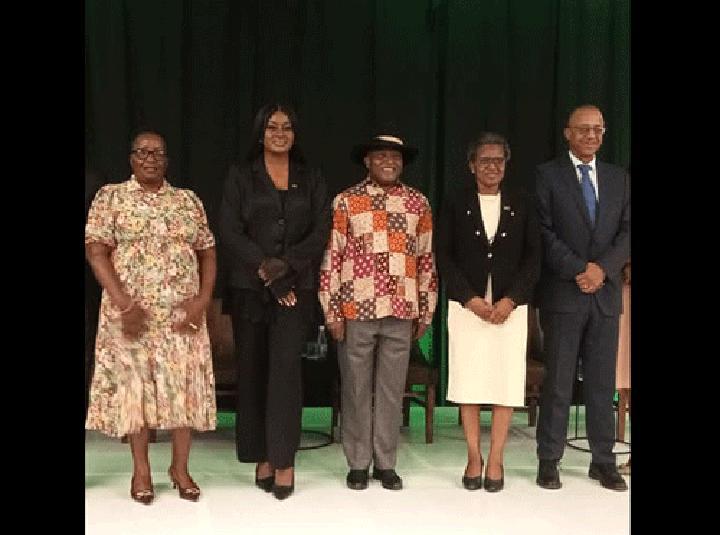
The inter-stakeholder engagement workshop on environmental stewardship and gender mainstreaming to State resilience and disasters concluded in Windhoek on Wednesday.
The workshop was held to establish environmental stewardship as a foundation for resilience, healthy ecosystems and sustainable resource management for national security.
It also served to embed gender mainstreaming across all resilience efforts, recognising that women, youth, and indigenous communities hold vital knowledge and responsibilities.
During his keynote address, Prime Minister Elijah Ngurare called for science-based approaches, increased investment in research and innovation, and the integration of resilience education across all levels of learning, from primary to tertiary education.
“This is intergenerational equity, and the time to act is now,” he said, highlighting the need for urgent research that benefits both present and future generations through long-term impact, sustainable decision-making, responsible knowledge sharing, and ethical stewardship.
Also speaking at the occasion, the Minister of Environment, Forestry and Tourism, Indileni Daniel, said that her ministry’s mandate extends beyond protecting the environment.
It also involves safeguarding economic development, strengthening social cohesion and protecting national security in the face of escalating climate risks.
“Climate resilience is not a slogan. It is a development imperative, an economic strategy and a matter of national interest,” said Daniel.
Speaking on behalf of the gender equality and child welfare minister Emma Kantema, the ministry’s deputy minister Linda Mbwale highlighted the importance of gender responsiveness and its role in reducing the inequalities that are caused by natural disasters.
According to her, the country’s policies, programmes and investments need to deliberately address the differentiated needs, vulnerabilities and capacities of women, men, girls and boys.
“When disaster strikes, existing inequalities are magnified. Women, who constitute the majority of subsistence farmers and informal traders, often lack access to land, credit and climate information. During droughts, their unpaid care work increases exponentially,” said Mbwale.
Statistics from the gender ministry indicate that 38% of young women are not in education, employment, or training, compared to 29% of young men.
“In times of economic shocks, women are the first to lose income and the last to recover. Yet, paradoxically, women are also our greatest untapped resource in building resilience, as knowledge holders, community mobilisers, and agents of change,” she said.
Health and social services minister, Esperance Luvindao said that it is essential for a strong, resilient health system to be built during climate change. This, she said, will withstand shocks that are brought by natural disasters.
“Firstly, we need ‘climate-smart’ healthcare. We must build clinics and hospitals that are resilient to floods and extreme heat.”
“We need to decarbonise our health supply chains. A hospital that loses power during a storm or cannot function during a drought is a failed asset,” said Luvindao.
She also emphasised the need for sustained and innovative financing as well as cross-sectoral integration.
For More News And Analysis About Namibia Follow Africa-Press