Africa-Press – Namibia. As energy costs surge and squeeze margins across Namibia’s economy, corporates are being forced to rethink one of their most volatile input expenses, namely power.
At a Renewable Energy Breakfast hosted in Windhoek yesterday, Standard Bank Namibia delivered a blunt message to business leaders, municipalities and energy providers: the era of treating renewable energy as a “nice-to-have” is over.
“Energy prices are now more than ever a key input cost for any business,” said Oliver Jugadasen, renewable energy market developer at Standard Bank Group. With traditional energy tariffs climbing steadily, he argued that renewable energy has shifted from an environmental talking point to a hard-nosed financial strategy.
Jugadasen pointed to two decisive factors reshaping boardroom calculations: predictability and falling technology costs. Unlike grid-supplied electricity, where tariffs are subject to regulatory shifts and global fuel dynamics, renewable energy offers long-term cost certainty. “Financing renewable energy, available for up to 10 years at Standard Bank, directly addresses the constant increase in traditional energy prices,” he said.
Buttressing intent, Standard Bank Group ramped up its continental commitment for sustainable finance to N$450 billion, underscoring the scale at which Africa’s largest banking institutions are positioning themselves for the energy transition.
For Namibia’s private sector, the implications are significant. As power disruptions, tariff adjustments and infrastructure strain remain pressing concerns, businesses are under pressure to secure a stable and predictable energy supply while protecting profitability.
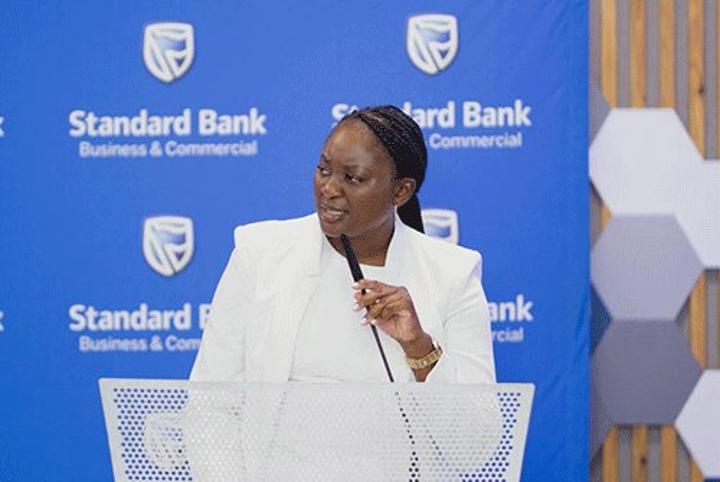
Standard Bank Namibia’s head of business and commercial banking, Hellen Amupolo, added. “Renewable energy is no longer a distant aspiration; it is a necessity,” she told attendees, which included corporates, engineering, procurement and construction (EPC) contractors, municipalities, town councils and small businesses.
Amupolo framed financing as the decisive lever in unlocking the energy transition. “As key energy providers and users seek cleaner, more resilient energy solutions, financing becomes the critical enabler to realise this,” Amupolo said.
Renewable energy investment, Amupolo stressed, has the potential to strengthen infrastructure, stimulate economic growth, create jobs and future-proof communities against rising energy volatility.
For More News And Analysis About Namibia Follow Africa-Press