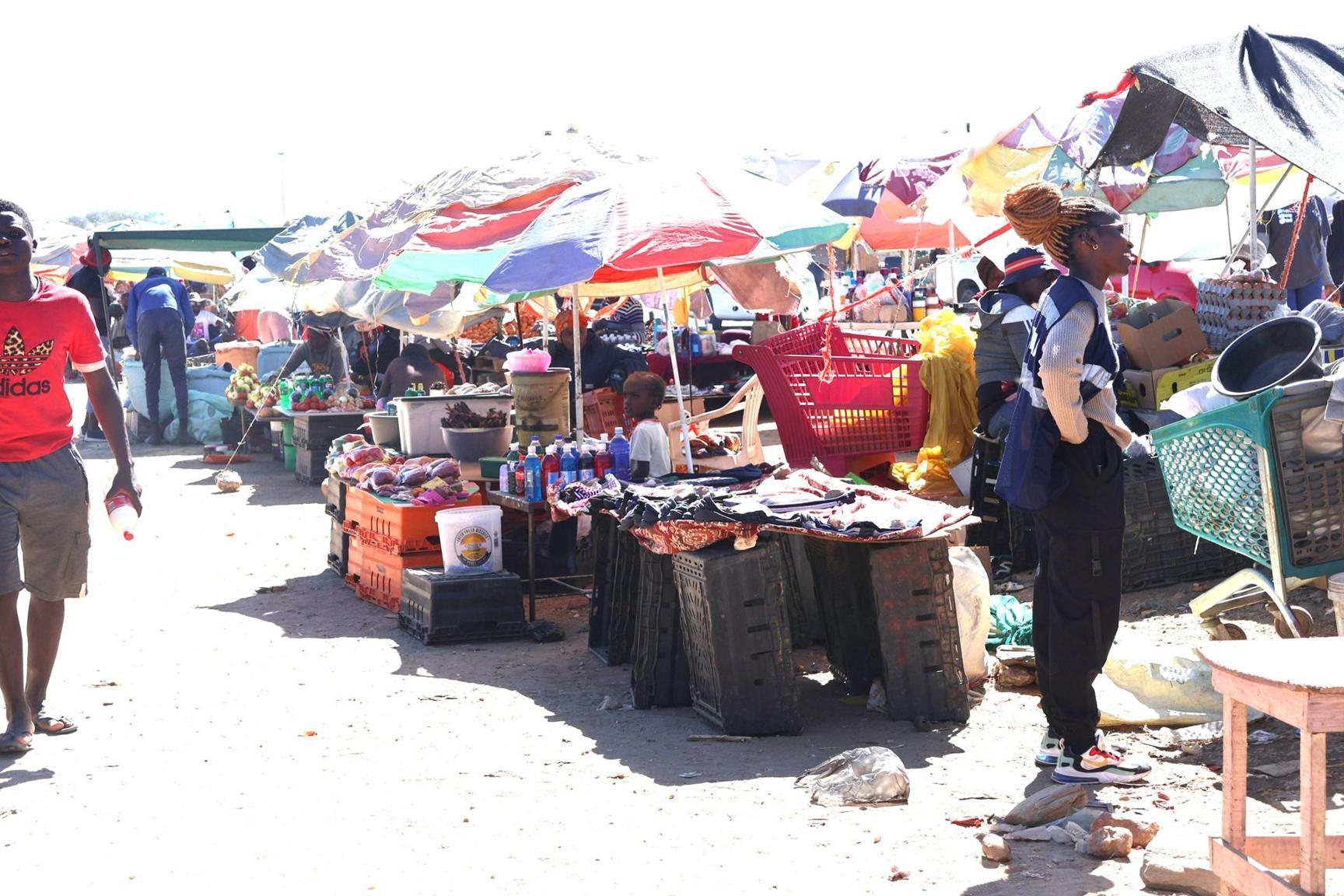
Africa-Press – Namibia. A group of vendors yesterday met officials from the ministries of urban and rural development to register their plight as they barely keep heads above stormy economic waters. The meeting was meant to address long-standing complaints about confiscated goods, fines and lack of proper trading spaces.
Ester Andreas, a street vendor, did not hide her pain. “We are facing a lot of challenges. We are suffering,” she said.
According to Andreas, vendors often have their goods confiscated and are fined N$500, which later accumulates to N$2 000.
“They insult us. They speak to us like we are nothing,” she said.
She said perishable goods such as tomatoes are sometimes taken on a Friday and only returned on a Monday. By then, the food is rotten.
“They tell us they threw the tomatoes away because they went bad. But what about recharge vouchers and biscuits? Those do not rot. When we ask about them, we are told to open a case. They know we cannot afford lawyers,” she said.
Andreas recalled an incident in 2022 when her vegetables were confiscated by police officers and taken to a police station.
“Later we heard they used the vegetables to cook for inmates. I kept asking myself, who is wrong here? The person trying to work, or the person who steals?” she questioned.
Another concerned trader is Paulus Shifa (47). He operates from the busy Havana Four-Way Stop, selling meat. They were recently told to vacate to pave the way for development in the form of a tarred road.
“They told us we would be moved somewhere else. But no proper place was prepared. If we do not work, we do not eat. We have families depending on us,” he said.
He warned that pushing vendors out without alternatives could worsen social problems.
“There is already high unemployment in this country. If people cannot work honestly, crime will increase,” he said.
Shifa described the meeting with officials as disappointing.
“This meeting was nothing. It has been over 10 years without proper answers. We feel betrayed,” he said.
Government response
Lahja Hipondoka, a deputy director in the urban and rural development ministry, acknowledged the concerns raised.
The government, Hipondoka said, has been working to improve infrastructure for small businesses and informal traders.
“We will continue to engage local authorities in providing suitable trading spaces. Traders must operate from spaces that help them grow and improve their businesses,” she said.
Hipondoka added that municipalities operate under their own bylaws and regulations. She said there are standard procedures that guide decisions such as relocations or confiscations.
“We cannot blame the traders or the city at this stage,” she said.
She confirmed that the government will continue discussions with the City of Windhoek to understand what happened at Havana Four Way and to seek solutions.
Rosalia Leonard said this issue goes beyond space and permits. They say it is about dignity. “We are not criminals. We are parents. We are trying,” she said.
For More News And Analysis About Namibia Follow Africa-Press