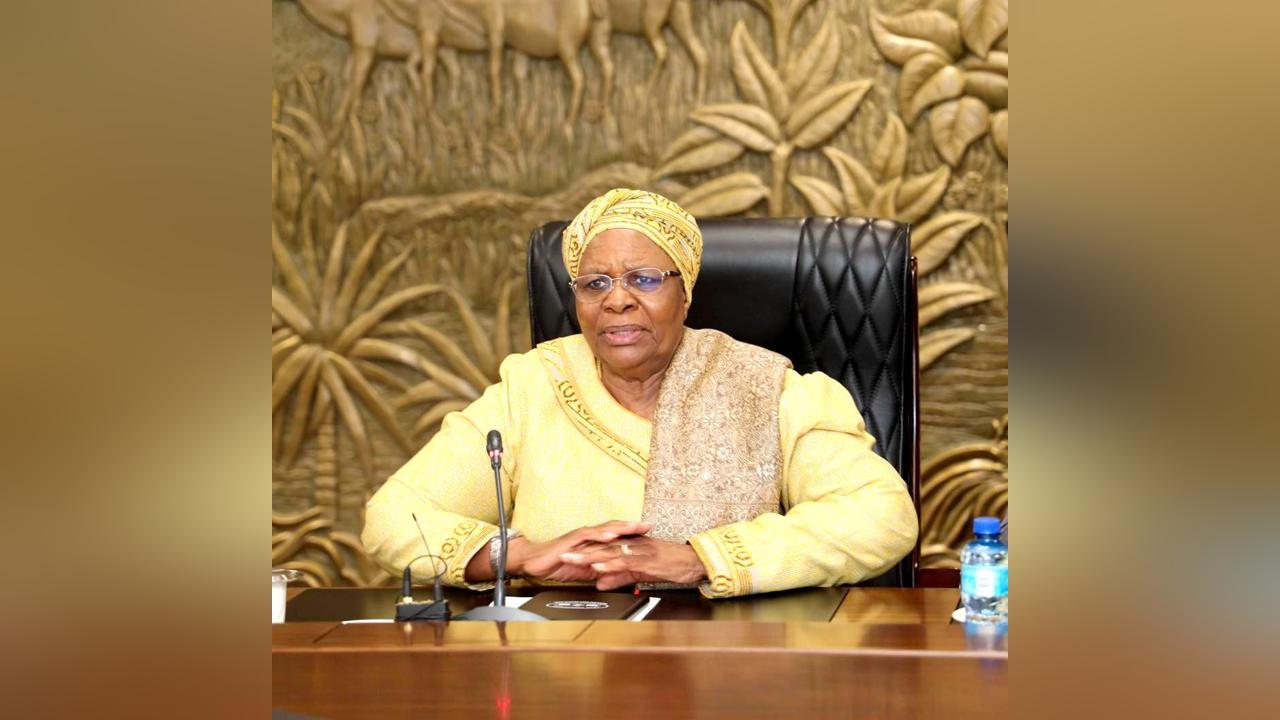
Africa-Press – Namibia. President Netumbo Nandi-Ndaitwah yesterday commissioned three national task forces to serve as the main engines to drive the seven priority pillars of the Sixth National Development Plan (NDP6). She described this as a major turning point in how government delivers services and responds to the country’s pressing needs.
Speaking at the State House during the commissioning ceremony, the President introduced the Economic Recovery, the Health, and the Housing and Land Delivery task forces, stressing that these bodies are not symbolic committees but “instruments for accelerated implementation” of national development goals.
The task forces are a direct outcome of the Namibia Public-Private Forum, which brought together government, private sector, labour, civil society and academia.
According to Nandi-Ndaitwah, the forum revealed a shared understanding that government cannot tackle national challenges alone.
She stressed that the government could no longer work in isolation, especially as citizens continue to struggle with rising living costs, limited job creation, uneven service delivery and housing shortages.
“It becomes clear that if we wanted to accelerate progress, we could no longer operate in silos. We needed a unified platform where concerns could be raised openly, and where solutions could be shaped constructively,” she said.
She said the establishment of the task forces represents the government’s urgency and commitment to fixing problems that have affected Namibians for years, including rising living costs, uneven service delivery, land pressure, housing shortages and strains on the health system.
The President’s address was that the three task forces are designed to drive the implementation of all seven pillars of the Sixth National Development Plan (NDP6).
These national priorities include agriculture and food systems, education, health, housing and urbanisation, youth empowerment, sports and the creative industries, as well as economic transformation.
The President said the combined work of the task forces touches each of these areas, making them key instruments for accelerating NDP6 delivery across government.
“When you look at their work holistically, these task forces are basically covering all seven priorities in NDP6. These are the economic and social sectors we must focus on as part of recovering our economy and uplifting our people,” she said.
She said NDP6 provides a clear road map for the country, and the three task forces are the “instrument to accelerate the implementation of that road map”.
Each task force includes members from government, the private sector, civil society, academia and community organisations. Their diversity, the President said, reflects the understanding that solutions require multiple perspectives.
“No single sector holds all the answers. Solutions will emerge when we listen respectfully to one another and when we challenge old assumptions with open minds,” she said.
Nandi-Ndaitwah said disagreements are expected but should not be seen as a weakness.
“Disagreement is an opportunity to understand one another and to build better solutions,” she said.
The President emphasised that the new task forces respond directly to public concerns about implementation.
“Some people wondered whether this idea would lead to real action. Today we stand here as proof that this administration is serious about service delivery. We are demonstrating agency. We are demonstrating commitment,” she said.
Economic recovery taskforce
The Economic Recovery team will focus on unlocking growth, promoting investment and expanding opportunities for young people.
Nandi-Ndaitwah directed the group to use the post-COVID-19 economic recovery report as one of its key reference documents.
“We are too few to be poor,” she said, stressing the need for coordinated action to stimulate the economy and lift families out of poverty.
Health Task Force
Turning to the health sector, the President said a productive nation depends on a health system that serves everyone.
“A healthy nation is a productive nation,” she repeated. She instructed the Health Task Force to prioritise the recommendations of the comprehensive 2013 national health report.
“I am asking this committee to help us implement this report,” she said. Housing and Land Delivery Task Force The President called the housing situation “deplorable” in some communities and emphasised the urgency of expanding access to safe land and dignified shelter.
“No Namibian should find themselves in those conditions,” she said. She also warned about recent disease outbreaks and stressed that better living conditions can help prevent them. She added that, “If we can prevent, let us prevent together.”
The President noted that the three task forces together cover the main priority areas of NDP6, from agriculture and youth empowerment to health, education and housing.
Nandi-Ndaitwah urged Namibians to support the new teams and remain patient but hopeful. “The canoe does not move forward if everyone is paddling in different directions. Our progress depends on our ability to pull in the same direction,” she said She thanked the task force members for volunteering their time and expertise.
“Your work will strengthen our public health system, support economic resilience, and advance land delivery and housing efforts. This will benefit our nation for generations to come,” said Nandi-Ndaitwah.
For More News And Analysis About Namibia Follow Africa-Press