

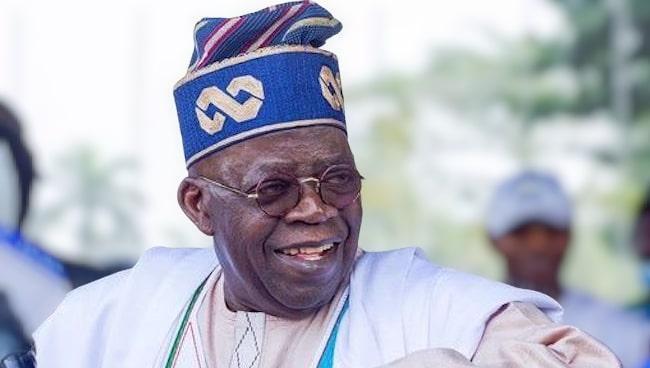
By- Abba Hamisu Sani
Africa-Press – Nigeria. The current economic hardship faced by Nigerians remains a serious source of concern as the citizens begin to react through protests against hunger and high inflation.
The situation is blind as it doesn’t differentiate between those who voted for President Tinubu of the ruling APC and who voted for Atiku Abubakar of the Peoples Democratic Party (PDP), Peter Obi of the Labour Party, and Senator Rabi’u Kwankwaso of New Nigeria People’s Party during the 2023 Presidential election as everyone suffers the situation which is the outcome of the decision taken by President Tinubu in his first day as the leader of the largest economy in Africa
Fuel subsidy removal and Foreign Exchange rate Indication two decisions that Nigerian economy into trouble
During his inaugural speech on 29th May 2023, many IMF policies admirers and some politicians clapped at the new President then as he boldly said “Subsidy has gone” without even waiting to have a deep understanding of how the Federal government operates.
The same man went ahead and floated Nigerian currency which he called Foreign exchange rate Unification which pushed the Dollar exchange rate to keep skyrocketing up to this point where it sells between 1450 naira and above to a dollar which was exchanged at less than 500 naira in May last year (2023) at the parallel market which is the major source of foreign currencies for the majority of Nigerian importers.
These twin policies of the APC government under the former Lagos State governor Bola Ahmed Tinubu are the root of the present hardship that makes life miserable for the majority of Nigerians from left right and centre.
Civil servants and other low income earners are now finding it difficult as salaries are yet to be increased while the prices of foodstuff reach their climax as bag of 50 kg of rice is sold at sixty thousand naira, transport pair in Abuja and other cities is very high to the extent that workers can hardly afford to go to their working places, the workers can no longer pay rents not to talk of school fees for their Children and their extended family members who depend on them.
Kano and Niger States residents set the ball running.
Recently a protest against the hardship was conducted in Kano which is the state with a high population in Nigeria according to the last census conducted in the Country, it also stands as the commercial Centre of northern Nigeria.
The protesters decried the high level of inflation and called on the Federal government to open borders with Niger Republic which stands as a major business partner to the people of Northern Nigeria particularly Kano State as the major commercial centre in West Africa.
Minna Youth and Suleja residents protest in Niger State witness a high turnout of angry residents particularly youth who showed their grievances over hunger,high inflation and lack of employment opportunities for them to survive
This is a dangerous signal to the Nigerian government and state governments that are receiving huge funds from the Federal allocation due to subsidy removal and float of naira but yet not ready to face real changes but busy creating elephant projects which they use as a pipe to syphon public resources.
For instance at this moment the Yobe State government is constructing an Airport, to be frank, and sincere, what Yobe citizens need at this time is to be provided with farming supplements and enough security to resume farming after years of suffering as a result of the Boko Haram insurgency.
Another governor that indulge in such unneeded projects is that of Abia State Alex Otti who recently announced that he will construct a FIFA Standard Stadium in Umuahia the state capital despite having enough facilities of its kind in the same state capital and Aba city which is enough for all the sporting activities taking place in the state.
Instead, the Governor should use the millions of dollars for the said project to promote entrepreneurs struggling with their legal businesses in Aba Commercial City.
Governors move to checkmate the food shortage
The Governors of Kwara, Abdulrahman Abdulrazaq; Taraba, Agbu Kefas; Ondo, Lucky Aiyedatiwa; and Kogi, Ahmed Ododo, on Monday 5th of February 2024 stormed the Abuja headquarters of the Federal Ministry of Agriculture and Food Security to push for increased crop production to ensure food security in Nigeria.
This is aimed at tackling food inflation and food shortage
Abdulrazaq, who doubles as the Chairman of Nigeria Governors Forum, told the Minister of Agriculture and Food Security, Abubakar Kyari, that adequate concentration should be given to food security, but stressed that Nigeria’s food remained the cheapest in West Africa.
Speaking on behalf of the governors, Abdulrazaq stated that the Anchor Borrowers Programme that was previously implemented by the Central Bank of Nigeria under its former Governor Godwin Emefiele, did not achieve much.
He, however, called on the agric minister to work hard to meet the food targets of the government, as this was vital for the Nigerian masses, adding that state governors would work with the ministry.
“We could not achieve much with the CBN Anchor Borrowers programme, it was very challenging. The issue of food security is a one-stop-shop and we need to concentrate on what we are doing. We need to concentrate on what we are doing for the dry season farming.
“The minister has come up with a programme on cassava, rice and maize and we want to engage in that programme and urgently make sure we improve on our yield and deliver to the Nigerian population.
“We want to get to a stage where we export our food. What we have now is that, because of the devaluation of our naira(crunch) , Nigeria’s food is being exported to West Africa and is the cheapest in the region today,” the Kwara State governor said.
He added that the governors had come to the realisation that we have a new Ministry of Agriculture, because over the last four years, before this administration, the engagement was not too productive.
This was because the CBN took over most of what the agric ministry used to do, our trips to the ministry at that time were not fruitful. But now we have seen strong engagement and sense from the Federal Ministry of Agriculture and that is why we are here .
Abdulrazaq said the governors had also noted that food in Nigeria was the cheapest in West Africa, adding that Nigeria’s neighbours were using its food to trade.
“They are taking our soya and other stuff to make foreign exchange for themselves. That is not a bad thing, what we need to do is to ramp up production and increase our yields per hectare so that we can feed West Africa, feed ourselves 100 per cent and export food. That is the goal we must achieve,” he stated.
The Nigerian Governors Forum chairman commended the government for prioritising food production, adding that whatever subsidy that is coming from the Federal Government will be improved upon by the states.
Minister of Agriculture and Food Security response
On his part, the agric minister Abubakar Kyari described the four governors’ visit as a huge endorsement for the progressive drive towards the much-needed collaboration between the Federal Ministry of Agriculture and Food Security and state governments.
“It is with a view to creating an agricultural sector fit for a nation as endowed as Nigeria with massive arable fertile land, abundant water resources and agricultural labour force. This visit is, in my view, beyond a courtesy call,” Kyari stated.
He told his guests that though agriculture had witnessed noticeable development over the years in their various states, the bigger picture we seek to create now is to vastly increase agricultural production all year round.
“This is with the cardinal objective of driving down food inflation, creating employment, reducing poverty, engendering economic growth and development, as well promoting inclusivity,”the minister said.
He pointed out that ahead of the second phase of the Dry Season Food Production Programme under the National Agricultural Growth Scheme and Agro-Pocket, I sent out Expression of Interests to the governors of the 36 States and Federal Capital Territory, to which responses have been encouraging.
“Indeed, a number of your brother governors have paid visits to our corporate headquarters here. These include the Governors of Jigawa, Katsina, Ekiti, Niger, Kebbi, and Sokoto states in furtherance of the collaboration that we are seeking for the success of the Dry Season Food Production Programme.” he added.
To achieve food security all hands need to be on deck
Kyari stated that there was no question that if all parties get things right, and without an iota of doubt with all hands on the plough, future programmes and projects would enable the government to seamlessly achieve all-year-round agricultural production.
“We are putting behind us the challenges encountered during the first phase of the dry season farming with wheat in 15 participating states.”
“The phase we are about to get into is particularly crucial because, unlike the phase one for wheat production, which involved only 15 states, the second phase will cover the entire country.
“We will, therefore, like you to use the instrumentality of your offices as governors to ensure the readiness of your respective states for optimal participation in this second phase for the cultivation of rice, maize, and cassava.”
Among the readiness criteria, the minister said the FMAFS would want the governors to ensure that the land is prepared and available for immediate cultivation; that the irrigable lands are allotted or owned by verifiable genuine farmers; and that the state is participating in the last mile of the entire chain.
He, however, noted that some states had purchased power tillers and other mechanised implements, solar-powered water pumps, and recruited and trained extension agents whose involvement was vital to the dissemination of agricultural innovations to the farmers.
To conclude this article ,is to suggest that governments at all levels right from the Federal , State and Local governments should prioritize people-oriented programs and job creation instead of focusing on giant projects like constructing stadiums and airports that will not solve the immediate challenges.
The protesters in Kano, Minna, and Suleja in Niger State accused political officeholders of insensitivity to their plight as they lamented their inability to feed even once a day.
Agricultural programmes introduced by the present government should be implemented judiciously by the Federal Ministry of Agriculture and Food Security and by agencies under it.
State governments also should stop politicising things when it comes to providing support to the farmers at their own level.
For More News And Analysis About Nigeria Follow Africa-Press