
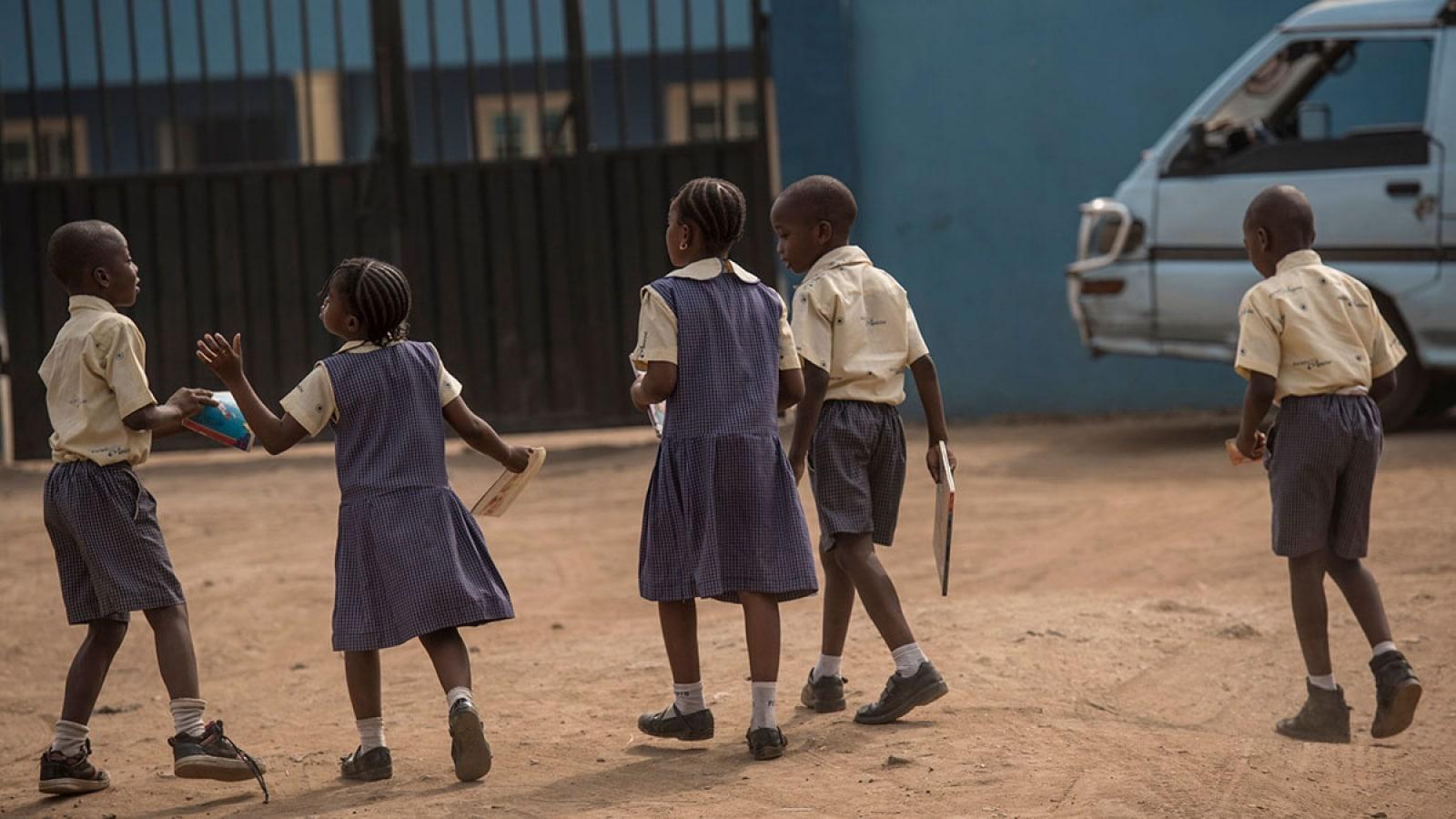
Africa-Press – Nigeria. The Lagos State Government has commenced moves to introduce a unified academic calendar for the 2026/2027 session for both public and private schools across the state.
A statement issued by the Lagos State government said the process was flagged off on Wednesday during a stakeholders’ meeting organised by the Office of Education Quality Assurance (OEQA) at the NUT Pavilion in Alausa, Ikeja.
Speaking at the meeting, the Commissioner for Basic and Secondary Education, Mr. Jamiu Tolani Alli-Balogun, called for stronger cooperation among stakeholders, stressing the need for accountability, teamwork and strict adherence to laid-down standards in schools.
He explained that the proposed calendar, when finalised, would be compulsory for all schools, covering key areas such as teaching periods, holidays and examination timelines.
According to him, the initiative is designed to promote uniformity across the education system and improve learning outcomes, noting that inclusive participation is vital for lasting progress.
Also speaking, the Permanent Secretary, Mrs. Abisola Dokunmu-Adegbite, described a harmonised academic calendar as essential for continuity, efficiency and long-term planning in the education sector.
Represented by the Director of Basic Education, Mrs. Oluwatoyin Oyedele, she urged stakeholders to contribute practical and workable ideas that would strengthen the process.
On his part, the Director-General of OEQA, Dr. Sulaimon Olagoke Ogunmuyiwa, stressed the importance of full compliance, warning that inconsistencies could weaken quality assurance efforts. He added that monitoring would be intensified to ensure adherence across schools.
Ogunmuyiwa also reaffirmed the agency’s commitment to better service delivery through its S.C.R.I.P.T.S framework, which focuses on staff capacity, collaboration, revenue, governance, professionalism and technology.
“Our vision is to become the leading educational quality assurance agency in Africa. Already, within Nigeria, people come to study what we do. But the key target is to be the best quality assurance agency in the world” Ogunmuyiwa said.
Earlier, the Director of Planning, Research and Statistics at OEQA, Mrs. Evelyn Pelemo, said the meeting marked the starting point of the calendar development process, aimed at gathering inputs, addressing emerging challenges and drawing up initial options for the 2026/2027 academic session.
She noted that the approach would ensure that the final calendar is practical, workable and widely accepted.
In his presentation, the Head of Policy, Planning and Training unit, Mr. David Ojelade, highlighted the importance of the academic calendar in maintaining order, coordination and efficiency within the school system.
He outlined key guidelines for the development process, including minimum instructional days, structured term periods, public holidays and breaks, as well as final validation.
Stakeholders at the meeting commended the initiative, noting that a unified calendar would create a smoother academic experience for students, teachers and parents.
Participants at the meeting included representatives of the Nigeria Union of Teachers (NUT), Lagos State Universal Basic Education Board (LASUBEB), Association of Providers of Education in Nigeria (APEN), All Nigeria Conference of Principals of Secondary Schools (ANCOPSS), and the Association of Primary School Head Teachers of Nigeria (AOPSHON).
Others in attendance were officials from the Lagos State Technical and Vocational Education Board (LASTVEB), League of Muslim Proprietors (LEAMPS), Catholic Mission Schools, West Africa Examination Council (WAEC), Ministry of Health, and Government Model College, Ikorodu, among others.
For More News And Analysis About Nigeria Follow Africa-Press