

Abba Hamisu Sani
Africa-Press – Nigeria. The Senate and house of representative chambers are the legislative organ of the Nigerian Government. The two chambers comprises 109 senators and 360 members of the house of representatives.
By virtue of the Nigerian constitution each out of the 36 states of the Country has three senators while Federal Capital Territory as the Nation’s Capital has one senator.
The election of members of the two chambers is conducted alongside the Presidential election.
The February 25th 2023 election produced a new set of legislatures that will serve for four years.
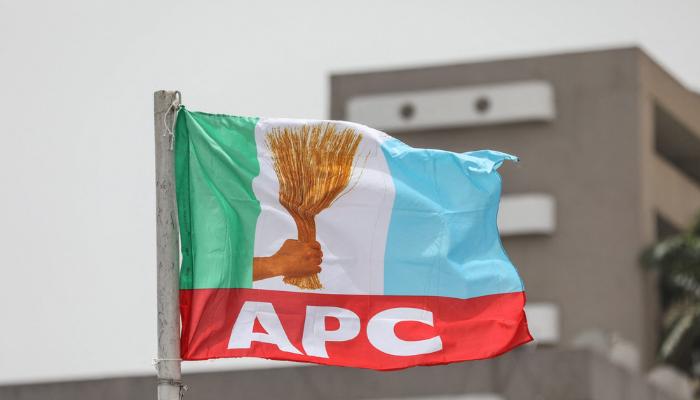
According to the outcome of the February election as announced by the Independent National Electoral Commission the ruling All Progressives Congress has the highest number of the legislatures .
So far, only seven of the 18 political parties in the country have at least a member in the Senate.
The parties are ;the All Progressives Congress (APC), the Peoples Democratic Party (PDP), the All Progressives Grand Alliance (APGA), Social Democratic Party (SDP), Labour Party (LP), New Nigeria Peoples Party (NNPP) and the Young People Party (YPP).
As it stands, the ruling APC retains the majority members in the Senate with 57 seats while the PDP got 29 seats.
The LP has six seats, NNPP and SDP have two seats each. APGA and YPP have one each. With this outcome the 10th National Assembly can be described as the most diverse Assembly.
With the ruling Party dominance which kind of Assembly should Nigerians expect?
By June this year the 10th Assembly will be inaugurated shortly after May 29 when Tinubu will be sworn in as President.
The 10th House will witness a plethora of new members amid the returnees. Apart from some high profile individuals such as Senate President Ahmed Lawan , Speaker Femi Gbajabiamila, his deputy, Hon. Idris Wase and other old lawmakers in the outgoing 9th assembly, others will be new members. This is consequent upon the disruptions caused in the political firmament by the Labour Party and New Nigeria People’s Party.
Though all the results from the National Assembly elections are not fully out, what is however known is that the ones already declared are giving the APC a comfortable lead to form the majority.
PDP to battle minority with Labour Party and NNPP at the lower chamber
Prior to now, the House belonged to the ruling APC and the main opposition party, the PDP. Members from the All Progressives Grand Alliance (APGA) and the African Democratic Congress (ADC) may be one or two respectively. But with the new development, the PDP is likely to contest the minority slot with the PDP , Labour Party and the New Nigeria People’s Party (NNPP) which has also recorded victories especially in Kano State.
With the majority at both upper and lower chambers the ruling APC has every opportunity at its disposal to make laws that can change the situation of bad economy ,insecurity , power generation and create more job opportunities for the teaming population.
During the outgoing 9th National Assembly under the leadership of senator Ahmed Lawan as senate President and Femi Gbajamila as speaker of the House of representatives the legislative arm of the Government considered to be like a rubber stamp to the Presidency under Buhari unlike the 8th Assembly under senator Bukola Sarki and Yakubu Dogara who stay firm as Independent arm of Government.
Dr. Ibrahim Matazu Suleiman is a Political Scientist and a lecturer with Department of Political ScienceUmaru Musa Yar’adua University Katsina.
He said the essence of having three arms in a Democratic system of Government that include ; Executive ,legislature and Judiciary is to ensure checks and balances and to prevent concentration of power to one single institution or Individual.
The analyst said one of the functions of legislatures is to check the excesses of the executives especially when the arm want to do something which is not the aspirations of the majority is the duty of the legislatures to take action by calling them to order and make sure it is done according to the will of the majority of the populace.
He said usually the executive, particularly the President, play a vital role in making the leadership of the National Assembly in Nigeria right from the election level up to the selection of the leaders of the two chambers of the National Assembly senate and House of representatives.
Dr. Matazu added that the executive made sure that only their loyalists emerged from the legislative arm for their interest to be always protected.
The political scientist stated that with APC having the majority at the National Assembly the Presidency will have influence on the law makers and added that the last Assembly (9th Assembly) will probably be better than the 10th National Assembly .
How ever according to some reports the battle for the leadership of the National Assembly have already started underground as the incumbent senate President Ahmed Lawan, former Abia State Governor Orji Kalu ,former Akwa Ibom state Governor God’s will Akpabio and a three term senator from Kano Barau Jibrin are all eying for the senate President position.
For More News And Analysis About Nigeria Follow Africa-Press