Africa-Press – Rwanda. African infrastructure and small business projects could attract more private investment if developers make full use of artificial intelligence (AI) and drone technology, investors said during the Africa Investment Forum (AIF) in Rabat, Morocco, on 26 November.
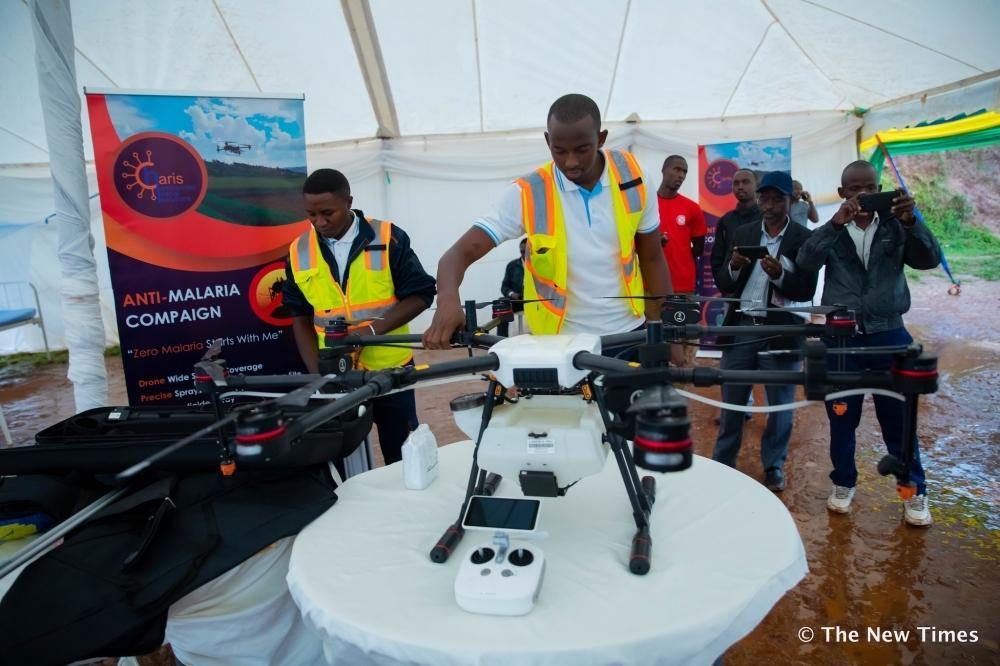
They highlighted that drones could survey up to 300 kilometres underground, mapping pipelines, tunnels, and other hidden structures without the need for costly excavation.
When paired with AI-generated 3D models, developers can visualise projects in detail, test different scenarios and detect risks before construction begins, making projects faster, more efficient and ultimately more attractive to investors.
“This technology allows project developers to create digital twins of roads, energy installations and urban infrastructure before they exist, giving investors precise, real-time data on costs, timelines and potential challenges. This is key to de-risking projects that often struggle to secure financing,” said William Kwende, Board Advisor at Equiline Group.
“Many African projects fail to reach bankable status simply because data and planning are insufficient. By harnessing AI and drones, we can make early-stage infrastructure and SME projects much more credible to investors, accelerating financing decisions,” he added.
Cheng Liang, the Senior Executive Director at the Silk Road Fund, said that these technologies become even more powerful when paired with coordinated project pipelines, creating structured sequences of projects that follow a clear strategy.
“It’s not just about reducing risk, it’s about building projects that are replicable and scalable, with standards investors can trust. AI and digital twins give us the accuracy and transparency needed to present well-prepared projects, which is exactly what investors look for before committing capital,” he said.
Moses Manuel, the CEO, African Trade and Investment Development Insurance (ATIDI), said that technology adoption can also help address fragmentation which is one of Africa’s biggest investment hurdles.
“The lack of coordination across Africa’s investment landscape, from differing regulations and scattered project data to unaligned infrastructure planning and small, separate markets, makes it difficult for investors to assess risks and commit capital,” he noted.
Manuel highlighted that tapping into technology can help bridge these gaps by standardising information, improving transparency and giving investors a unified, reliable view of project quality, ultimately speeding up financing decisions.
With Africa’s infrastructure gap estimated at $200 billion annually, technology-driven planning could fast-track funding, especially for renewable energy, transport, and urban development projects. Investors could finally access reliable data that turns ambitious African projects into bankable opportunities.
Khalid Al-Mana, the Vice-President of Enterprise Development at Qatar Development Bank said that technology alone is not enough to make all changes. Real transformation, he said, requires strong institutions, coordinated support systems, and clear governance structures that allow AI tools to function at scale.
“Africa’s ambitions to use drones, 3D digital twins and AI modelling to accelerate project preparation will only succeed if countries build the right foundations. Because AI does not work in fragmented systems, the continent needs institutions that can see the private sector end-to-end, from the idea stage all the way to export readiness,” he said.
He explained that Qatar’s own development journey, which saw the country transform its infrastructure within a decade, was enabled by a one-stop institutional model that provided full visibility across the SME ecosystem. That structure, he argued, is what allows countries to deploy modern tools quickly and efficiently.
“What helped us move fast was governance and a single point of accountability. When one institution oversees incubation, financing, venture capital and export promotion, it becomes possible to adopt advanced technologies that shorten timelines and reduce risk.”
Africa’s ability to attract large-scale private capital, he added, increasingly depends on how well its governments can combine institutional capacity with technology.
For More News And Analysis About Rwanda Follow Africa-Press