Africa-Press – Rwanda. Rwanda is set to take a step toward the future of finance as the pilot phase of the Central Bank Digital Currency (CBDC) is scheduled to begin next year, the Governor of the National Bank of Rwanda, Soraya Hakuziyaremye, has revealed.
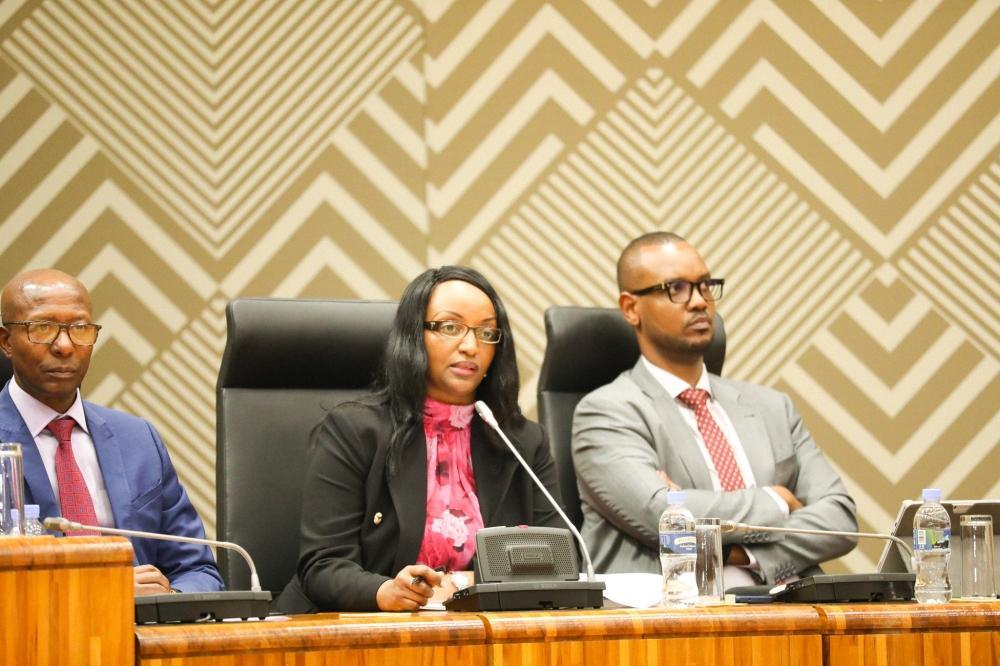
The announcement was made on December 1 during a joint session of both chambers of Parliamentduring which the Governor presented the Central Bank’s annual report for 2024/2025.
She explained that the pilot project will initially focus on employees within the financial sector, with subsequent phases extending to the public and commercial traders.
“Next year, the trial will begin with financial sector staff, and we will also test cross-border transactions to assess both efficiency and costs,” Governor Hakuziyaremye told lawmakers.
She added that reports from these preliminary tests will inform the launch of the pilot phase for the general population and traders.
The CBDC is expected to open opportunities for Rwandan traders, particularly those exporting goods to markets such as China, Nigeria, and Ghana.
“By enabling seamless transactions across borders, the digital currency could reduce costs and increase speed, positioning local businesses to compete more effectively on the international stage,” she added.
Rwanda’s experience with cashless payment systems demonstrates the potential of digital financial tools.
According to the Central Bank, shared mobile money services, such as eKash, have surged by 301 percent by June 2025, reaching a total value of Rwf37.7 billion.
“Digital payments have remained stable and highly efficient, with over 99 percent of transactions successfully completed, while mobile-based payments rose by 57 per cent in value and 44 per cent in transaction volume; also online banking services also grew steadily, by 7 per cent in value and 15 percent in volume,” added Hakuziyaremye.
Move to enhance innovation
The CBDC is part of BNR’s broader strategy to advance financial innovation and inclusion.
The Central Bank has been developing the digital currency in collaboration with Rwanda Finance Limited and the Global Finance and Technology Network.
This includes participation in the Inclusive Fintech Forum 2025, which brought international experts together to share insights on digital finance and inclusive technology.
In August, BNR launched a retail CBDC ideathon, inviting fintechs, startups, and innovators to contribute ideas that could shape the future of digital currency in Rwanda.
The ideathon, conducted in partnership with German tech firm Giesecke+Devrient (G+D), is part of the proof-of-concept phase, which is the second of five stages outlined by the International Monetary Fund (IMF): preparation, proof-of-concept, prototype, pilot, and production.
CBDC will be a digital form of the Rwandan franc that holds the same legal status as physical cash. It can be retail-focused for general public use or wholesale-focused for interbank transactions.
Unlike cryptocurrencies, which are unregulated and volatile, CBDC is centrally issued, fully backed by legal tender, and guaranteed for merchant acceptance.
BNR’s research highlighted four key benefits of CBDC adoption, including ensuring resilience by enabling offline transactions during outages, fostering innovation and competition as a low-cost alternative to mobile money, reducing cash handling costs projected at $35 million by 2027, and facilitating faster, cheaper, and more transparent cross-border remittances, integrating with regional payment systems like East African Payment System (EAPS).
Senator Bibiane Mbaye Gahamanyi noted that before the digital currency is fully in use, cross-border payments would utilize CIPS (Cross-Border Interbank Payment System).
She explained that CIPS is a payment system designed to enhance the efficiency of transactions in Chinese yuan (RMB).
“Unlike SWIFT, which functions as a messaging network, CIPS provides clearing and settlement services, making RMB transactions faster and more cost-effective,” she said.
The Governor indicated that studies are underway to assess how CIPS could complement existing systems like SWIFT, further facilitating trade and investment with China and other countries.
BNR’s ongoing CBDC feasibility study also examined the broader financial ecosystem in Rwanda, which now includes banks, microfinance institutions, insurance companies, pension funds, and payment service providers.
The study evaluated functional, technical, economic, legal, and financial perspectives, while identifying opportunities and risks.
Findings so far suggest that CBDC could reduce costs, enhance efficiency, and complement existing cashless systems, but public adoption remains a key factor requiring further research and education.
The central bank assured that the digital currency will not replace cash or cards but will offer an additional, secure, and inclusive payment option.
For More News And Analysis About Rwanda Follow Africa-Press