Africa-Press – Rwanda. We are going to enjoy it as oncologists,” says Dr. Theoneste Maniragaba, an oncologist at Rwanda Military Hospital (RMH), commenting on the nuclear medicine services soon to be introduced in Rwanda.
According to him, oncologists have often faced significant challenges in determining the exact stages of cancers due to technological limitations in the country.
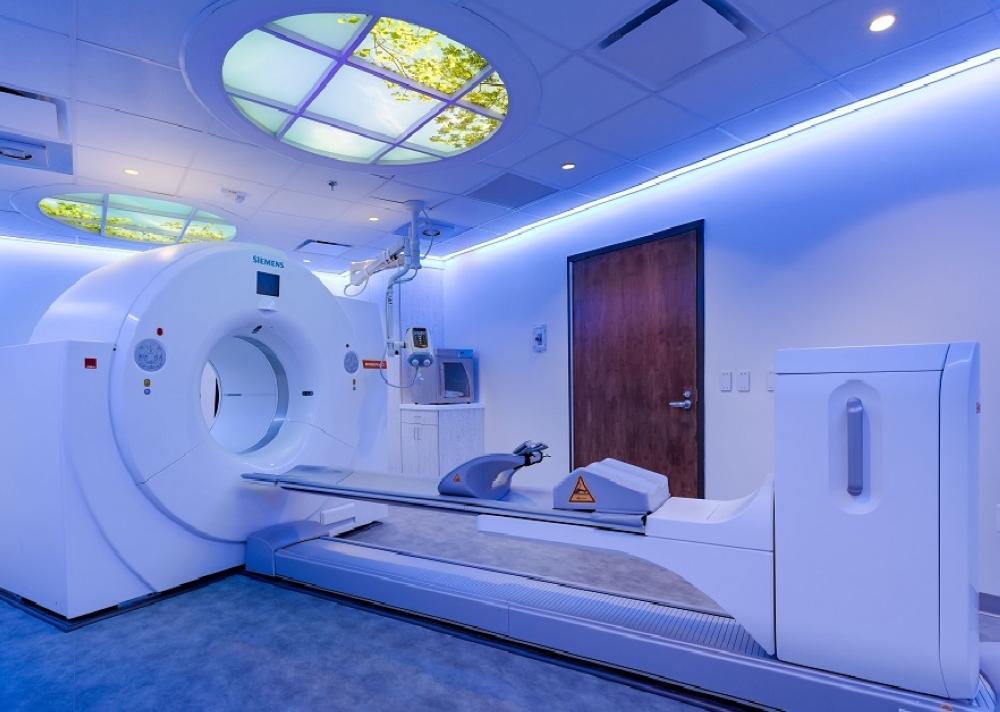
Nuclear medicine, which uses advanced technologies such as the Positron Emission Tomography (PET) scan, is expected to be rolled out at RMH. This follows a government announcement last week confirming the approval of a partnership with Aegle Onco Care Center Ltd, a Mauritian health services institution.
Broadly, nuclear medicine is a specialised medical field that uses small amounts of radioactive materials, known as radiotracers, to diagnose and treat diseases by observing physiological functions and cellular activity inside the body.
The radiotracers may be injected, swallowed, or inhaled, and their distribution is then captured by a special camera that produces detailed images of the body’s internal structures.
Talking about the importance of the advancement, Dr. Maniragaba, who also serves as the Director of the National Cancer Control Plan at Rwanda Biomedical Center (RBC), said the technology will bridge a critical gap in the country’s healthcare system.
“The most immediate impact of nuclear medicine is the ability to offer advanced diagnostic services domestically,” he said, explaining that previously patients who were required to have detailed scans had no option but to travel abroad.
“We have many Rwandans whom we send to our neighbouring countries or even India, and Europe for tests, looking for precision on cancer diagnosis. It was difficult for the patient to go.”
He pointed out that bringing such services home removes the stress of travel for patients who are often already in poor health.
“If you want to send a patient to Nairobi for tests, it will take around one week,” he explained, pointing out that the process is not very easy for the patients.
“This time around, if your doctor prescribes a test, it will be just taking one day.”
Beyond patient care, nuclear medicine is expected to have a good effect on Rwanda’s economy, saving millions of francs that were previously spent on foreign medical bills, flights, and so on.
In addition, it positions the country well towards becoming a medical hub in the region, attracting patients from the region.
The introduction of nuclear medicine will also promote medical education, he noted.
“We are going to start teaching nuclear medicine in our country,” Maniragaba stated. This means that medical students and residents specialising in cancer and radiology will no longer need to go abroad to complete their education.
For More News And Analysis About Rwanda Follow Africa-Press