Africa-Press – Rwanda. Kigali’s transition to a service-led public transport model is already reshaping the commuter experience, something I witnessed first-hand during a peak-hour trip this week. Launched on Tuesday, December 2, the new model is designed to improve reliability, streamline fleet management, and support the city’s shift toward greener transport.
PHOTOS: Kigali introduces exclusive bus lanes to improve public transport
During a peak-hour trip around 17:00 on Tuesday, the changes were immediately noticeable. At exactly 17:14, a bus pulled into the Downtown bus park empty, but ready to depart on schedule. By 17:23, it was already on the move with about about 45 passengers on board. Unlike the old system where buses waited indefinitely to fill up to 70 passengers before departure, the new model prioritises fixed schedules over passenger headcount.
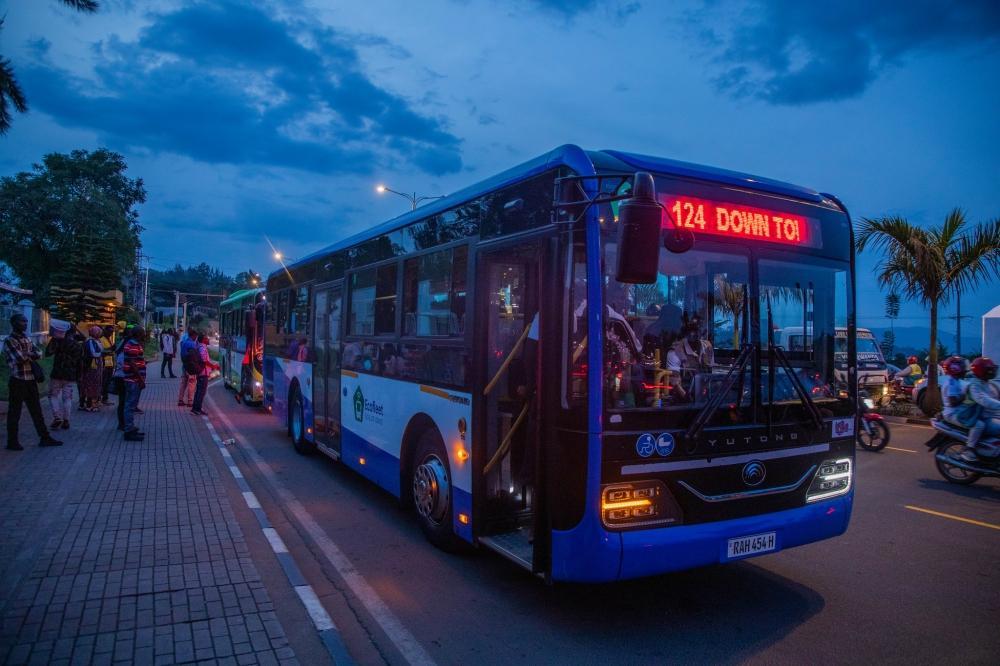
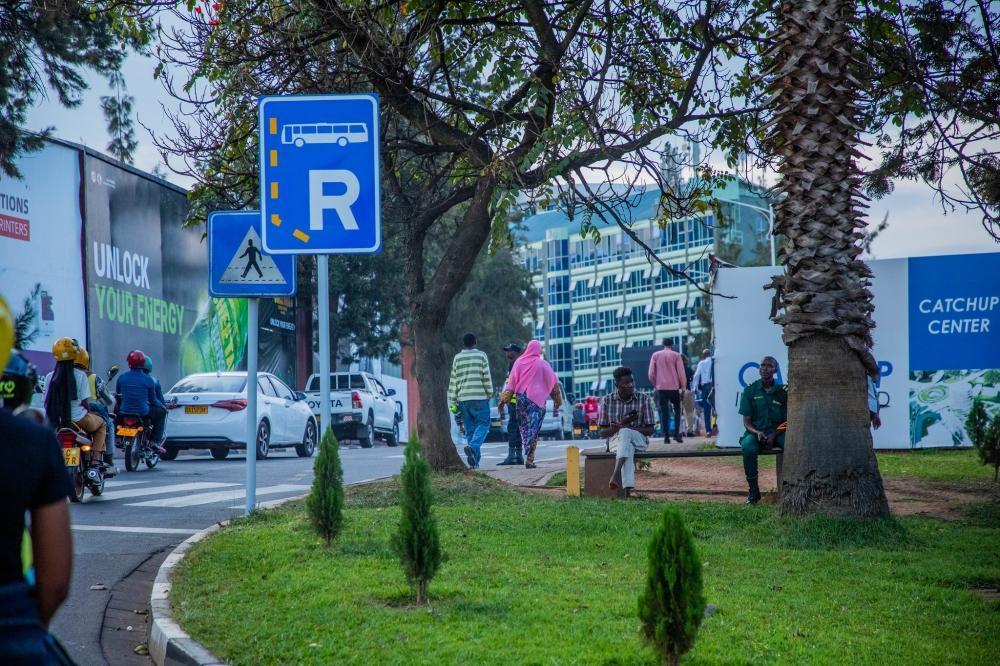
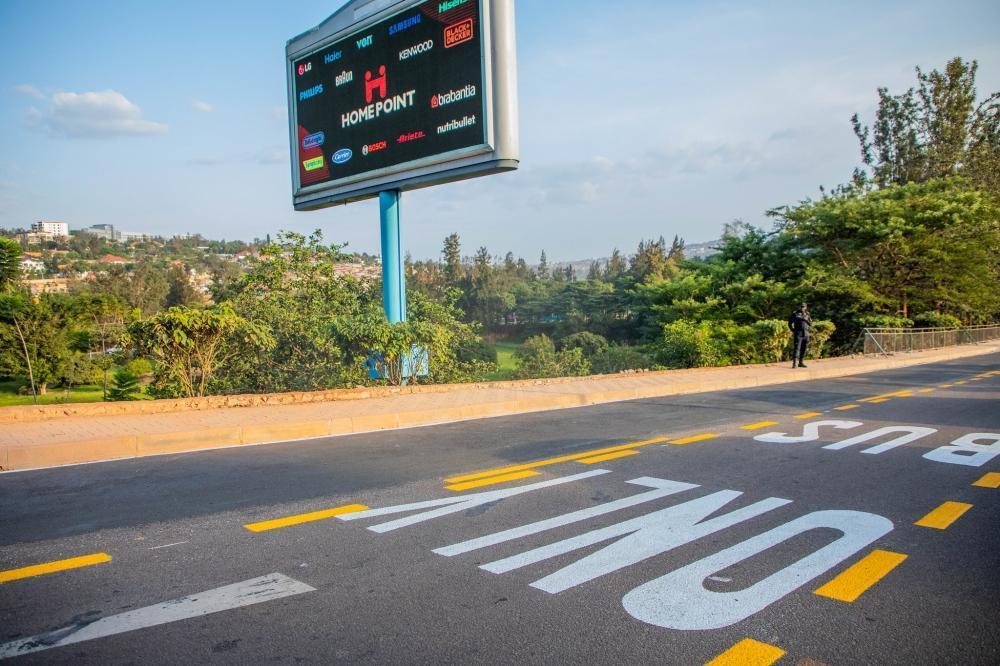
A bus leaving the Downtown Bus Park on December 2. New road signs marking bus-only lanes have been installed along the route to guide drivers and support the enforcement of Kigali’s updated public transport rules.
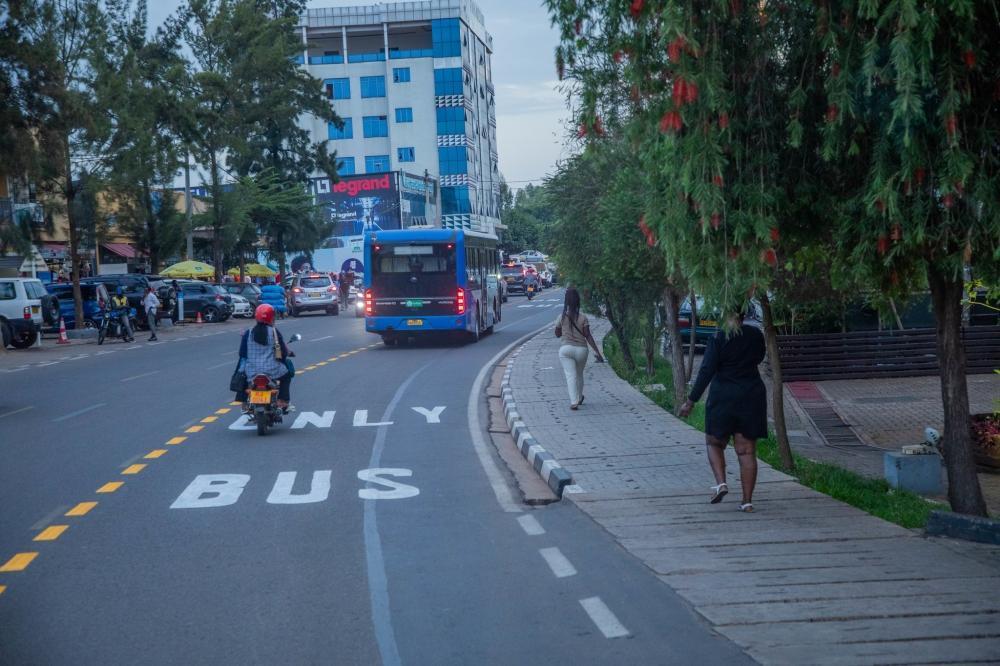
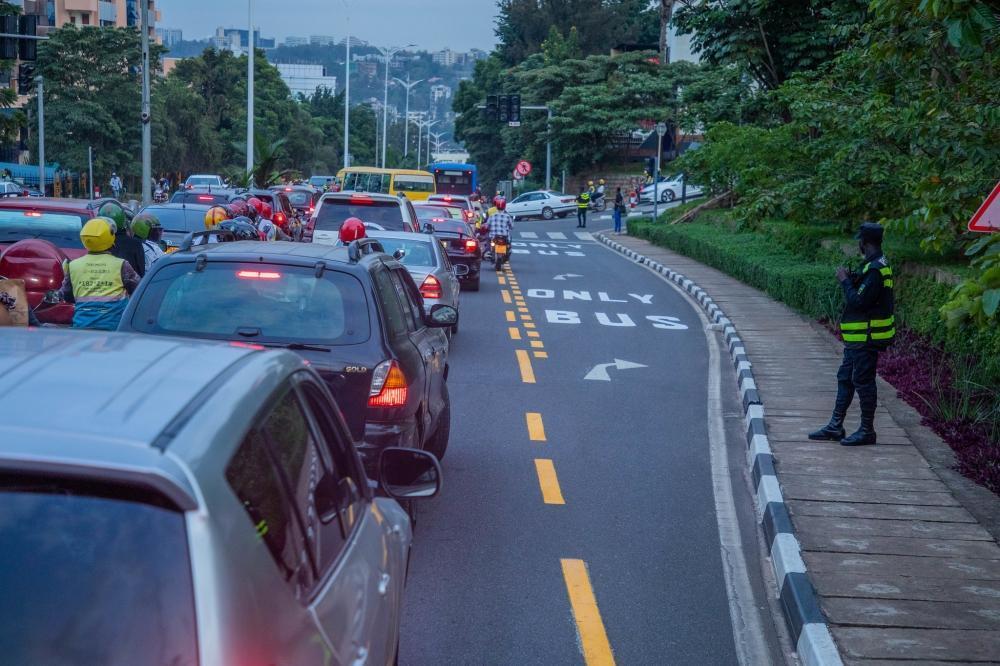
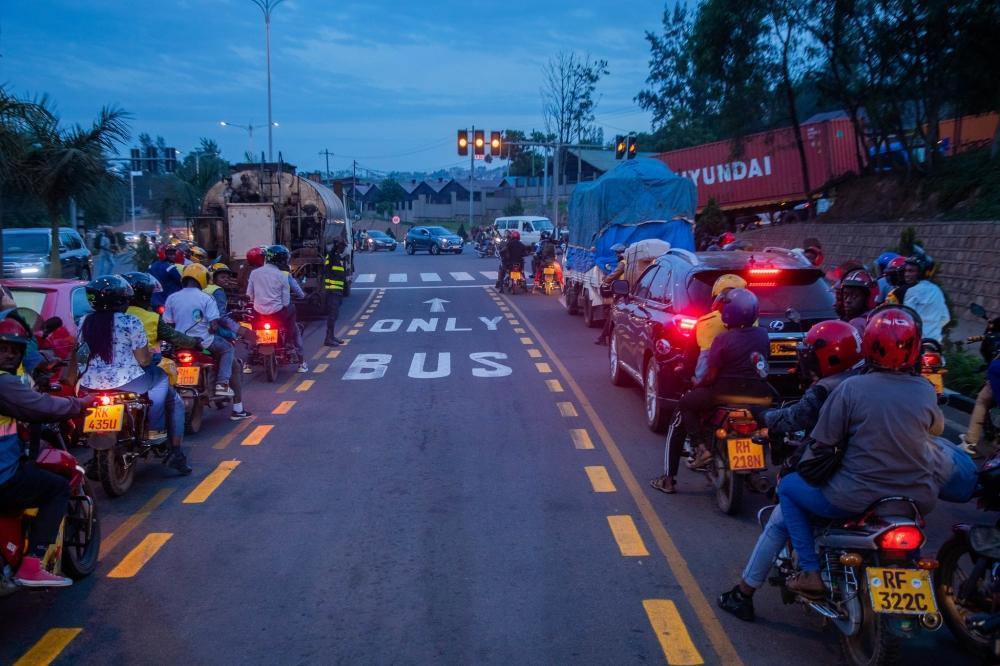
As soon as the bus exited the bus station and joined the dedicated bus lane, the difference was striking. The lane was completely clear, only a few motorcycles that quickly moved aside. The stretch from Downtown to the city centre roundabout, which typically drags during rush hour, took less than five minutes. The uninterrupted flow emphasised exactly why the city has invested in priority lanes.
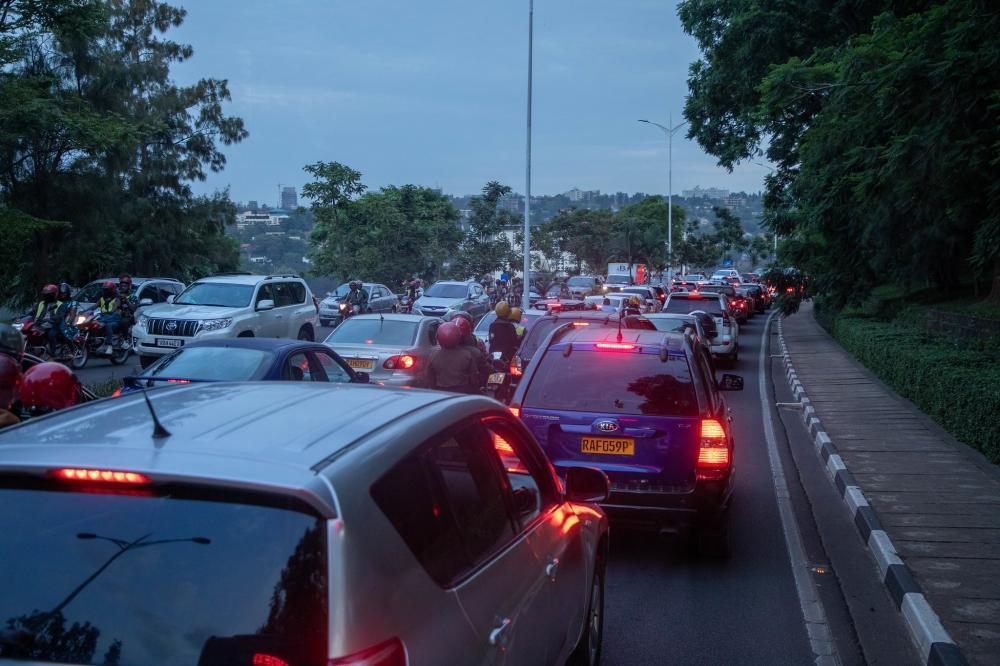
Traffic briefly built again once the bus merged back into mixed traffic on sections without dedicated lanes. But the relief was almost immediate near the Rwanda Social Security Board headquarters, where another bus-only corridor began. At the traffic lights, the bus lane turned green around 30 seconds before the lanes for private cars, giving it just enough time to slip through an area that is usually congested.
By the time the bus reached Péage at 17:45, a police officer stood on the opposite side ensuring private cars kept out of the bus lane as rush hour intensified. The pattern repeated at the Rwandex roundabout, where the lane remained exclusive, clear, and efficient. Once again, the bus was given priority to move ahead of other vehicles, by the traffic lights.
We arrived at Rwandex bus stop at about 18:00, and within five minutes the bus departed again for Remera. The dedicated lane remained a consistent advantage, and by the time we pulled into the Remera bus park, the clock read 18:37. The entire journey, from the city centre to Remera, took just 1 hour and 14 minutes, an improvement for a peak-hour weekday commute.
A police officer stood on the opposite side, ensuring private cars stayed out of the bus lane as rush hour traffic intensified. Photos by Craish Bahizi.
But the experience was not without challenges. Despite the progress on mobility infrastructure, the payment system remains unchanged. Passengers must have a Tap&Go card. Without one, boarding simply isn’t allowed. The card remains the only option for payment.
However, Jean de Dieu Uwihanganye, the Minister of State in charge of Infrastructure at the Ministry of Infrastructure, told The New Times in an interview that the government’s goal is a seamless cashless system where passengers can use any card or payment method.
This requires complex technology integration, currently being developed and tested under the Ministry of ICT. It will take time, but that is the direction, the official said.
New road signs marking bus-only lanes have been installed along the route to guide drivers and support the enforcement of Kigali’s updated public transport rules. Photos by Craish Bahizi.
For More News And Analysis About Rwanda Follow Africa-Press