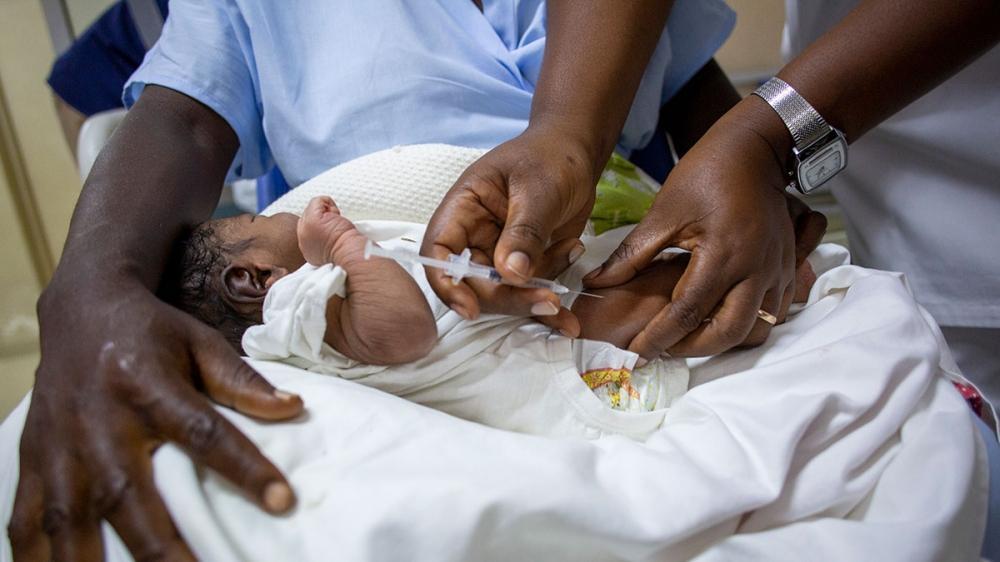
Africa-Press – Rwanda. Rwanda Biomedical Centre (RBC) has explained how it will ensure that newborns receive the hepatitis B birth-dose vaccine on time, including babies born at home or outside health facilities.
The Community Health Worker (CHW) network will be used to identify home births and link families to nearby health facilities for immediate care and vaccination, Hassan Sibomana, Director of the Vaccine Programmes Unit at RBC, told The New Times.
He noted that CHWs already monitor pregnancies and births at the village level and are expected to help ensure that newborns are vaccinated within the first 24 hours after birth.
“The community system allows us to know when a baby is born, even outside a health facility. Once a home birth is identified, the child is referred quickly to the nearest facility so the hepatitis B birth dose can be administered within 24 hours,” Sibomana explained.
He noted that RBC has conducted orientation workshops and follow-up training for Community Health Workers and Community Environmental Health Officers, with a focus on early identification of births, referrals, and follow-up.
Sibomana explained that RBC has expanded vaccination points to include health posts and private clinics, reducing distance and access challenges for families.
“Health workers across the country have received extra training to support the rollout of the hepatitis B birth-dose vaccine. District vaccination supervisors, hospital matrons, and private clinic representatives were trained first, followed by nurses and midwives in both public and private facilities.”
He added that the training covered vaccine administration, storage and handling, and safety monitoring.
Sibomana noted that health workers were also trained to report adverse events following immunization using the Vigi-Mobile system and to register vaccinated newborns in the national electronic tracker, known as e-tracker.
Vaccine stock management is handled through the electronic Vaccine Logistics Management Information System.
“We wanted health workers to be clear on every step, from administering the vaccine to recording the data. If data is not captured properly, it becomes difficult to know which children have been reached,” Sibomana said.
He added that the vaccination coverage will be monitored through existing national data systems, noting that all vaccinated newborns are registered in the e-tracker, and coverage is calculated by comparing vaccination records with live birth data. The system is linked with the Civil Registration and Vital Statistics (CRVS) platform, making it easier to compare and verify records.
Sibomana noted that the collected data from e-tracker and the Health Management Information System (HMIS) will be used to report hepatitis B birth-dose coverage at both district and national levels. Supportive supervision visits will continue, and routine data quality review meetings at the hospital level will assess progress and address gaps.
The RBC official added that the birth-dose rollout will be followed by a post-introduction evaluation to review coverage, data quality, and early implementation challenges. The evaluation will inform adjustments to service delivery where needed.
He added that a knowledge, attitudes, and practices survey is planned to assess community awareness and acceptance of the vaccine.
“The birth-dose vaccine is part of Rwanda’s broader plan to eliminate hepatitis B. The country is targeting coverage of more than 90 per cent for the birth dose while maintaining high coverage of the routine infant vaccine doses. The aim is to reduce chronic hepatitis B infection among children under five years to below one per cent by 2030,” he said.
According to Sibomana, the vaccine introduction is also linked to efforts to eliminate mother-to-child transmission of HIV, syphilis, and hepatitis B through coordinated maternal and child health services.
“To support the rollout, RBC has strengthened vaccine storage and supply systems at health facilities. Refrigerators have been installed in hospital maternity wards specifically for hepatitis B vaccines, and tablets have been provided to support real-time registration of vaccinated newborns in the e-tracker.
“Vaccine availability is monitored through the electronic Vaccine Logistics Management Information System to ensure doses are in stock when births occur.”
For More News And Analysis About Rwanda Follow Africa-Press