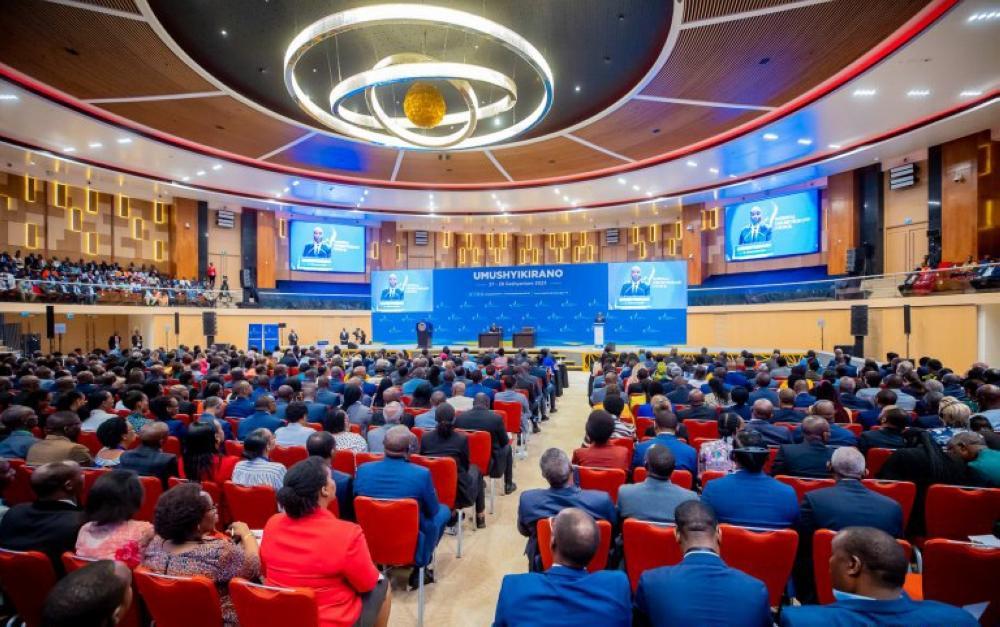
Africa-Press – Rwanda. The National Dialogue Council, commonly and locally known as Umushyikirano, will return to the country’s annual calendar on February 5 and 6, after a one-year break.
As has become tradition, the forum brings together hundreds of public leaders and thousands of Rwandans from all walks of life for a carefully curated programme dedicated to discussing the state and future of the nation.
Past editions have demonstrated that Umushyikirano provides a unique space where ordinary citizens sit with their leaders, led by the Head of State, to engage in honest and open conversations on issues that matter most.
The discussions focus on improving the daily lives of Rwandans, including access to healthcare, education, quality infrastructure, and social protection, while also advancing the country’s broader economic development and transformation agenda.
The 2024 edition was particularly significant, as it marked 30 years since Rwanda endured its darkest chapter, when more than a million innocent lives were lost during the 1994 Genocide Against the Tutsi.
It offered a moment for both citizens and leaders to reflect on how far the country has come, acknowledging the pain and struggles endured, the unity forged, the resilience built, and the extraordinary task of rebuilding a nation from scratch.
It was also an opportunity to recognise the gains made over the past three decades. Crippled infrastructure has been restored, access to education has expanded significantly with major improvements in quality, and universal access to healthcare has been rolled out.
Rwanda has also diversified its economy, with growth in tourism and aviation, while positioning itself as an attractive destination for investment across multiple sectors.
Umushyikirano is derived from the word “Gushykirana” which implies “dialogue” or “consultation.” Historically, Gushyikirana was a big part of Rwanda’s governance tradition where consensus-building and collective problem-solving was a norm for the society.
It was a way through which leaders and their people had dialogue – not a one-decided conversation, and leaders engaged their constituencies, but also listened before deciding.
Even in pre-colonial Rwanda, Kings, chiefs, and other lineage heads routinely consulted elders and notables, heard grievances from their subjects, and deliberated on issues ranging from land use and security to social obligations.
This year’s Umushyikirano should therefore serve as a platform for Rwandans and their leaders to collectively assess what is needed to chart the path forward—towards a country determined to attain upper-middle-income status by 2035 and high-income status by 2050.
Source: The New Times
For More News And Analysis About Rwanda Follow Africa-Press