Africa-Press – Rwanda. When Rwanda cut loan interest rates for economically vulnerable citizens from 11 per cent to just 2 per cent, the shift did not originate in a boardroom or policy document. It began with citizens raising their voices at the National Umushyikirano Council.
During the 16th National Dialogue in December 2018, participants flagged high interest rates as a major barrier to accessing government-supported loans intended to lift households out of poverty. The concerns gained traction, prompting government action.
Since 2019, loans carrying a subsidised 2 per cent interest rate have been disbursed to eligible beneficiaries, according to the Local Administrative Entities Development Agency (LODA), which oversees social protection programmes.
The reform illustrates what Umushyikirano, launched in 2003 has become: a forum where citizen concerns translate into concrete policy change.
The 20th edition of Umushyikirano started on Thursday, February 5 and concludes on Friday, 6 at the Kigali Convention Centre.
A benchmark for accountability
Member of Parliament Christine Mukabunani describes Umushyikirano as a powerful accountability mechanism that extends beyond public dialogue into formal oversight.
“Resolutions adopted during Umushyikirano are followed up by Parliament and used as benchmarks during our oversight activities,” said Mukabunani, who also chairs the PS Imberakuri political party, an opposition political party.
She noted that the forum provides a rare opportunity for citizens to directly engage national leaders, including the President and have concerns addressed immediately or referred to responsible institutions.
“This direct engagement helps identify governance gaps and ensures that previous resolutions are not forgotten,” she said.
Mukabunani cited reforms within the Business Development Fund (BDF)—later integrated into the Development Bank of Rwanda (BRD)—as an example of institutional change shaped by repeated concerns raised during Umushyikirano sessions.
Redefining democratic engagement
Rwanda’s former Ambassador to Turkey, Williams Nkurunziza, said Umushyikirano has reshaped how democracy functions in the country.
“Under President Kagame’s direct facilitation, Umushyikirano has redefined democracy as direct, accountable, and inclusive,” he said.
By bringing leaders face-to-face with citizens—from rural farmers to members of the diaspora—Nkurunziza said the forum strengthens ownership of development priorities and accelerates government responsiveness.
He noted that implementation rates of Umushyikirano resolutions frequently exceed 80 to 90 per cent, driving progress in clean water access, subsidised agricultural inputs, infrastructure development, and post-pandemic recovery.
“What begins as candid dialogue ends as measurable change, proving that inclusive debate catalyses efficient execution,” he said.
From dialogue to development strategy
Joseph Nkurunziza Ryarasa, Executive Director of Never Again Rwanda, said Umushyikirano has played a decisive role in shaping Rwanda’s long-term development trajectory.
He cited the Agaciro Development Fund, Rwanda’s sovereign wealth fund—as a landmark outcome.
“The Agaciro Development Fund, established following a citizen’s proposal at the 9th Umushyikirano in 2011, exemplifies how dialogue can translate into concrete economic transformation,” he said.
Ryarasa also pointed to the 13th National Dialogue Council in 2015, which called for the development of Vision 2050. That process later involved broad national consultations, institutionalising a pathway for subsequent medium-term strategies.
Under the first National Strategy for Transformation (NST1: 2017–2024), which was regularly monitored and adjusted through Umushyikirano, Rwanda recorded major gains.
These included electricity access rising from 34.4 per cent to over 70 per cent of households, internet coverage surpassing 97 per cent, online government services expanding from 155 to 684, the creation of 1.37 million jobs, and a 195 per cent increase in mineral exports.
Ismael Buchanan Aboui, a Senior Lecturer in Political Science and International Relations at the University of Rwanda’s School of Governance, said Umushyikirano has increasingly become a popular platform for open engagement between citizens and leaders.
He said it has also served as a catalyst for other home-grown initiatives, including Girinka (One Cow per Needy Family), performance contracts (Imihigo), and the community-based health insurance scheme, Mutuelle de Santé.
“These policies directly respond to economic and social challenges and contribute to Rwanda’s development vision while promoting efficiency,” he said.
Over time, Aboui added, such programmes have reduced reliance on foreign aid and supported the country’s pursuit of economic self-sufficiency.
Where the dialogue must improve
While acknowledging Umushyikirano’s impact, Mukabunani said the platform must continue to evolve. One concern, she noted, is limited time for citizen interventions, as panel discussions often dominate the agenda.
“Citizens have many pressing concerns, and their questions often reveal weaknesses in policy design, implementation, or enforcement,” she said.
She also urged greater focus on agriculture and livestock, where dependence on rain-fed farming leaves farmers vulnerable to climate shocks.
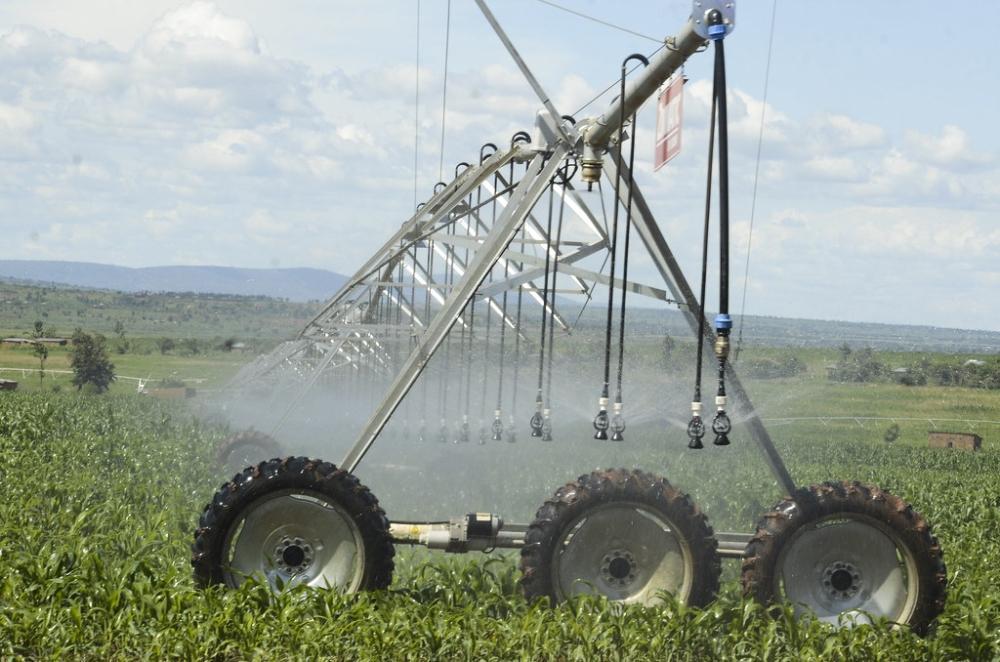
According to the Ministry of Agriculture and Animal Resources, more than 74,000 hectares of land are currently irrigated, against a target of over 132,000 hectares by 2029.
In the justice sector, Mukabunani called for effective implementation of alternatives to pretrial detention for minor offences, citing electronic monitoring mechanisms provided for under the 2019 criminal procedure law, amended in 2023. She said the system remains largely unenforced.
She further pointed to unresolved resolutions—such as compensation claims involving former Banque Populaire du Rwanda (BPR) shareholders—as evidence that follow-up must remain rigorous.
As Rwandans participate in the 20th Umushyikirano, some issues remain unresolved, Ryarasa said.
He noted that concerns over delays in business standards certification and licensing—first raised at the 18th dialogue—resurfaced during the 19th Umushyikirano.
Although the Rwanda Development Board later launched a revamped One Stop Centre to consolidate licensing services, citizens continue to report delays, pointing to persistent coordination challenges among government agencies.
Ryarasa also highlighted service delivery gaps identified in the 2025 Rwanda Governance Scorecard published by the Rwanda Governance Board (RGB).
While sectors such as justice recorded citizen satisfaction levels above 80 per cent, others lagged behind. These included agriculture, with a satisfaction rate of 55.3 per cent, and land, environment and settlement services, which recorded 59.4 per cent.
For More News And Analysis About Rwanda Follow Africa-Press