Africa-Press – Rwanda. In Rwanda, symbols rarely shout. They do not rise as towering statues or declare themselves through grand monuments. Instead, they speak quietly, carried in the objects of daily life, objects shaped by hand, patience, and memory.
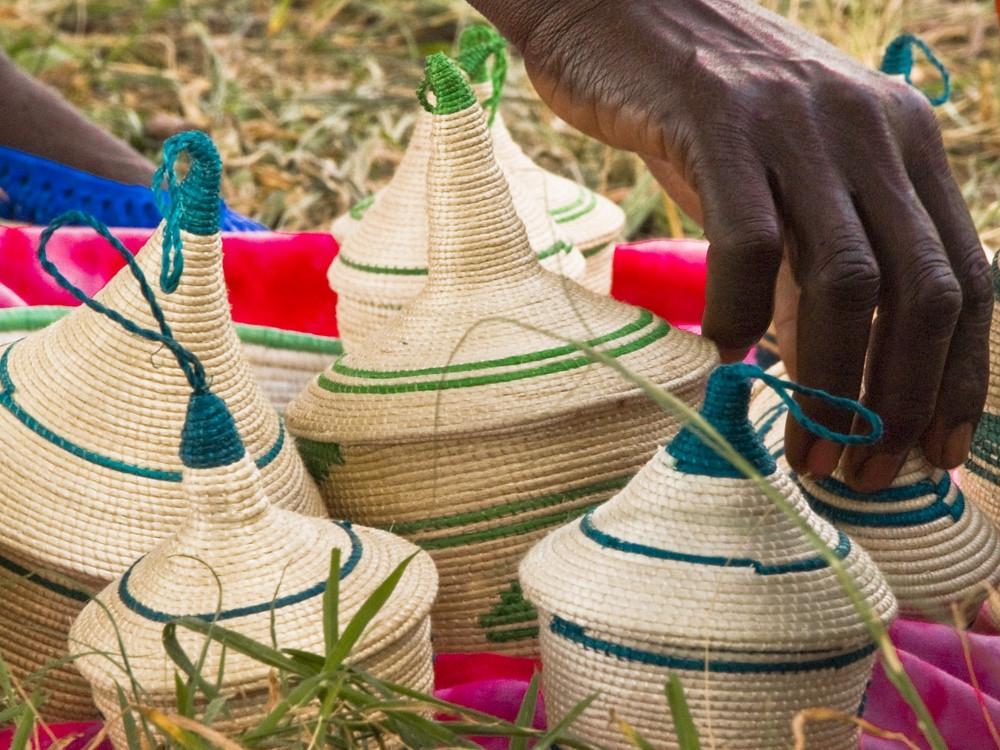
One such symbol is agaseke, the traditional woven basket that has come to represent peace, unity, and the quiet dignity of reconciliation in Rwanda. At first glance, the basket appears simple. Its spirals are elegant. Its patterns deliberate. To the casual observer, it may seem little more than a beautiful craft, an artifact of tradition preserved through generations of skilled artisans.
But in Rwanda, an agaseke carries more than beauty. It carries meaning.
For centuries, Rwandan women wove these baskets not only as household vessels but as gestures of hospitality. The basket was given in moments of welcome, of celebration, of reconciliation. To offer an agaseke was to extend trust. It was to acknowledge relationship. It was to say, quietly but unmistakably: we belong to one another.
Over time, this humble object came to embody something larger than craft. It became a reminder that strength is rarely the work of a single hand. That societies endure not through force alone, but through patience, cooperation, and the willingness of people to bind their lives together.
Then history intervened. In 1994, Rwanda faced one of the darkest chapters in human history during the 1994 Genocide against the Tutsi. The violence did not simply destroy lives. It fractured the delicate bonds that hold communities together. When the genocide ended, the country confronted a task almost impossible to describe: rebuilding not only institutions and infrastructure, but trust itself.
That kind of rebuilding cannot be legislated into existence. It must be practiced. It must be lived. And in many ways, the quiet wisdom of agaseke offered a lesson in how that work might begin.
Because the strength of the basket lies not in a single strand, but in the way many fragile fibers are patiently woven together. Alone, each thread bends easily in the hand. Together, they form something capable of holding weight.
A society, it turns out, is not so different. In the years that followed the tragedy of 1994, Rwanda began the long process of weaving itself back together. Across the country, women gathered in cooperatives to weave baskets once again. What might appear, at first glance, as simple craft carried deeper meaning. The act of weaving became an act of renewal.
Thread by thread. Conversation by conversation. Community by community. Something stronger began to take shape.
Yet renewal alone is never enough. A nation cannot remain forever in the posture of recovery. There comes a moment when survival, however hard-earned – can no longer be the horizon of a people’s ambition.
That moment has arrived.
At a recent diplomatic corps dinner in Kigali, President Paul Kagame spoke with characteristic clarity about the path forward. Addressing assembled diplomats, he offered a simple but powerful reminder: “Make no mistake, Rwanda wants peace, but we want a genuine and lasting peace, on which we can build our future prosperity.”
The distinction matters.
Peace is a word often spoken in the language of diplomacy. But the kind of peace capable of sustaining a society cannot be superficial. It cannot be loosely assembled or hastily declared. It must be carefully constructed, layer by layer, strand by strand until it is strong enough to hold the weight of a nation’s future.
In this sense, an agaseke offers more than symbolism. It offers instruction. The weaver knows that the pattern cannot be rushed. Each strand must find its place. Each layer must strengthen the one beneath it. Remove too many threads, or weave them carelessly, and the vessel weakens.
The same is true of nations.
Across Rwanda, the quiet work of building that strength continues every day, in classrooms, in farms, in marketplaces, and in the shared institutions that bind citizens together. The work is rarely dramatic. It seldom makes headlines. But it is steady, deliberate, and deeply purposeful.
Because the goal is no longer merely to rebuild what was lost. The goal is to build something stronger. Something lasting. Something capable of carrying the hopes of generations yet to come.
This is the deeper promise woven into the agaseke. Not simply that communities can endure hardship but that they can move beyond it. Not merely that peace can be restored but that it can become the foundation for prosperity, dignity, and shared possibility.
In other words, we want to live – not merely to survive. To live is to build with confidence. To dream without apology. To invest in a future that is larger than the shadow of the past. And like the basket itself, that future will not appear all at once. It will be woven. Patiently. Deliberately. Together.
Laura Noella Rwiliriza is a communication specialist who continues to work across both the private and public sectors.
For More News And Analysis About Rwanda Follow Africa-Press