Africa-Press – Rwanda. Rwanda has reached a staff-level agreement with the International Monetary Fund (IMF) for a $250 million (Rwf365 billion) support programme over the next 38 months.
The agreement follows a two-week IMF mission to Rwanda, and the programme remains subject to approval by the IMF Executive Board in June.
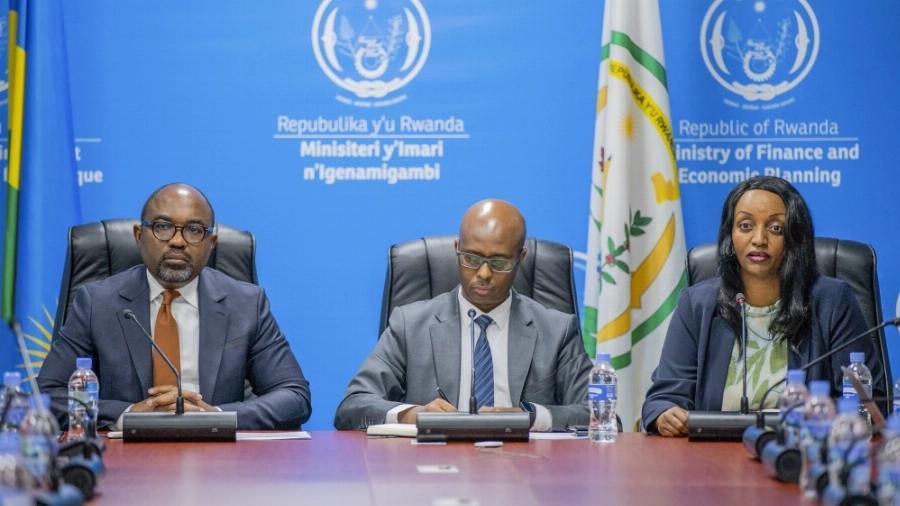
(L-R) IMF team representative Albert Touna Mama, Finance Minister Yusuf Murangwa and Central Bank Governor Soraya Hakuziyaremye during a press conference on Thursday, April 2. Photos by Kellya Keza
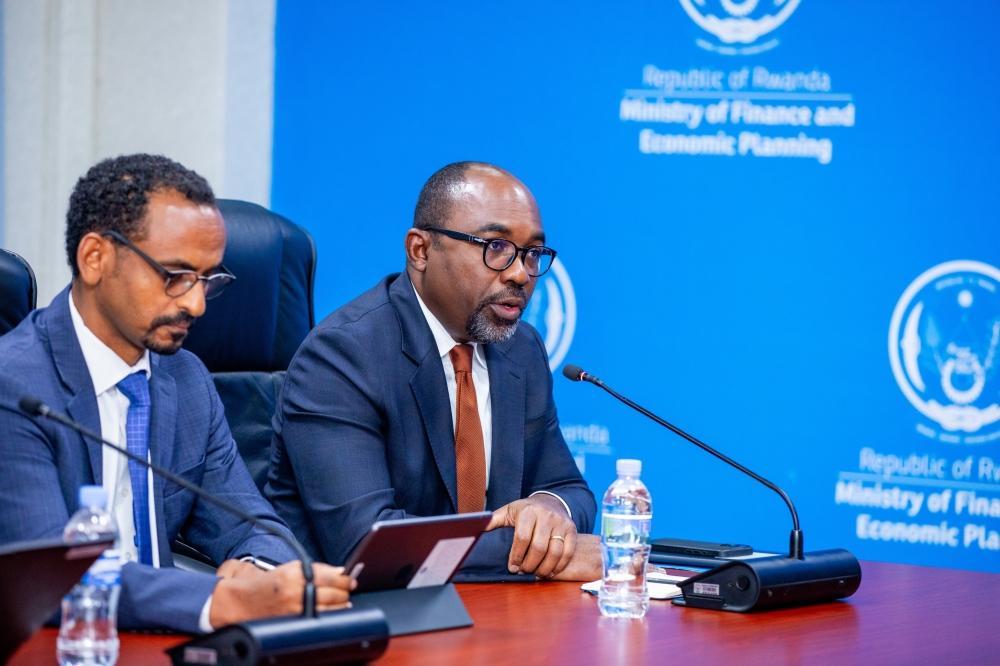
Speaking at a press conference in Kigali following the conclusion of the IMF mission on April 2, IMF team representative Albert Touna Mama said the arrangement is intended to support the ongoing reforms, maintain economic stability, and help the country navigate global shocks, including rising prices linked to the US-Israel war on Iran.
“The programme will be anchored around strengthening the macroeconomic policy framework, managing fiscal and debt risks to sustain growth, and promoting private sector-led development with improved oversight of state-owned enterprises,” he said.
This is not the first time Rwanda has benefited from IMF missions. Similar programmes over the years have supported the country in navigating challenges while maintaining growth and stability.
The Minister of Finance and Economic Planning Yusuf Murangwa said that while sustaining high economic growth over many years is challenging, it is equally important to ensure that development keeps pace with that growth to safeguard Rwanda’s long-term stability.
He added that maintaining moderate debt levels while achieving high growth is another challenge many countries face.
“We’ve managed to have high growth and good development over a long period and still remain in a moderate debt situation,” Murangwa said, crediting both the government’s policies and consistent collaboration with the IMF.
“These programmes have been coming with advice, and in some cases with money. Resources have helped us cushion shocks, partly during Covid-19 and partly during global supply chain and inflationary shocks. I would say the programs have been very successful,” he added.
According to findings from the IMF mission, Rwanda’s economy has performed strongly, with GDP growth reaching 9.4 per cent in 2025, well above initial expectations.
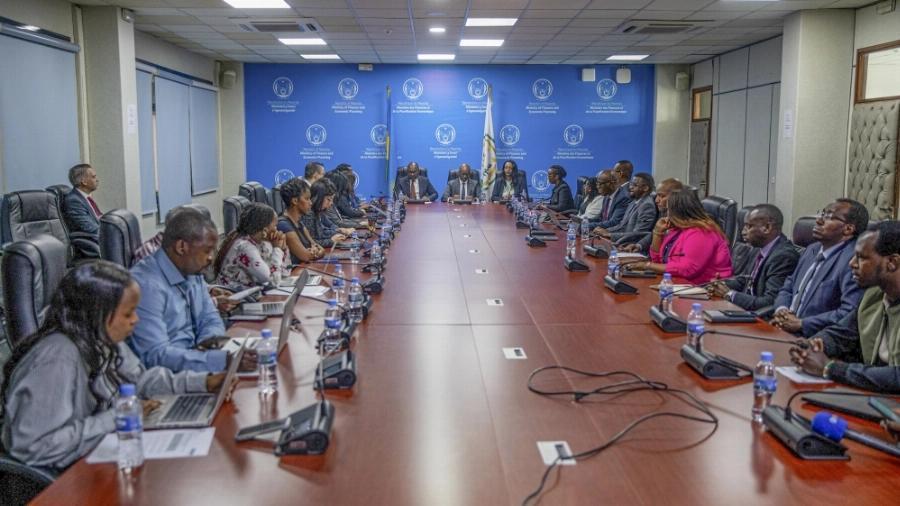
The meeting took place at the Ministry of Finance and Economic Planning on Thursday.
However, Inflation rose in early 2026, rising to 9.2 per cent year-on-year in February and surpassing the central bank’s target range.
This, the IMF says, is largely due to higher global fuel and fertiliser prices linked to the ongoing Middle East conflict.
The outlook
Exports of coffee and minerals helped improve the country’s external balance last year, while imports of equipment and materials for businesses remain high.
Soraya Hakuziyaramye, Central Bank Governor said inflation is expected to stay elevated until the second half of 2026.
“We have increased our central bank rate by 75 basis points since August in response to inflationary pressures,” she said.
“We are also closely monitoring new risks, particularly rising oil prices linked to the Middle East conflict and potential shortfalls in agricultural production, which could further drive inflation.”
Hakuziyaramye added that while monetary policy plays a key role, it may not be enough on its own to bring inflation back to the medium-term target of 5 per cent. There is a need for complementary government measures, as we saw during the inflation shocks of 2022 and 2023,” she said, noting that authorities are maintaining close coordination.
For More News And Analysis About Rwanda Follow Africa-Press