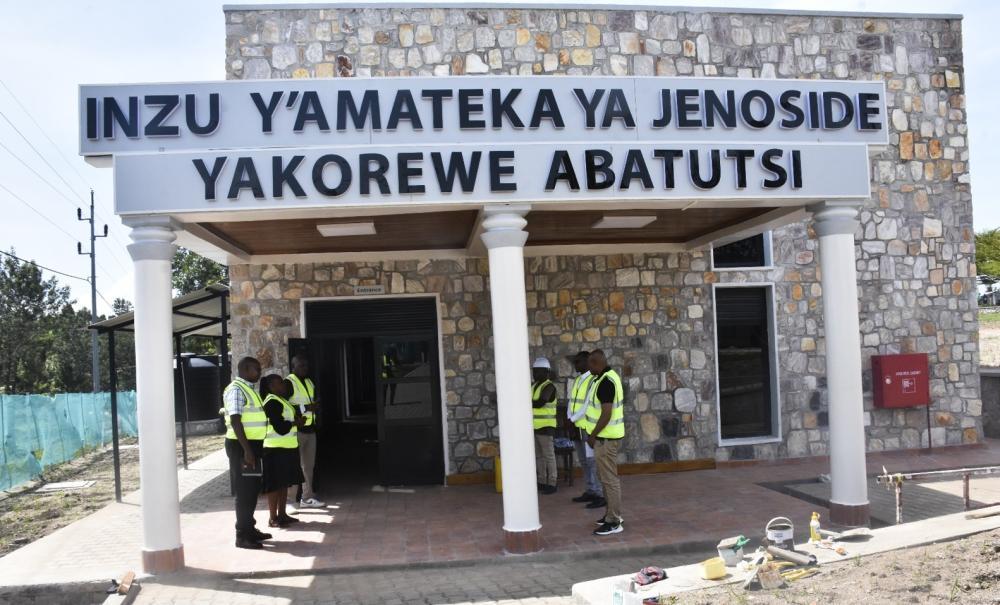
Africa-Press – Rwanda. A Genocide Museum under construction in Ruhango District, in the region known as Amayaga, will feature a special room dubbed “Chambre Noire” (Black Chamber), dedicated to exposing the masterminds behind the 1994 Genocide against the Tutsi.
The chamber will highlight individuals who planned, organised, and directed the systematic killings and serve as a reminder that some suspects remain at large.
“We are still carefully planning the different sections of the museum, and they have not yet been finalised. However, among them is the ‘Black Chamber’,” Ruhango District Mayor Valens Habarurema told The New Times.
He said the space will help visitors understand that, even though some genocide fugitives have not been apprehended, “their history remains and will not be erased.”
“It is also a way to support survivors in coming to terms with the past and finding a sense of peace,” he added.
The museum will also include a memorial garden, the “Jardin de Mémoire,” offering visitors a place for rest and reflection, particularly during commemoration periods.
Set for completion in 2026 in Kinazi Sector, the museum will preserve the history of the 1994 Genocide against the Tutsi in the former Ntongwe Commune, an area that witnessed some of the most brutal killings in Amayaga.
Ruhango District is home to four major genocide memorials: Kabagari (6,618 victims), Mbuye (5,022), Ruhango (22,233), and Kinazi (63,293).
The new museum will complement these sites by providing detailed accounts of how the genocide unfolded in Ntongwe and across the country.
Built with the support of experts and advanced preservation tools, it is expected to attract visitors year-round—not only during the official commemoration period.
Inside “Chambre Noire”
Jeanne d’Arc Mukaruberwa, president of Ibuka in Ruhango District, cited key genocide perpetrators from the area, including Charles Kagabo, Zephanie Kanyandekwe, Nyandwi, and Eustache Gakuba.
Ntongwe Commune is notably linked to its former bourgmestre, Charles Kagabo, who remains at large 32 years after orchestrating mass killings.
Kagabo is believed to have led militias that killed thousands within his jurisdiction and neighbouring areas, particularly in the then Mugina Commune. Survivors describe him as ruthless and methodical in executing the extermination of the Tutsi.
He is also accused, alongside Burundian refugees based at Nyagahama camp, of playing a central role in the massacres. Survivors say the refugees were recruited, paid, transported, and promised rewards by local leaders to carry out the killings.
Before becoming bourgmestre, Kagabo trained as a nurse at Groupe Scolaire Officiel de Butare Indatwa n’Inkesha and worked at Nyanza Clinic.
He later assumed leadership of Ntongwe Commune during the interim government following the killing of his predecessor, Alfred Habumugisha.
In 2008, a Gacaca court sentenced him to life imprisonment in absentia.
To preserve this history, survivors from Amayaga established the Amayaga Genocide Survivors Foundation (AGSF), which has also called for justice against genocide fugitives, including those who crossed borders.
The concept of the “Chambre Noire” was unveiled during the launch of the 100-day commemoration marking the 32nd anniversary of the Genocide against the Tutsi at Ruhango Genocide Memorial.
According to Evode Munyurangabo, president of AGSF, the chamber will display photographs and profiles of suspected masterminds, including those from Amayaga.
“The ‘Chambre Noire’ will include the names and images of those who have not yet been tried, including former local leaders, Burundians who took part in the killings, and other key figures such as members of the Bagosora group,” he said.
The aim, he added, is to deepen public understanding of the genocide while supporting survivors in remembrance and healing.
Young people have also voiced the need for more accessible spaces to study this history in depth. Emmanuel Gikundiro called for a dedicated library or learning centre where youth can engage with detailed information.
“We often receive brief explanations, but there is a need for a place where we can study and better understand our history,” he said.
For More News And Analysis About Rwanda Follow Africa-Press