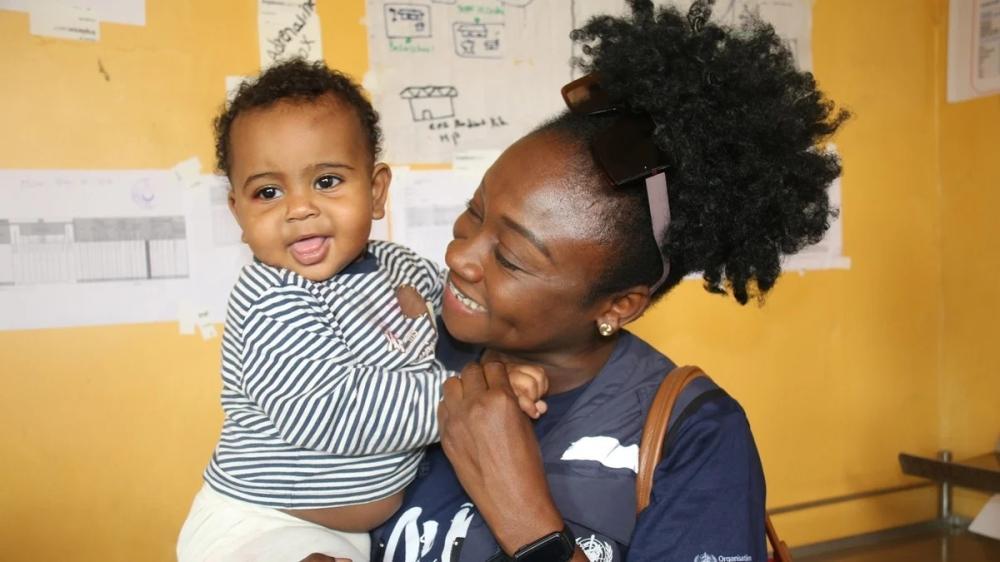
Africa-Press – Rwanda. The World Health Organization (WHO has approved the first malaria treatment made for newborns and very young infants, in an effort to improve care for children most at risk.
The medicine, artemether-lumefantrine, is designed for babies weighing between two and five kilograms. Until now, infants with malaria were treated using drugs meant for older children, which led to challenges with correct dosing and raised the risk of side effects.
WHO’s approval, announced on April 24, means the treatment meets international standards for safety and effectiveness. It allows governments and health agencies to purchase and distribute it more widely.
This is expected to help close a long-standing gap in care, especially in Africa, where around 30 million babies are born each year in areas affected by malaria.
WHO Director-General Dr Tedros Adhanom Ghebreyesus said progress is being made in the fight against the disease. He pointed to improvements in vaccines, testing, mosquito nets and medicines, including those now adapted for very young children.
“For centuries, malaria has stolen children from their parents, and health, wealth and hope from communities,” said Ghebreyesus, WHO Director-General.
“But today, the story is changing. New vaccines, diagnostic tests, next-generation mosquito nets and effective medicines, including those adapted for the youngest, are helping to turn the tide. Ending malaria in our lifetime is no longer a dream – it is a real possibility, but only with sustained political and financial commitment.”
WHO has also approved three new rapid tests to improve malaria diagnosis. The most commonly used tests detect a protein known as HRP2. However, in many countries, some malaria parasites no longer produce this protein, making them harder to detect.
In parts of eastern Africa, including Somalia, Ethiopia, Eritrea and Djibouti, this has led to serious gaps in diagnosis, with reports showing that many cases are missed.
The new tests look for a different protein, pf-LDH, which is the parasite less likely to change. Public health experts say this will make diagnosis more reliable in areas where current tests are failing. WHO advises countries to switch to these tests if more than five percent of cases are missed.
The latest World Malaria Report shows that there were about 282 million cases and 610,000 deaths in 2024, about 9 million more cases than the previous year. While some countries have managed to eliminate malaria or reduce cases significantly, progress has slowed in many parts of the world.
Challenges such as drug resistance, insecticide resistance, weak diagnosis systems and reduced funding continue to affect efforts to control the disease.
For More News And Analysis About Rwanda Follow Africa-Press