Africa-Press – Rwanda. As Rwanda continues 100 days of commemoration of the 1994 Genocide against the Tutsi, Water and Sanitation Corporation (WASAC) Group and Rwanda Energy Group (REG) on Friday, April 24, honoured 174 former ELECTROGAZ employees killed at a time when ethnicity and hatred replaced merit within the institution.
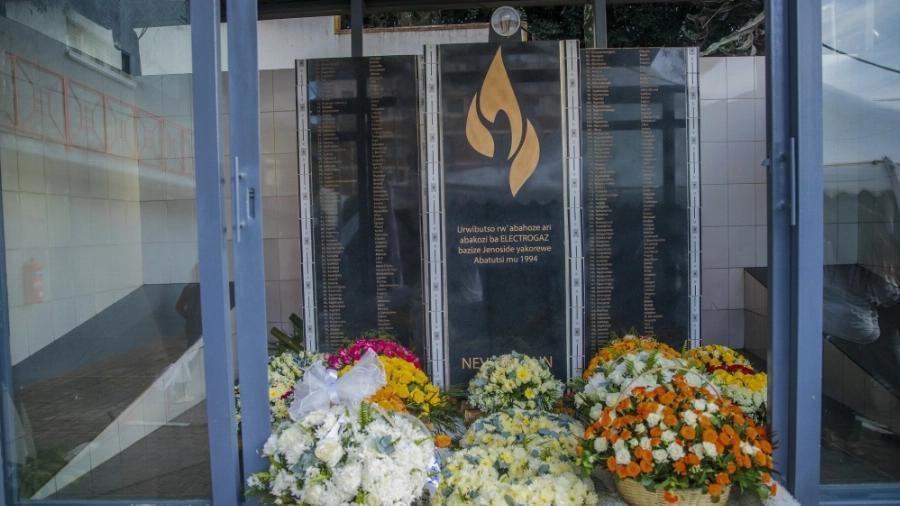
The commemoration was held at the memorial site in Nyarugenge, where ELECTROGAZ once operated, bringing together Genocide survivors, families of victims, officials and current REG and WASAC employees. Wreaths were laid, victims’ names were read, and testimonies offered personal accounts of how an institution once defined by professionalism and unity gradually mirrored the divisions and Genocide ideology that engulfed the country.
As Rwanda marks #Kwibuka32, Water and Sanitation Corporation (@wasac_rwanda) Group and Rwanda Energy Group (@reg_rwanda) on April 24 2026 honoured 174 former ELECTROGAZ employees killed during the 1994 Genocide against the Tutsi, in a moment of remembrance, reflection, and… pic.twitter.com/41FMC7pQaw
— The New Times (Rwanda) (@NewTimesRwanda) April 26, 2026
ELECTROGAZ is a former public utility for production, transmission and distribution of water and electricity in Rwanda.
Former employees describe early ELECTROGAZ as a workplace where competence determined opportunity. Under then director Andre Katabarwa, recruitment and promotion were guided by merit, at a time when discrimination against Tutsi was widespread across the country.
Within the institution, employees worked together, interacted freely, and even played sports without exclusion. For some, it offered a rare space in a country where identity increasingly dictated opportunity.
Shift in institutional culture and rising division
That environment, however, shifted in the early 1990s.
Following a change in leadership, the institution’s culture took a different direction. By 1993, under Donat Munyanganizi, who was affiliated with the extremist CDR party, former staff say ethnic identity became central to workplace dynamics.
“Munyanganizi was a real Interahamwe; he even had an Interahamwe flag on his car,” said one former employee. “By 1993, the organisation was already divided along ethnic lines. Hatred and Genocide ideology had taken over, and Tutsi employees were segregated and lived under intimidation.
Discrimination became routine, marked by intimidation, exclusion, demotions, and dismissals targeting Tutsi employees. The workplace increasingly reflected a national climate where persecution was normalised.
Odette Muhorakeye, a genocide survivor shares her testimony.
Odette Muhorakeye’s experience illustrates that transition. Having grown up in exile in Burundi, she returned to Rwanda in 1987 after marriage, inspired by stories of a homeland she had never lived in.
“Our mother used to tell us that Rwanda is a country that flowed honey and milk,” she said. “At our age, we believed it. I could not wait to come back.”
Her expectations quickly met a different reality. After losing a teaching job due to issues with her foreign qualifications and identity, she later secured employment at ELECTROGAZ.
“At first, it was a friendly environment. Colleagues could talk to me freely,” she said. “But identity later determined everything, your position, your relationships, and how you lived at work.”
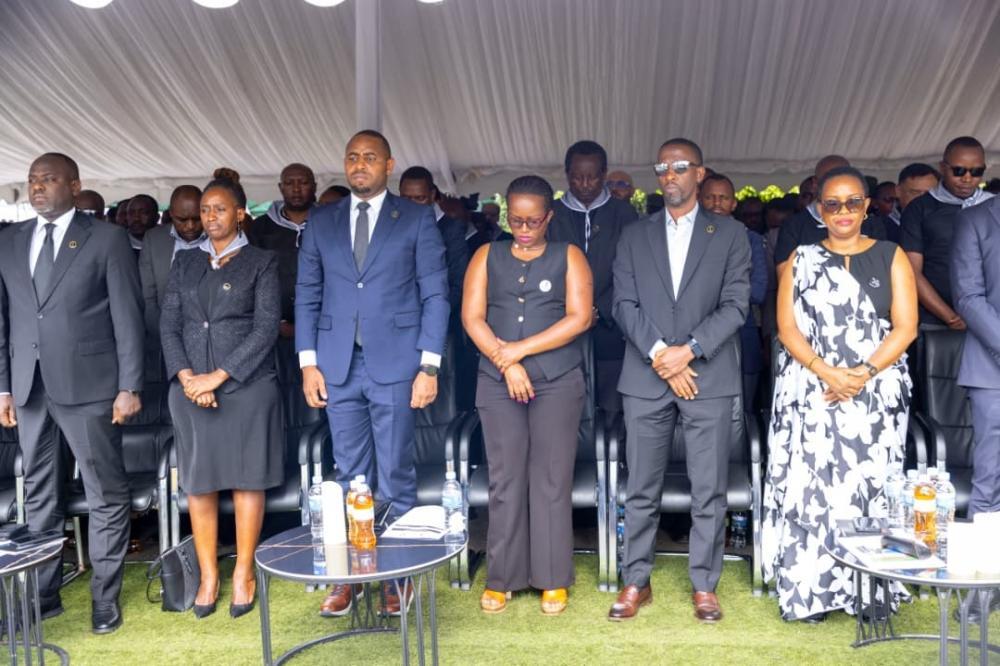
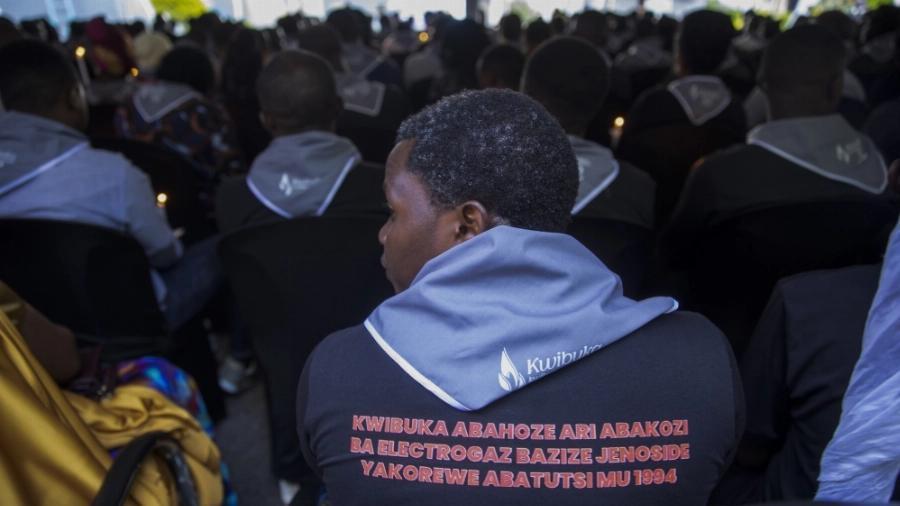
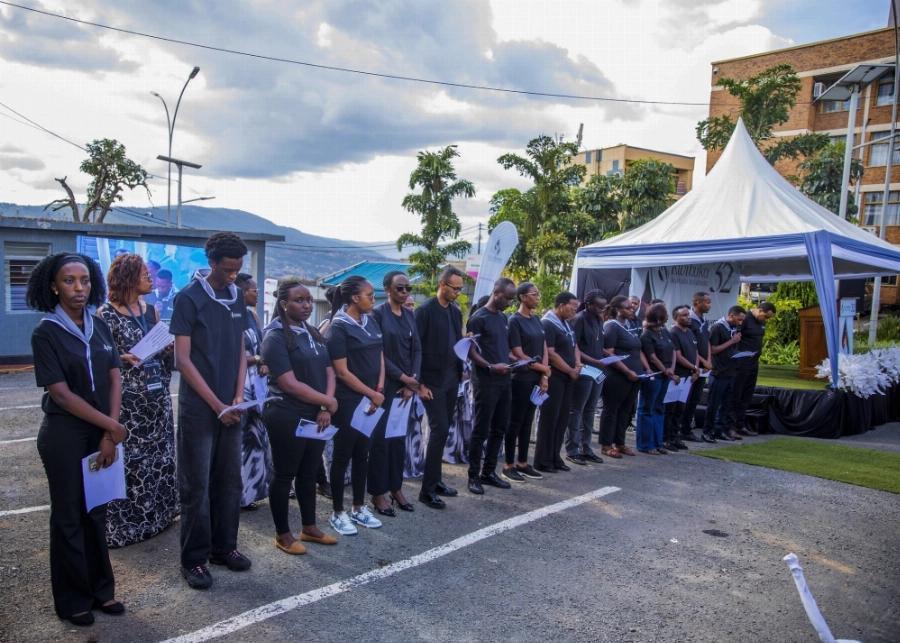
Mourners observe a moment of silence in honour the victims of the Genocide against the Tutsi. Photos by Craish BAHIZI
As tensions escalated, she became a target, accused not only for being Tutsi but also because she had studied abroad, which led to suspicions that she was linked to the Rwanda Patriotic Front (RPF) Inkotanyi as their spy.
“I remember one lady called Tereza,” Muhorakeye said. “She was part of the Interahamwe. After meetings, she would come and tell us that no one would touch us because she would kill us herself. She repeated it whenever we met.”
The commemoration took place on Friday at REG Headquarters in Kigali.
Collapse of unity and survival during the Genocide
During the 1994 Genocide against Tutsi, the institution was already fractured. Employees turned against colleagues, and killings followed. Muhorakeye lost her husband but survived with her two children after being rescued in Gatsata, Gisozi by soldiers belonging Rwandan Patriotic Army (RPA), a former military wing of RPF Inkotanyi.
“Today, we are living a better life with our children,” she said. “Now I can testify that Rwanda is truly a country of honey and milk.”
Leaders call for remembrance and responsibility
At the commemoration, leaders emphasised remembrance alongside responsibility.
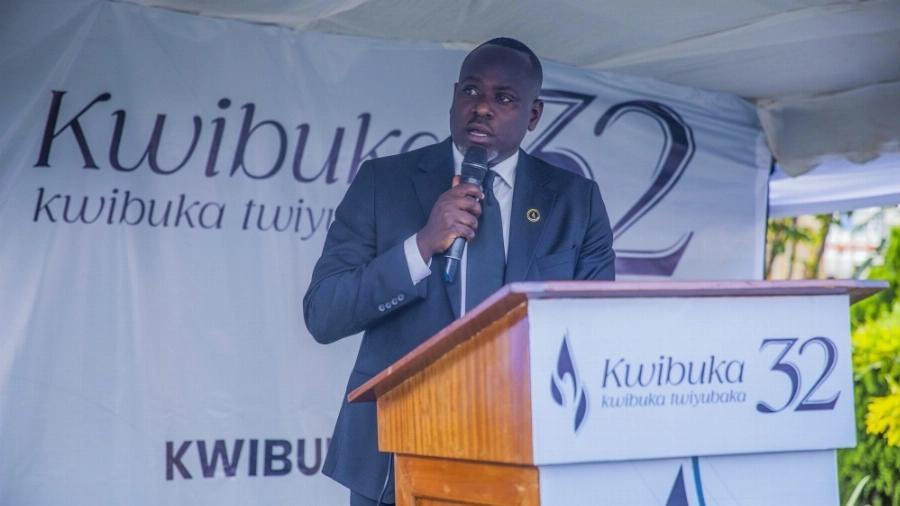
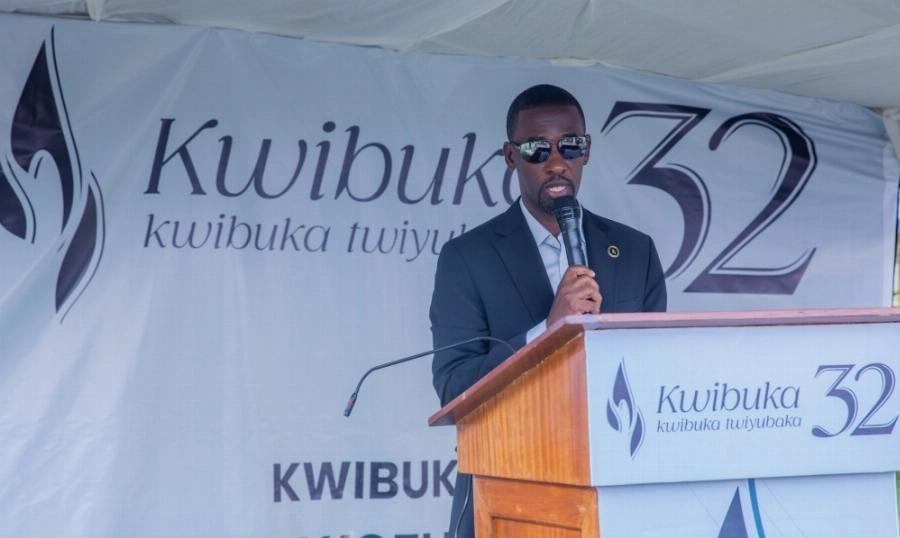
Armand Zingiro, the CEO of REG, addresses mourners at the event.
Armand Zingiro, the CEO of REG, commended survivors for their resilience and willingness to share their experiences, noting that such testimonies are central to reflection and rebuilding.
In his message, the CEO of REG, Zingiro stated “As employees of REG and WASAC Group, we are committed to fully eradicating the legacy of divisionism that once characterised Electrogaz, and to continuing to foster unity and resilience as core values that guide our daily work.”
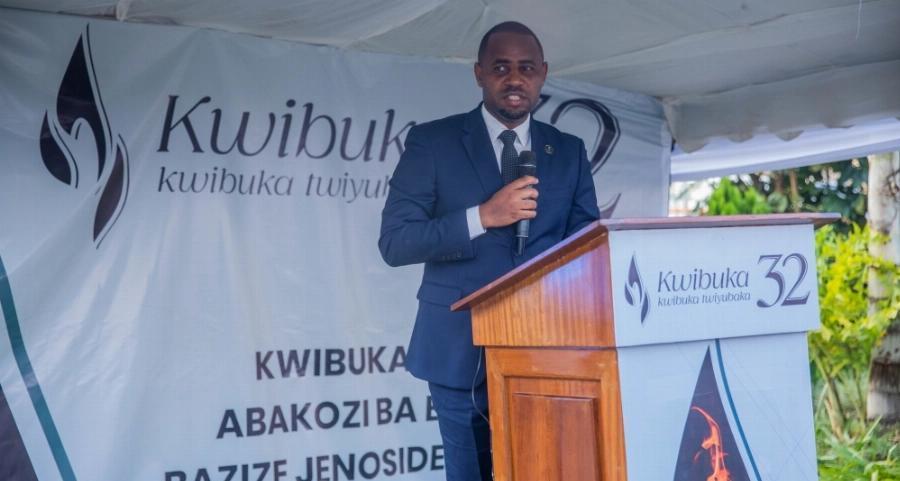
Asaph Kabaasha, the CEO of WASAC Group, speaks to the participants during the commemoration.
Asaph Kabaasha, the CEO of WASAC Group, said the history of ELECTROGAZ carries lessons that must guide present and future generations.
“The former employees who were killed had the responsibility to serve the public with clean water and energy, but that did not protect them,” he said. “We must honor them by rejecting discrimination, fighting Genocide ideology, and promoting a culture of peace.”
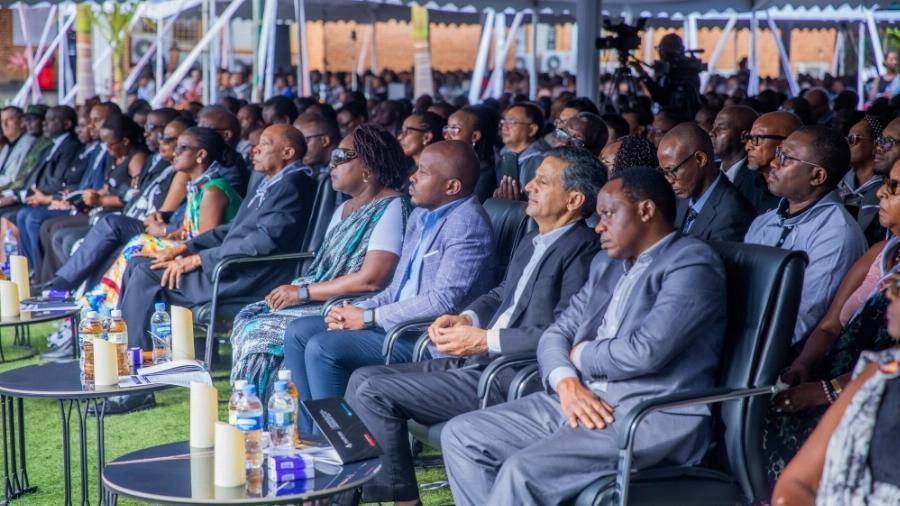
Water and Sanitation Corporation (WASAC) Group and Rwanda Energy Group (REG) on Friday, April 24, honoured 174 former ELECTROGAZ employees killed during the genocide. Craish Bahizi
He stressed the importance of preserving testimonies within the institutions.
“This history should remain alive for current and future employees so that its lessons are not lost,” Kabaasha said.
State Minister for Infrastructure Jean de Dieu Uwihanganye addresses mourners at the commemoration event held at former ELECTROGAZ offices.
Jean de Dieu Uwihanganye, the Minister of State for Infrastructure, pointed to the country’s recovery journey following the Genocide.
“Thirty-two years of reconstruction after the 1994 Genocide against the Tutsi were not easy, especially for survivors,” he said. “The country had to rebuild from zero, with destroyed infrastructure and broken unity.”
He urged continued reflection and collective responsibility.
“This is the time to honor victims, support survivors, and learn from our history. Everyone has a role in strengthening unity and contributing to the country’s development,” Uwihanganye said.
Water and Sanitation Corporation (WASAC) Group and Rwanda Energy Group (REG) on Friday, April 24, honoured 174 former ELECTROGAZ employees killed during the genocide.
Military perspective on the Genocide
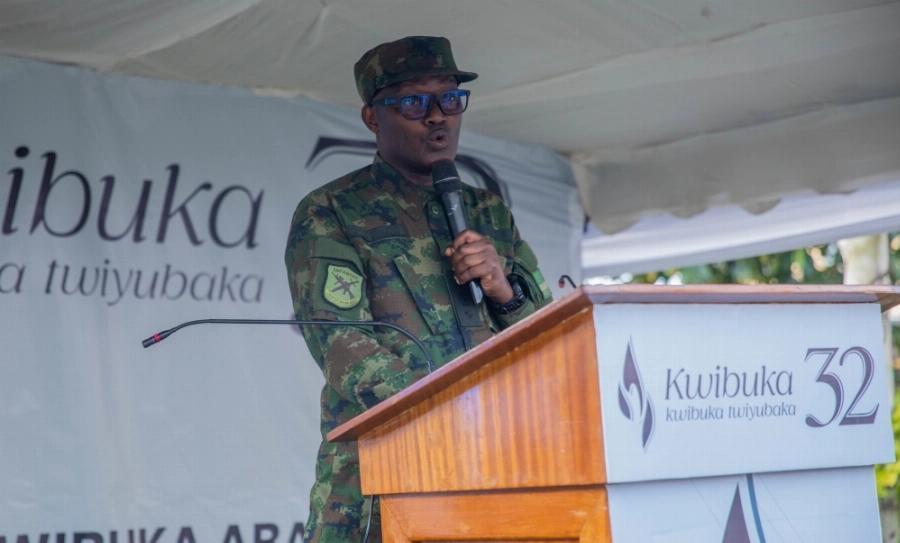
Lt Col Gaetan Semucyo, who was among the RPA soldiers stationed in Kigali under the 1993 Arusha Accords, which were arrangements meant to support peace efforts the country, reminded the audience of the organised nature of the Genocide.
“It is the history we lived. Interahamwe were armed, mass graves were prepared, and lists of those to be killed existed. It is all documented and denial is not an option,” he said.
Lt Col Gaetan Semucyo, who was among the RPA soldiers stationed in Kigali under the 1993 Arusha Accords.
He added that while peace talks were ongoing at the time, preparations were also made to respond if they failed.
“The reason we reflect on this history is to ensure it never happens again. Everyone has a responsibility to uphold unity and make Rwanda better than it is today,” he said.
For More News And Analysis About Rwanda Follow Africa-Press