Africa-Press – Rwanda. Farmers in Dongola, located in northern Sudan, are suffering the consequences of the receding Nile waters, which have significantly impacted their crops, while the government has not taken any measures to address the issue.
In recent months, the problems caused by the receding Nile have also begun to affect residents in the capital, Khartoum, who are struggling to obtain drinking water, according to reports from a local source.
Commenting on this issue, one farmer stated that he lost his lemon crop, which he used to sell for substantial amounts that helped him cope with the difficult situation in the country. He emphasized that he is now bringing water from homes to irrigate his trees, while the government provides no solutions.
Another farmer mentioned that he has not found irrigation water for four months, and although the government promised to resolve the issue, nothing has been done, leaving them unable to cultivate even crops that require infrequent watering.
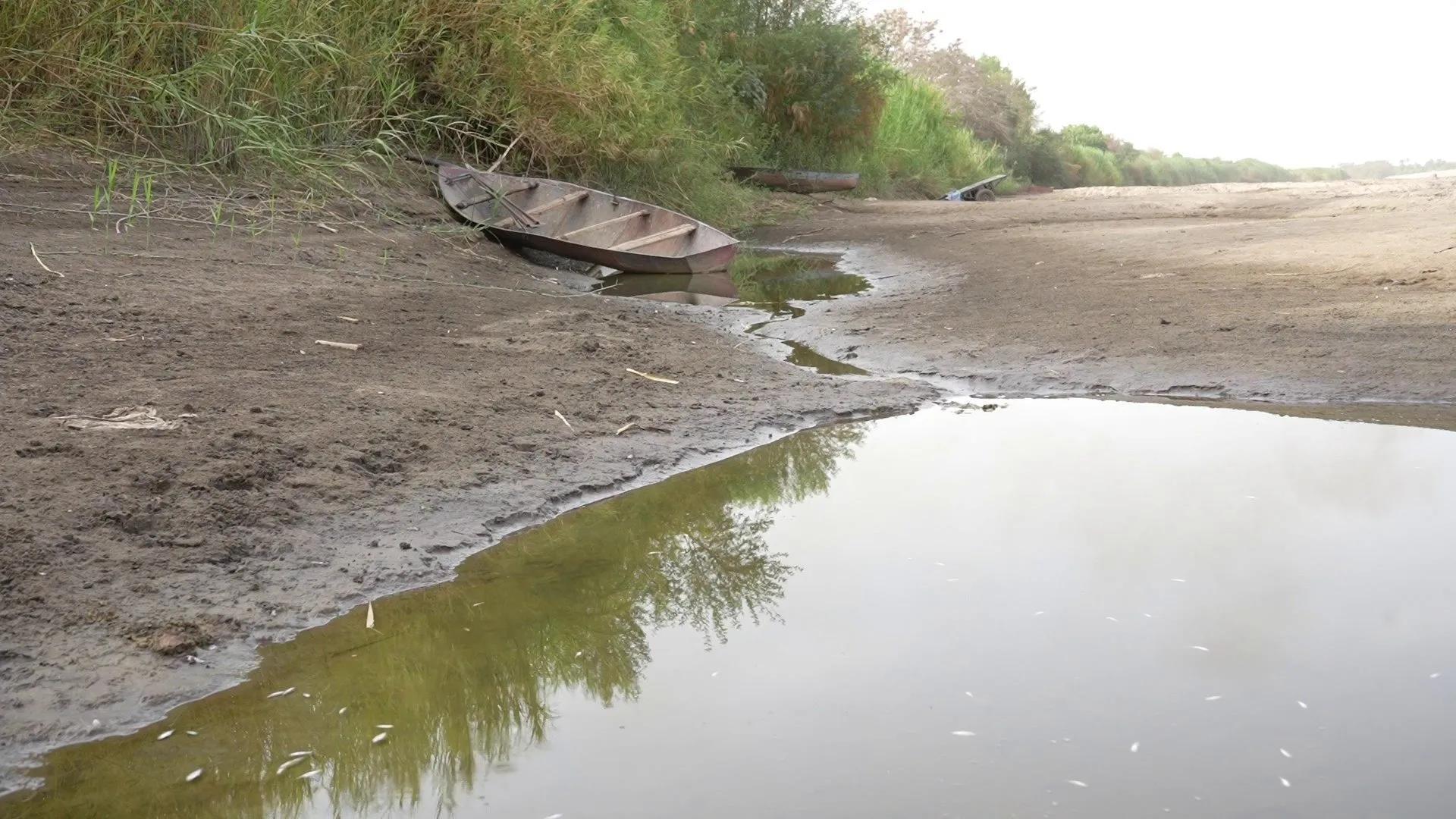
Images shared by a local source showed dried wells and fish deaths due to the receding Nile waters. A third farmer noted that the trees have dried up, and farming is no longer possible this summer, stating that he cannot even find water to feed his livestock. A fourth farmer argued that the problem could be resolved simply by digging a small channel to transfer water from the south to the north to mitigate the damage.
The government has dispatched engineers and staff to assess the problem in preparation for a solution, but farmers have confirmed that no action has been taken in recent months.
Significant Recession
The Nile River has experienced an unusual recession in Khartoum and northern Sudan, leading to a nearly 50% reduction in the production of drinking water stations, exacerbating the suffering of residents in several areas east of the Nile in obtaining potable water, as reported by a local correspondent in a previous report.
In more than seven areas, drinking water is no longer supplied through the distribution networks but rather through tanks donated by some able individuals, while residents continue to complain about a prolonged crisis.
Numerous studies have previously warned of the significant repercussions of the Ethiopian Renaissance Dam, which experts say will only become apparent during drought years when the dam’s operational decisions and water discharge quantities become critical factors in stabilizing water supplies and agriculture in downstream countries, starting with Sudan and then Egypt.
Recently, satellite images analyzed by an open-source unit revealed a sharp decline in the Nile’s water levels, leading to the main drinking water station being taken out of service, while the Khartoum state government announced an urgent emergency plan to contain the crisis and restore water supplies to the affected areas south of Omdurman.