Africa-Press – Rwanda. There is a need for an estimated Rwf30 billion to construct 3,006 houses for residents that were completely destroyed by disasters — including floods and landslides — which occurred on May 2 and 3, in different parts of Rwanda, the Rwanda Housing Authority Ag. Director General, Noel Nsanzineza, has said.
Nsanzineza provided the estimates during a budget hearing in which the Ministry of Infrastructure and its affiliated agencies were presenting their proposed financial plan for the fiscal year 2023/2024, during a virtual session with the Lower House’s Committee on National Budget and Patrimony.
It was in response to the Committee Chairperson, MP Omar Munyaneza, who wanted to know the estimated budget for the most urgent housing intervention to the disaster affected residents, so that the Committee is able to make evidence-informed advocacy for the needed funding to be considered in the draft budget.
“Starting mainly from the completely destroyed houses, because those are the most vulnerable, there is a need for an estimated Rwf30 billion so that a rapid solution can be found in all the [concerned] districts,” Nsanzineza said.
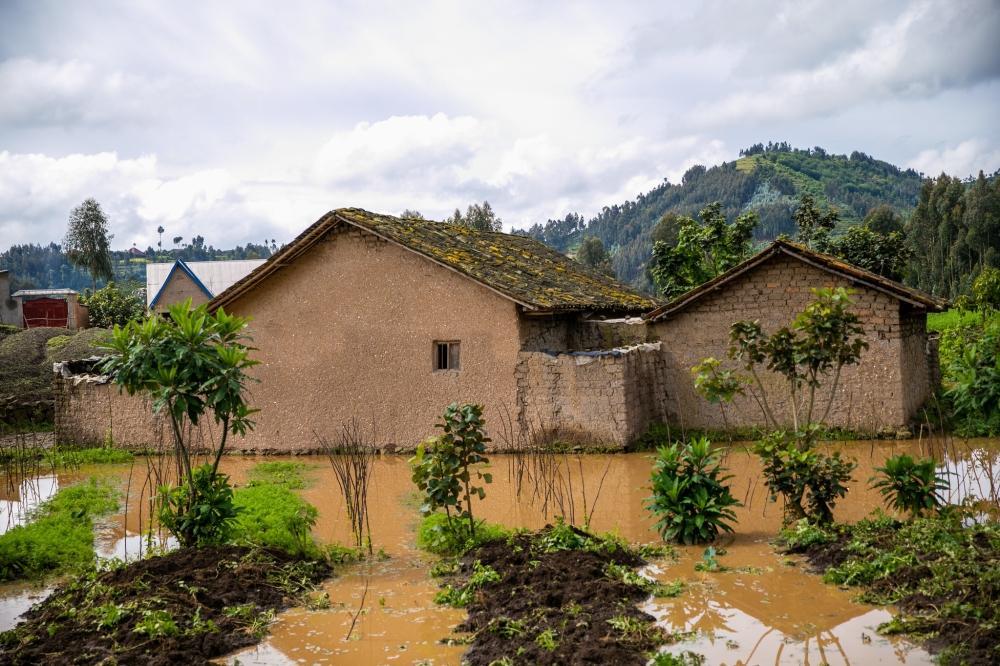
According to data from the Ministry of Emergency Management, the flood and landslide-induced disasters — on May 2 and 3 — killed 131 people in Northern, Western and Southern provinces.
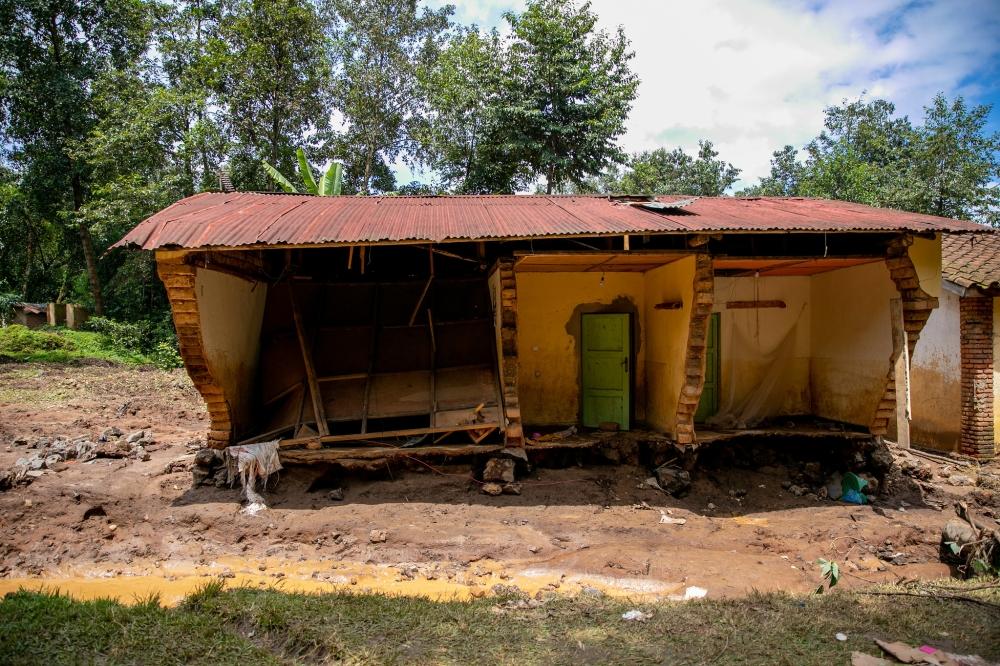
Overall, Nsanzineza said that 3,006 houses were completely destroyed, while 3,200 were damaged by the disasters — bringing the total to 6,206 houses.
On the required budget, he said that it still is being considered, but gave an example that the budget for constructing a house under the Integrated Development program (IDP) model village, is between Rwf15 million and Rwf20 million — indicating that the budget for constructing all the more than 6,000 houses (including those that were completely destroyed and those damaged) would be huge.
Going forward, he said that they will consider how to cater for that in the medium term expenditure framework, with top priority being those who are more vulnerable than others, especially starting with those whose houses were completely destroyed.
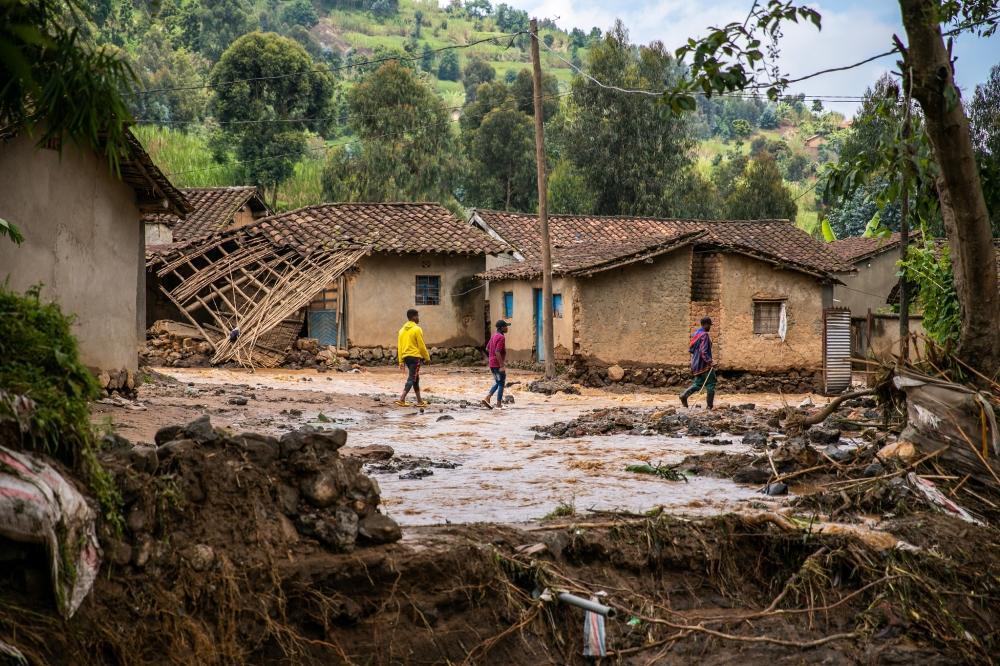
One of houses that were damaged by the recent disasters Rubavu District. There is a need for an estimated Rwf30 billion to construct 3,006 houses for residents that were completely destroyed by disasters. Olivier Mu
Temporary facilities to be set up
Meanwhile, Nsanzineza said that some urgent interventions were already made, starting from Rubavu District because it was observed that it is the area where there were the most alarming issues. These include finding another place for relocating the affected residents.
Currently, he indicated three sites in Rubavu where residents were relocated – including Kanyefurwe, Rugerero and Nyamyumba, adding that there are some residents who were provided accommodation by their neighbours and friends.
However, he told lawmakers that all those sites, which are accommodating about 1,021 families, are temporary as some are schools, and churches such that the usual activities that were held there were (temporarily) stopped.
For that issue to be addressed, he said that they have established a transitional mechanism where they are working with the Ministry of Disaster Management and Police as well as Rubavu District authorities.
“We want to build temporary facilities at a site called Inyemeramihigo, where we are going to set up about 20 tents, put in place mobile toilets, build kitchens for them,” Nsanzineza said, adding that those 1,021 families will be sheltered there and they will also set up other tents to ensure the availability of support such as basic medical services.
He pointed out that the affected families will also be provided with food, beddings and other necessities to support their living in the short term, adding that the same could be done in other districts where residents were affected by disasters.
But, all that will precede the long-term settlements (houses) for the families in question, with the construction of houses that can be ‘resilient’ to disasters.


For More News And Analysis About Rwanda Follow Africa-Press