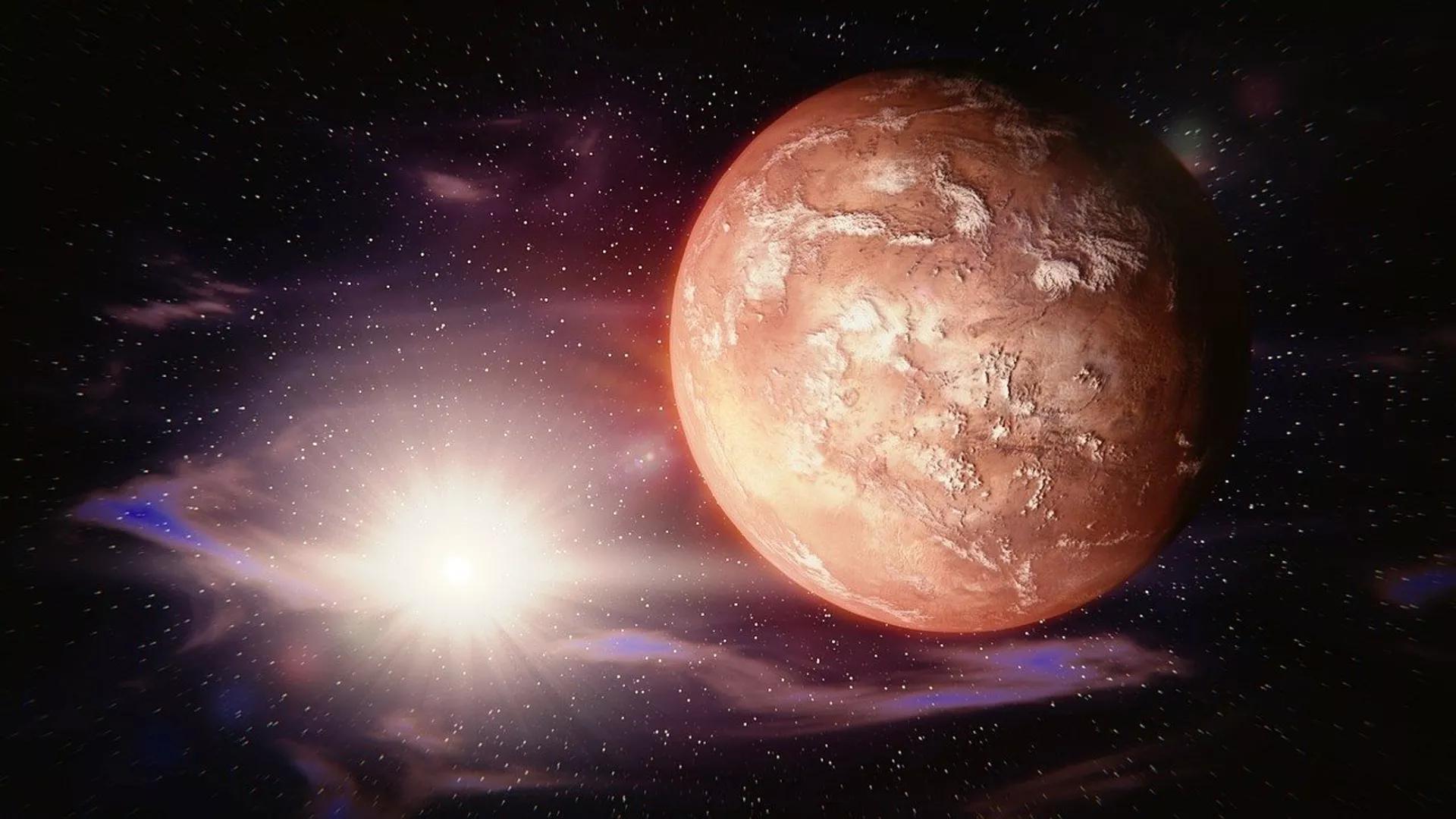
Africa-Press – Rwanda. NASA put the lid on its InSight Mars Lander mission last December after it stopped responding to communications from Earth. Dust had accumulated on its solar panels, draining the lander of energy. But after four years of seismic monitoring, its data is still being analyzed, offering remarkable revelations about the Red Planet.
Seismic waves have been discovered for the first time rippling through Mars’ core, offering clues as to why the Red Planet evolved to become barren and “hostile to life”.
Analysis of readings from two different seismic events, measured by the seismograph of NASA’s InSight (a acronym for “Interior Exploration using Seismic Investigations, Geodesy and Heat Transport”) Mars Lander, was carried out by a team of seismologists and planetary scientists.
They discovered that Mars’ core is very different from Earth, laying out their findings in a paper published in the ‘Proceedings of the National Academy of Sciences’ on 24 April. This could answer the question why, despite evidence that there had been liquid on Mars – an indication that life could once have existed there – it evolved into a rocky landscape of parched lake beds and dormant volcanoes.
Mars most probably has a completely liquid core, the research revealed, unlike our planet Earth, which consists of a combination of a liquid outer core and solid inner core. Analyzing how the seismic events – a marsquake and a large meteoroid impact – rippled through the planet, the team combined this data with other seismic and geophysical measurements. They subsequently estimated the density and compressibility of the material through which the waves traveled.
Furthermore, they discovered that although the core of Mars is probably composed of carbon, sulfur, oxygen and hydrogen, its bulk consists of liquid iron, like the core of planet Earth. However, the amount on Mars is not sufficient for it to generate a strong magnetic field.
The team have been able to take away two certainties from the results of their research: first, earlier conceptions of Mars’ interior are correct; and second, the results will be useful for future geological investigations of other planets in the solar system, such as Venus and Mercury.
For More News And Analysis About Rwanda Follow Africa-Press