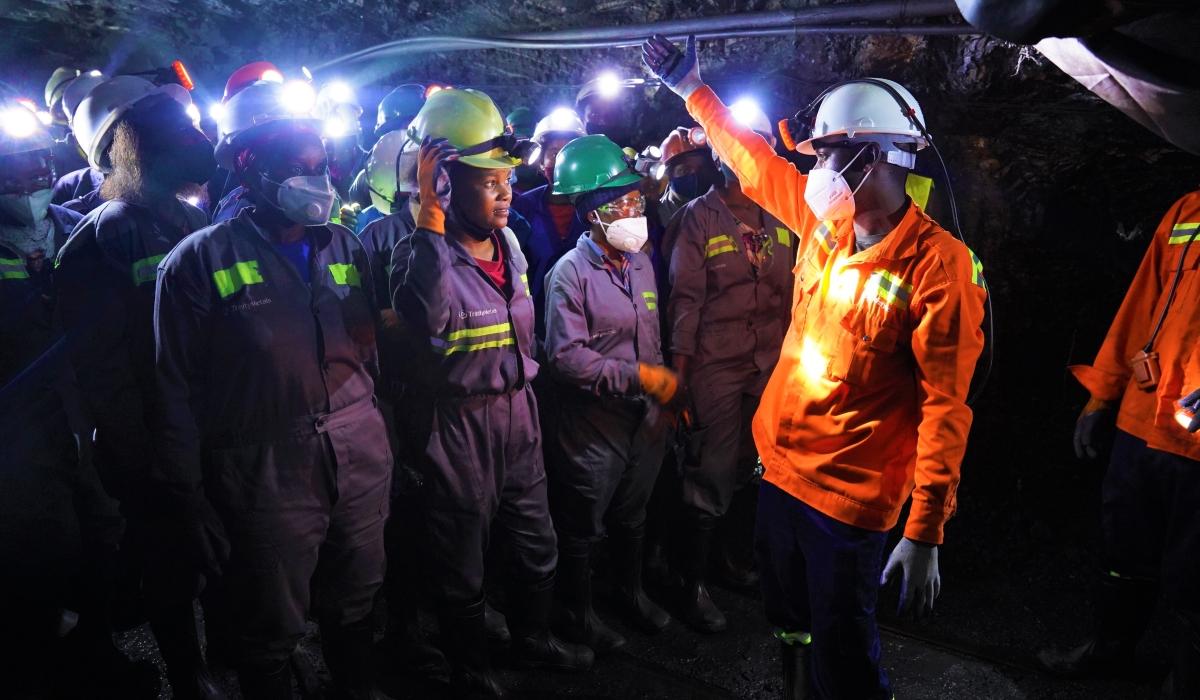
Africa-Press – Rwanda. Rwanda Extractive Industry Workers Union (REWU), a local trade union for people employed in the mining industry, says it is lining up a study that will examine the health and occupational safety of miners in the country.
According to the Executive Secretary of the trade union, Andre Mutsindashyaka, there has been talk of some health matters in the industry including particular respiratory issues, about which REWU does not have concrete information so far.
“We are in the process of doing a study on occupational safety and health (OHS) and working conditions in the mining sector. With this, we hope to know more about the health and safety of workers,” he told The New Times.
The study will also look into safety in the workplace, in an attempt to know if miners are not exposed to risks of accidents for example.
Mutsindashyaka noted that the trade union is in the process of getting requirements needed to do the study, and when it is done, there will be more information to be used in addressing the issues that will have been found in the industry.
Rwanda’s extractive sector employs around 120,000 workers.
The industry is a key foreign currency earner for the country currently. For instance, mineral exports fetched $ 247,480,699 in the first quarter of 2023 (January to March), according to the Mines, Petroleum and Gas Board (RMB).
Some of the outstanding minerals that pushed the exports include Cassiterite which generated USD 5,436,480 in January, USD 5,398,054 in February, and USD 5,903,483 in March, while Coltan demonstrated a substantial increase in export revenues, reaching 124,514 kilogrammes worth USD 5,911,646 in January, 138,205 kilogrammes worth USD 6,985,467 in February, and 213,065 kilogrammes worth USD 11,415,082 in March.
Mutsindasyaka told The New Times that the country has good mineral deposits, and in the future, more employment opportunities are expected to come up in the sector.
According to Malic Kalima, the chairman of the Rwanda Mining Association, authorities have tried to put in place measures for the protection of miners. However, he noted that there are issues of people working in illegal mines who do not respect safety measures and thus their lives are often in danger.
“The mining sector has risks. But what we do is to encourage the miners to try to minimise these risks. Today, there are less accidents in legal mines. Many legal mines, for example, have taken a decision to work in tunnels. When people work in tunnels, it reduces the danger of accidents,” he noted.
For More News And Analysis About Rwanda Follow Africa-Press