Shyaka Kanuma
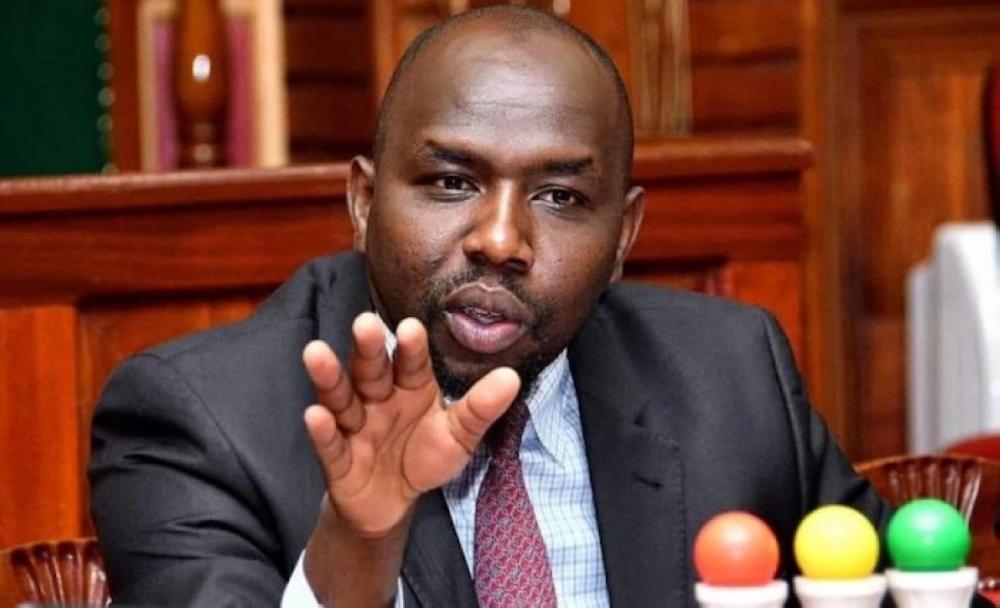
Africa-Press – Rwanda. Recent remarks by Kenyan cabinet secretary (minister) for roads, transport and public works Kipchumba Murkomen, suggesting that things get done more quickly in Rwanda “because Rwanda is an autocracy”, and also that “Rwanda being small is easier to manage” – have set off a social media kerfuffle.
Some even feared diplomatic relations could be negatively affected.
But minister Murkomen – who is not his country’s spokesperson – probably was expressing a personal opinion, rather than an official position of the government of neighbourly, friendly Kenya.
The minister among other things asserted that in Kenya, it’s very difficult to get anything done “because Kenya is a democracy”, and therefore before anything happens, “laws must first be discussed”, and then tabled before parliament. “Even important cabinet decisions can easily be undone when someone appeals to the courts,” he added.
Murkomen, who was appearing on a talk show on his country’s Citizen TV, then claimed that, in contrast, “in Rwanda the word of the president is law.”
His words drew outrage and condemnation, most notably from senior Kenyans in their country’s political establishment, which prompted the minister to backtrack, defending himself that he had been taken out of context.
Maybe Murkomen meant no harm, as he says. I think there would have been no issues had he not applied upon Rwanda a label that’s a favorite of Africa’s erstwhile colonizers that use it as a tool – one of very many! – of control over the affairs, most especially, of African countries.
(If one has the power to define who or what you are, the next stage is to tell you what you should be).
There is a pervasive, negative perception, especially in the minds of those that have never been to Rwanda, that we live in some suffocating grip of – fill in the scary word you most encounter.
On X (former Twitter) we are familiar with outlandish claims that we are some version of scared, “programmed robots” that are watched around the clock, and that do everything we are told. Hence that’s why the Rwandan government succeeds in so much!
It’s truly astonishing to read words like these.
Rwandans have unrestricted access to the Internet, and say pretty much what they want. (Yes, even Victoire Ingabire who was convicted by the courts on charges of terrorism and genocide denialism, and later got out of jail on presidential clemency, freely posts her propaganda on social media daily).
Rwandans of all walks of life apply for, get passports or other travel documents, and travel anywhere they wish. We have freedom of movement. We can move anywhere abroad, or inside the country at all hours of day, and night. A Rwandan will send their child to any school of their choice, and no government official will interfere to tell them otherwise.
These only are a few of the freedoms one will find in this country. Surely, democracy must be at work in any country where such is the norm?
Still, to read the claims of groups like Human Rights Watch, or some of the most jaundiced media reports on Rwanda, the uninformed foreigner will conclude we are the same as Pol Pot’s Cambodia!
Years of bad international press coverage by bad faith journalists, or authors with agendas, coupled with years of terrible reports by international so-called rights groups, have created this image of Rwanda that bears zero resemblance to lived experiences, on the ground.
Rwanda gets a lot of stick from those with the tools (the dispensers of aid or development funds, the editors of media organisations with worldwide reach, the well-funded pressure groups) because post-genocide, the country does not, and has never conformed to Western notions of how governments are supposed to be run.
In other words, they have reserved the same resentment for this government as to any other that won’t conform to their ideas.
Their wish; the wish of Western donors of all types, multilateral institutions and others, is that Rwanda, and not only Rwanda but the entire world, adopt – lock, stock, and barrel – the same systems of government as theirs.
Even when our realities have very little in common with theirs. And so, for any society to avoid dreaded labels like “dictatorship” and others, the only way to go is copy, or do its best to mimic Western governance, or political systems.
To these people, Julius Nyerere the late, great Tanzanian statesman would answer: “Every country on earth considers itself democratic. What matters is what kind of governance each chooses, its philosophical underpinnings, and how well it works for their particular society.”
Rwandans saw what happened the last time there was “competitive, multiparty politics” (lauded by overlords in the West as a step in the right direction) in their country. Among other things, CDR, MDR “Pawa”, and similar genocidal groups happened. They were campaigning against the ruling MRND, on who had the most effective strategy of genocide against the Tutsi community.
In Rwanda, multiparty politics – also known as a central plank of Western-style democracy – always has meant pogroms, ethnic cleansing, and genocide, against the Tutsi.
Right from 1959, in the run-up to a spurious independence that simply meant the colonial administration handing the instruments of violence to Parmehutu extremists.
After the 1994 genocide against the Tutsi in Rwanda, this kind of politics could never be allowed to have a place in the country. Ever again.
And so, Rwanda set out to develop a system that was all-inclusive, consensual in nature, and designed to protect everyone’s rights. A system with all the democratic institutions in place, moreover.
Some people get confused because here you do not have an adversarial situation, with different political actors, interest groups, individuals, and so on, pulling in different directions.
Rwandans pull in one direction, and that’s the main reason the country achieves so much.
Source: The New Times
For More News And Analysis About Rwanda Follow Africa-Press