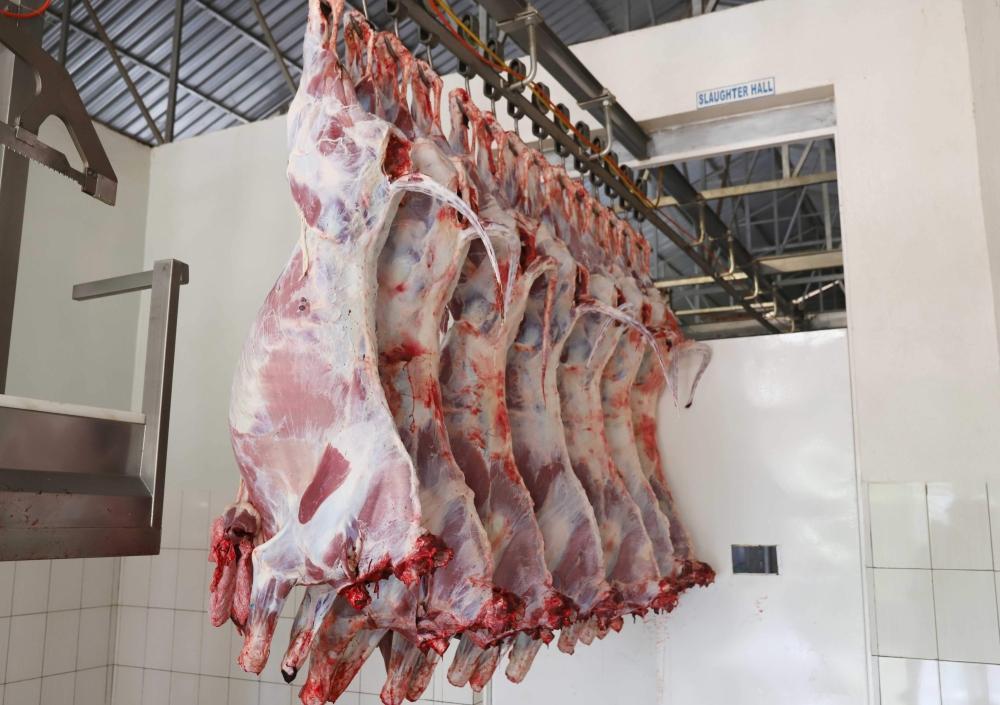
Africa-Press – Rwanda. Rwanda’s target was to achieve 215,000 tonnes of meat produced annually was reached by more than 90 per cent in 2023, figures from the Rwanda Agriculture and Animal Resources Development Board (RAB).
The meat production target was set in the 2018-2024 strategic plan for agriculture transformation.
“The current data on meat production indicates that during 2022/23 the country has produced 197,778 metric tons of meat, representing 91% of the set target,” RAB deputy director general Solange Uwituze told The New Times.
Up to 35 per cent of the meat produced in the fiscal year 2022/23 was beef, followed by chicken 22 per cent and goat 19 per cent. Pork represented 14 per cent, while rabbit and lamb represented six and five per cent, respectively.
The validation of the next strategic plan for agriculture is in its final stages and a new target for meat production will be “published very soon” Uwituze said.
According to the National Agricultural Export Development Board, Rwanda’s meat exports raked in $22.3 million in 2022/23, up from 8.8 the previous fiscal year.
To increase the production of meat, especially for small livestock, Uwituze said, the government has invested in the availability of vaccines and drugs for the animals, increasing the capacity of hatcheries to produce day-old chicks, establishing pig breeding centers.
The government has also subsidized the access to finance for small livestock farmed by availing single-digit interest loans. Currently, farmers can get loans at eight per cent.
However, Uwituze noted that one of the challenges affecting meat production is a limited number of farmers involved in professional beef production, especially for cattle.
“There is also limited availability of animal feeds as human and animal nutrition are conflicting for the same raw materials, mainly maize and soya,” she said.
To increase further, the official said the government encourages investment in professional beef farming through the provision of training programs to educate farmers on modern techniques, including breed selection, animal husbandry and sustainable farming practices.
Additionally, she noted that the government encourages farmers to form cooperatives in order to pull resources and share knowledge for better production.
To address the issue of limited animal feeds, the government is “actively working on increasing the agricultural productivity to enhance the production of maize and soya for both human and animal consumption,” Uwituze said.
“Moreover, we are exploring the possibility of developing alternative feed sources that do not compete with human food, such as crop residues and agro-industrial by-products,” she noted.
For More News And Analysis About Rwanda Follow Africa-Press