Africa-Press – Rwanda. Last week, the cabinet approved Rwanda’s updated Climate Action Plan, known as the Nationally Determined Contribution (NDC 3.0), designed to build resilience to climate change and reduce greenhouse gas emissions up to 2035.
The ambitious roadmap covers the period from 2025 to 2035 and requires an investment of $12 billion (approximately Rwf17.4 trillion) to implement, according to the Ministry of Environment.
In this article, The New Times takes a look at some key points in the plan:
1. Rehabilitating one million hectares of degraded land
NDC 3.0 aims to accelerate Rwanda’s transition to Integrated Water Resources Management (IWRM). It includes catchment restoration using terracing and agroforestry, with a target to rehabilitate over one million hectares of degraded land by 2030.
This will reduce run-off and flood risks, and help regulate water flows, including dry-season flows.
2. 200,000 hectares to be irrigated
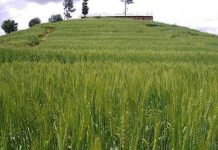
The plan will support sustainable expansion of irrigation, targeting an increase from 102,000 hectares in 2025 to 200,000 hectares by 2030. This will strengthen agricultural production and food security against rainfall variability.
Rwanda’s drive towards climate-resilient agriculture will combine on-farm water security with solar irrigation, climate-resilient seeds, and improved livestock breeds.
3. Reducing unplanned settlements to 44 percent in Kigali
Currently, 60 percent of Kigali’s residents live in unplanned settlements. The plan aims to reduce this to 51.2 percent by 2030 and 44 percent by 2035.
Meanwhile, rural households in integrated, planned communities will increase from 65.4 percent today to 84.2 percent by 2030, reaching full coverage (100 percent) by 2035.
By 2030, every urban land parcel will be governed by risk-informed physical plans, and public green and open spaces will grow from 19.8 percent to 30 percent of built-up areas. Progress will be tracked through surveys, satellite land-use data, and regular agency reporting.
4. Reducing the length of roads vulnerable to landslides
Under NDC 3.0, primary road corridors will be climate-proofed through slope stabilisation, raised embankments, and enhanced drainage systems.
This will reduce the length of roads vulnerable to landslides from 67,683 km today to just 384 km by 2030.
Concurrently, the modal share of public transport will increase from 21 percent of all trips at baseline to 23 percent by 2030 and 24 percent by 2035, supported by climate-smart bus routes and resilient urban transit corridors.
5. Rehabilitating abandoned mining sites
Rather than viewing mining as a sector vulnerable to climate risks, NDC 3.0 positions it as a resilience partner. By 2030, 90 percent of operations are expected to adopt climate-compatible practices such as water-efficient processing and dry-stack tailings.
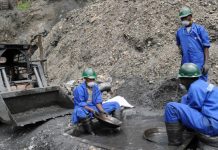
Abandoned sites will be filled in and replanted with native trees to create vegetated areas that improve stormwater absorption and support biodiversity. Mandatory flood-impact assessments will ensure these rehabilitated sites remain pollutant-free during extreme weather events.
For More News And Analysis About Rwanda Follow Africa-Press