
Africa-Press – Senegal. The populations of Kabadio, a village in the department of Bignona (south), hope that the exploitation of Niafrang zircon will make it possible to meet the challenge of development in their locality and the other neighboring villages of this mine.
Among other benefits, they expect from the extraction of minerals access to the telephone network, the construction of schools, paved roads, health structures, etc.
The village of Kabadio, located in Basse-Casamance, is part of the rural commune of Kataba 1, in the department of Bignona. This locality has about 4000 inhabitants.
Lors d’un point de presse organisé en mai dernier, les villages du Fogny Diabang, dont Kabadio, avaient exprimé leur accord pour l’exploitation du zircon de Niafrang.
Les villages de Kabadio et Niafrang sont en désaccord sur l’exploitation du zircon dans cette zone de Kataba. Chacun de ces deux villages réclame le droit de propriété de la dune qui abrite le minerai.
Le site du zircon de Niafrang se situe sur un espace dunaire de six kilomètres et d’une superficie de 180 hectares. L’exploitation de ce minerai a été confiée par l’Etat sénégalais à la compagnie australienne Astron.
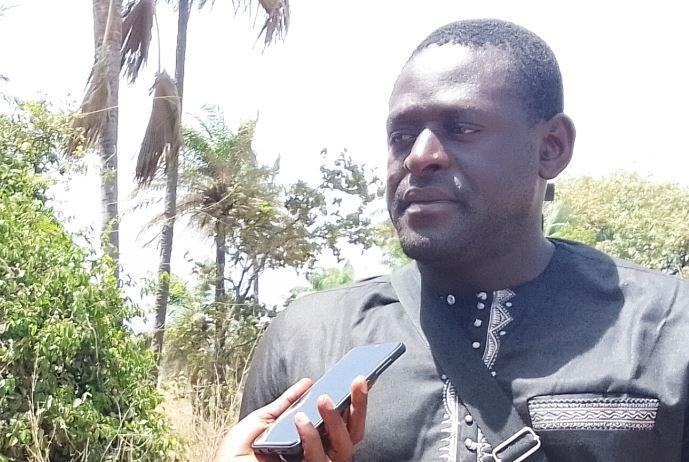
« Beyond tourism, Kabadio needs to develop. And the exploitation of Niafrang zircon would be a godsend to finally make a living from mining, » said the president of the village’s youth, Moustapha Kandioura Diabang.
Kabadio has a real treasure consisting of a rich flora including cheese trees, mango trees, orange trees, lemon trees, coconut trees, palm trees, cashew trees, etc.
But the pleasure of contemplating this lush landscape quickly gives way to sadness as soon as one arrives in front of the cemetery of the castaways of the boat Joola, a ship which provided the shuttle between Dakar and Ziguinchor and which was shipwrecked off the coast of the Gambia in 2002.
The village of Kabadio had lost 27 students from its football school in this maritime disaster which occurred on September 26 and which left 1,863 dead for 63 survivors, according to an official report.
A painful memory told by Lamine Diatta, a Kabadio-based journalist who said it is difficult to get to the area because of the deplorable state of the production track. « The track was good at the start, but it’s just sand now, » he remarked.
To get to the village, you have to travel about 108 km between Ziguinchor and Kafountine, passing through Bignona and Diouloulou.
Before arriving in Kabadio, one must take a public transport vehicle from the Kafountine bus station. The visitor can also continue the journey by mototaxi or other means of transport from the village of Bandjikaki.
Otherwise, he can walk along the beach from the village of Abéné, located a few kilometers from neighboring Gambia, says Lamine Diatta.
‘ ‘Kabadio, first village of Fogny »
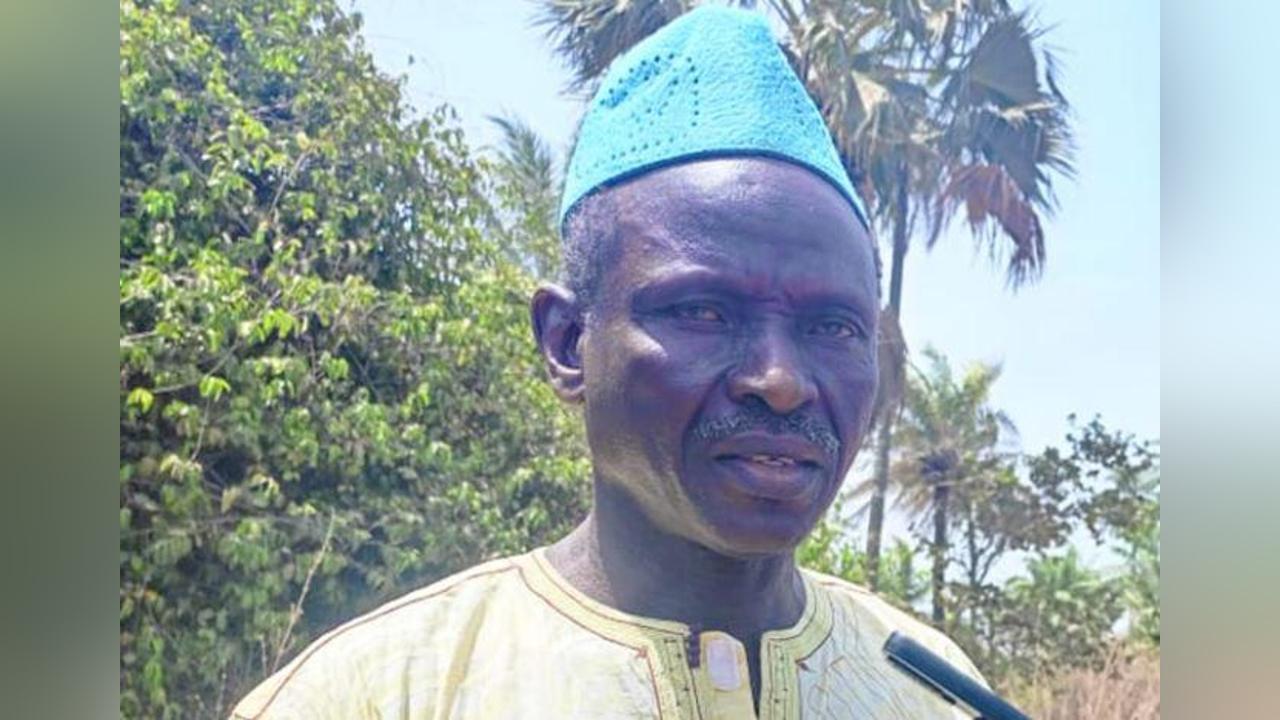
Kabadio est le premier village à s’être installé dans le secteur du Fogny. Les villages de Bandjikaki, Niafrang, Kounkoudian, Kata, entre autres, sont des hameaux de Kabadio, indique l’adjoint au chef du village de Kabadio, Abdoulaye Diabang. Le fondateur de Kabadio, Mansa Damel Traoré, fut ‘’l’unique roi qui a pris la couronne auprès du royaume de Gabou’’, rappelle-t-il.
On retrouve presque toutes les principales ethnies de la région naturelle de la Casamance dans ce village : peul, mandingue, diola, caronne, manjaque et balante. ‘’Kabadio est la Casamance en miniature. Toutes les ethnies sont représentées ici’’, souligne-t-il.
Christians and Muslims also live here in perfect cohabitation. Both communities have a mosque and a church to practice their worship. « We live in perfect harmony. Here, Christians and Muslims understand each other very well and respect each other », magnifies the deputy village chief.
Kabadio has experienced a population boom in recent years, with an estimated population today of 4,000. A situation mainly due to the arrival of workers looking for jobs in the fields of agriculture and commerce. “Kabadio is a hospitable village,” assures Abdoulaye Diabang.
The tracks of emergence
Il plaide pour l’érection, à Kabadio, d’un lycée pour assurer une bonne formation aux enfants qui font chaque jour trois à quatre kilomètres entre le village et leurs collèges. ‘’Ce sont eux qui peuplent les autres établissements secondaires dont ceux de Kafountine’’, relève Abdoulaye Diabang.
Dans le domaine de l’agriculture, il insiste sur la nécessité d’octroyer à son village des équipements modernes et des unités de transformation pour valoriser la filière mangue. ‘’Kabadio est un village typiquement agricole. On ne peut pas développer cette agriculture avec les +Kadiandou+ (instrument traditionnel). Nous voulons que notre agriculture soit mécanisée’’, souligne-t-il.
« During this period, our mangoes rot. We don’t have processing units. We call on the State to help our village to enable it to increase its income, » pleaded Mr. Diabang.
The village of Kabadio now has a private dispensary built by Catholic nuns. « Most of our patients are evacuated to Ziguinchor without an ambulance worthy of the name », he underlines.
But young people are mobilizing for the development of their land by taking several initiatives, such as the construction of two classrooms at School 2 of Kabadio. They set up a structure called « Collective of young people of Kabadio » to better defend the interests of the needy populations of the village. « We are working for the development of our village », says their president, Moustapha Kandioura Diabang.
Pour plus d’informations et d’analyses sur la Senegal, suivez Africa-Press