
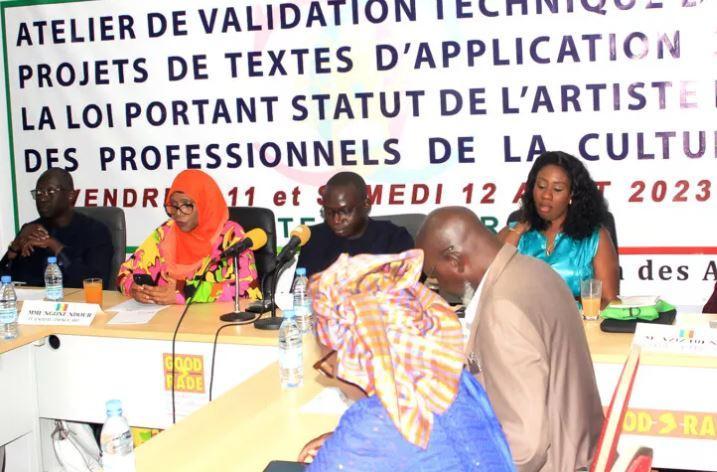
Africa-Press – Senegal. The draft texts for the application of the law on the status of the artist and cultural professionals were submitted, on Friday, to the various cultural professionals and cultural entrepreneurs for validation in a spirit « inclusive and participatory, » said the Secretary General of the Ministry of Culture and Historical Heritage, Habib Léon Ndiaye during a workshop.
Il a expliqué que l’objectif était de faire une pré-validation technique de ces projets de textes (deux projets de décrets et de trois projets d’arrêtés) par les artistes et autres acteurs de la culture afin de recueillir leurs observations et préoccupations.
The law on the status of the artist and cultural professionals was voted by the National Assembly on December 30, 2020 and promulgated by the President of the Republic on March 13, 2021. It provides for a right to social protection for cultural actors.
»Comme tout acte législatif, comme toute loi, il y a des textes d’application notamment des décrets et des arrêtés, c’est pour cette raison que nous nous sommes réunis pour partager avec les acteurs et recueillir leurs observations et préoccupations dans une démarche inclusive et participative », a indiqué M. Ndiaye lors de l’ouverture de cette rencontre de deux jours à Dakar.
Le projet de décret relatif au régime de la protection sociale, le projet d’arrêtés qui porte sur les cartes professionnelles, celui relatif aux métiers seront examinés, a fait savoir Habib Léon Ndiaye.
He insisted on the fact that all these texts will be reviewed in order to ensure that no aspect has been left behind and to try to provide texts that reflect the different concerns of the actors in the culture sub-sectors.
The Secretary General of the Ministry of Culture and Historical Heritage recalled that the process will take some time before the application texts become effective.
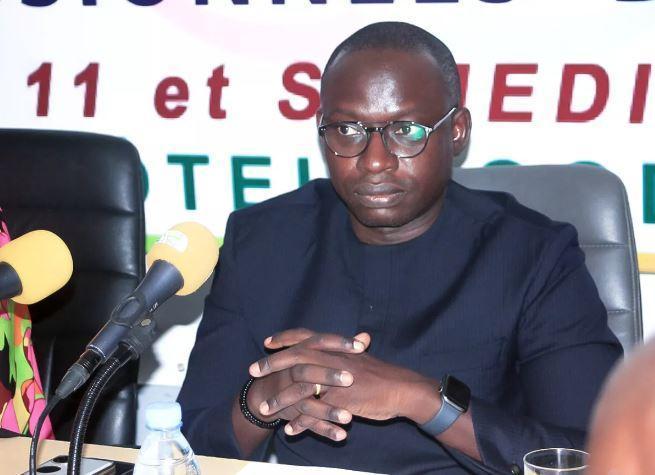
« The Ministry of Culture and Historical Heritage, project manager, will send the texts to the General Secretariat of the Government, which will be responsible for transmitting them to the other ministerial departments before convening a technical validation committee », he said. – he says not without adding that the most important and the hardest, « is to collect the opinions and the observations and the concerns of the actors of culture and the arts ».
Following this step, “I believe that with the other ministerial departments, we should go much faster,” suggested Habib Léon Ndiaye.
For his part, the legal consultant, Mohamed Bachir Niang, believes that the text has many specificities related to the particularities of the sector of activity that is culture.
“These are the intermittence, the discontinuity of activities, what is called pluriactivity, salaried and self-employed workers, the plurality of employers, specific remuneration corresponding to stamps or property rights intellectuals, artistic or literary, etc”, he listed.
According to him, all this means that the social protection of this sector can only be governed by “specific provisions”.
The draft decree relating to the social protection scheme has raised many questions with those involved in culture, in particular on the one-stop shop bringing together the social security fund and the IPRES, on the number of working hours necessary to benefit of social protection and the management of accidents at work and illnesses and also the nature of cultural enterprises.
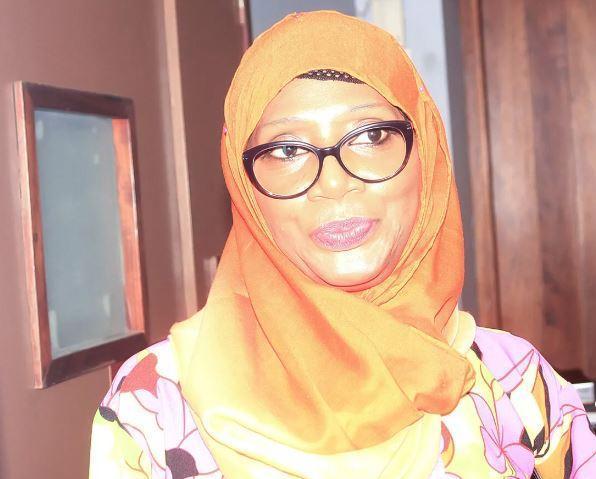
For Ngoné Ndour, producer and president of the Board of Directors of the Senegalese Society of Copyright and Related Rights (Sodav), these texts will make it possible to organize and regulate the sector, most of which is informal. .
She notes, however, a concern about the professional card. For her, formal cultural enterprises that have a trade register and operate normally do not need a professional card.
Pour plus d’informations et d’analyses sur la Senegal, suivez Africa-Press