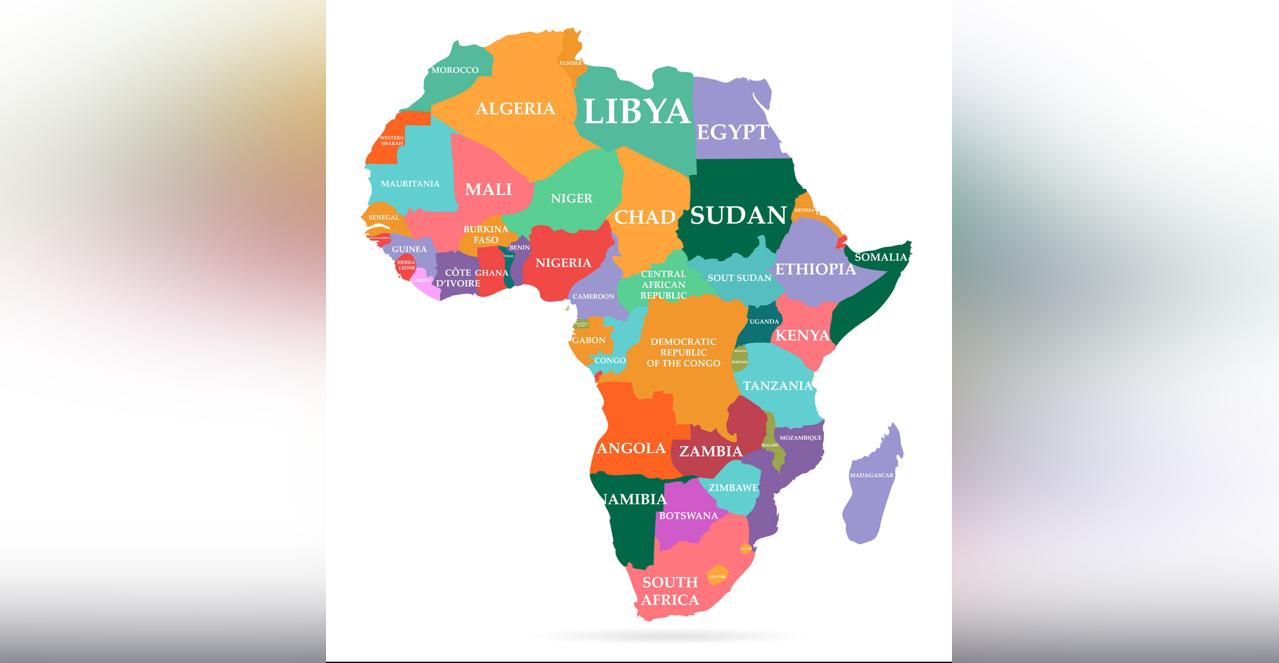
Africa-Press – Seychelles. OF ALL THE FIVE COUNTRIES designated as the sub-region of Southern Africa in the southernmost part of the African continent, only one country overshadows the rest.
Although made up of Botswana, Lesotho, Namibia, South Africa, and Swaziland (now known as Eswatini), South Africa seems synonymous with all these countries put together for a number of reasons.
Even when four additional countries (Angola, Mozambique, Zambia and Zimbabwe) are included to beef up the size, all the rest still remain in the shadows of South Africa.
The picture only gets fairly diluted under a wider Southern African Development Community (SADC) as a Regional Economic Community (REC), comprising 16 member states, including also Angola, Comoros, DR Congo, Madagascar, Malawi, Mauritius, Seychelles and United Republic of Tanzania.
In the Southern Africa region, South Africa as a country stole the show, with all the prominence on many, if not all, fronts.
In that sub-region, with a combined population of 69,683,621 or roughly 69.7 million people, South Africa’s population alone is 59.39 million – a whopping 85.6 percent of that sub-region’s population.
The remaining paltry 14.4 percent is shared between the other four countries, with Botswana, Eswatini, Lesotho and Namibia having population figures of 2.58 million, 1.19 million, 2.28 million, 2.53 million, respectively.
Similarly, the economy of South Africa dwarfs those of the other countries.
It was once touted as the biggest in Africa and assumed bigger than that of Nigeria until in 2014 when the rebased economic statistics of Nigeria revealed that Nigeria has overtaken South Africa in terms of the comparative sizes of both countries’ economies.
For instance, South Africa’s GDP in 2021 alone was $419 billion, compared to Botswana’s $17.61 billion, Eswatini’s $4.74 billion, Lesotho’s $2.96 billion and Namibia’s $12.31 billion GDP within the same period.
All put together, South Africa’s economy stood at 91.73 percent of the total sub-regional economy, while the other four countries shared the remaining 8.27 percent.
It would, therefore, not be out of place to assume that Southern Africa is nearly the same as South Africa, viewed from any perspective – demographics, economics and even politically.
However, the advantages enjoyed by South Africa over the other countries – including those in the expanded context – are many.
While nearly all the countries in that sub-region experience the same natural environment, South Africa has gone through years of economic transformations that have led to diversification and have stood it apart from others.
South Africa is subtropical, with temperatures modified by altitude.
Grasslands are a major component of South Africa’s vegetation.
The interior, where the bulk of grasslands are found, is semi-arid to arid, with rainfall decreasing westwards.
Grassland is mainly in the central, high regions.
Savannah occurs in the north and east, while arid savannah extends to the Kalahari.
The Kalahari Desert is a large semi-arid sandy savannah in Southern Africa extending for 900,000 square kilometres (350,000 sq miles), covering much of Botswana, and parts of Namibia and South Africa.
The implications are many.
The climate is not favourable to agriculture and that has its impact on food security within the sub-region.
In the Western Cape region where Cape Town is situated, the Cape Town water crisis is almost becoming perennial in the drought-ravaged Western Cape.
According to South Africa’s 2021 public records, agriculture contributed a meagre 2.43 percent to the GDP, whereas industry and services respectively contributed 24.46 and 62.75 percent of the total value added.
The other contiguous countries are not so favoured as population and consequent market sizes are not to their advantage, made worse by the prevalent climate.
Although South Africa has a well-developed and advanced food processing sector, which drives strong demand for food ingredients, the country nonetheless remains a net importer of food ingredients and one of the top five African food importers accounting for 50 percent of Africa’s total food imports.
In that cadre, South Africa comes third at nine percent after Egypt’s 15 percent and Algeria’s 12 percent.
Of the 1.2-million square kilometres area of South Africa’s land that is bigger than all countries Europe – except Russia – and approximately approximately 175 percent of the land area of Texas, only 9.89 percent has been steadily arable since 2012, shrinking from 10.44 percent in 2009 to 10.33 percent in 2010 and to 9.92 percent in 2011.
The implications for future food security are clear.
But doesn’t it sound counterintuitive that such a country is a leading exporter of some agricultural commodities in Africa? For instance, in 2022, South Africa reportedly recorded a five percent year on year increase in agricultural exports in 2022, reaching $3.4 billion.
The documented top exportable products were citrus, maize, apples, pears, wine, grapes, figs, dates, avocados, nuts, fruit juices, wheat, wool and sugar.
For More News And Analysis About Seychelles Follow Africa-Press