Africa-Press – Seychelles. The Ministry of Employment & Social Affairs has started discussion with stakeholders from government ministries, departments and agencies, to get their views on the proposed Flexible Work Arrangement.
Flexible Work Arrangement (FWA) is a mode of work that permits a more flexible arrangement between an employer and worker that is different from the traditional work week that most organisations operate under. An example is a workplace that does not require everybody to be on site at the same time.
This concept has been adopted by many countries but it is not common here, although there are some components in our practice such as part-time work. It was brought to the forefront by Covid-19 where many workers had to work from home, following which quite a number of private organisations as well as government offices are adopting some form of it.
Although this time has passed, the ministry is still forging ahead with its plans that was initiated a while back to ensure the right environment to make FWA become a reality for the country. The aim for considering FWAs is to contribute in reducing unemployment and informal employment especially among the youths, as well as promoting work life balance for workers.
In forging ahead with the concept, the ministry will be seeking the assistance of ILO for a study to be undertaken on ground to see what can possibly work for the country. The study is expected to start by mid-year with the assistance of an international expert.
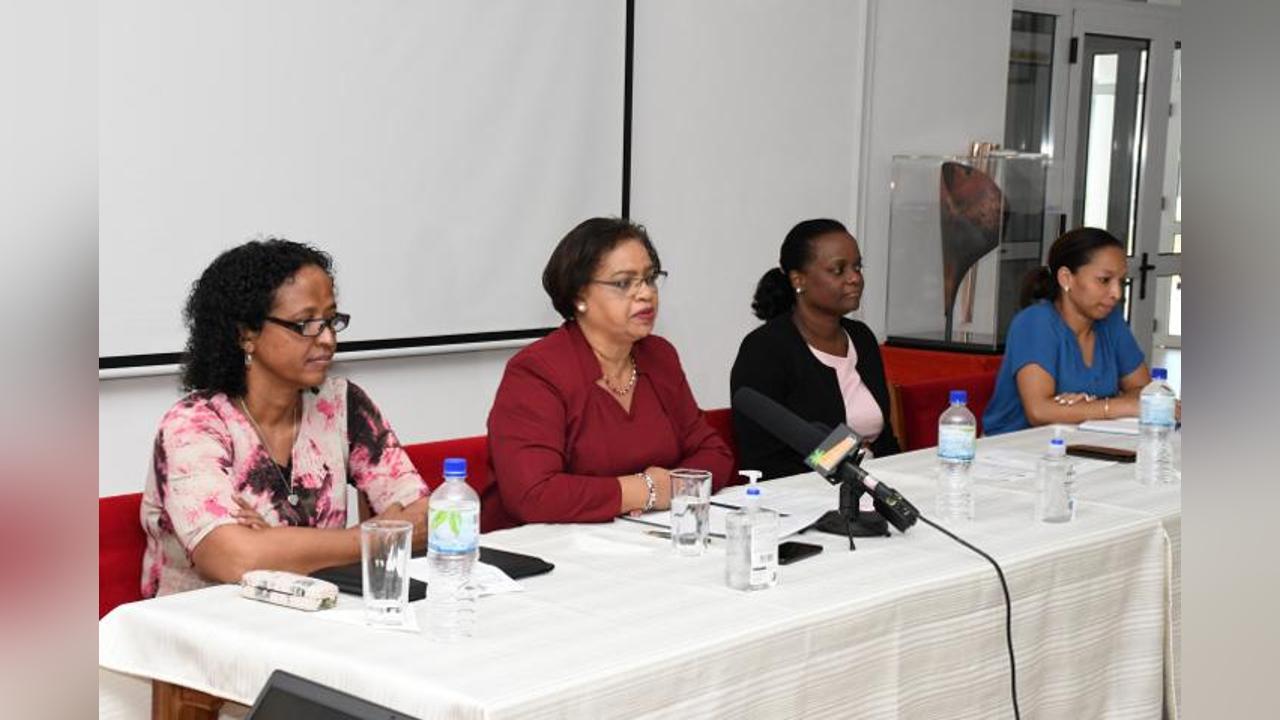
In a first meeting held on Tuesday at the Seychelles Olympic House, Roche Caiman, to get them onboard in preparation for when the study begins, the various stakeholders – namely from education, health, finance, land transport, the police, Institute of Early Childhood Development (IECD) and the Seychelles Public Transport Corporation (SPTC), among others – were briefed on the different modes of FWAs before engaging in discussion and to present their views, the challenges they are facing and their recommendations for consideration if ever the proposed FWA is to be adopted. The meeting was chaired by Minister Patricia Francourt.
Speaking to the press, Susan Morel, the chief policy analyst from the Employment department, said that the ministry wanted to present the different forms of FWA to the stakeholders so that they are aware of what practices that could be adapted and also to hear of their challenges including recommendations for consideration should government decide to introduce a certain form of flexible work and work time arrangement.
The types of working time arrangements that were discussed on Tuesday for consideration to be adapted in our country’s context were the compressed working weeks that involves working more hours in fewer days to accumulate time off; staggering hours where work is set to start and end at a particular time; hours averaging schemes that allow for variations in daily and weekly working hours over periods longer than a week within specified legal limits; fix-time arrangement that allows for working hours to be scheduled flexibly on a daily and weekly basis in order to complete tasks based on individual needs; time-saving account that allows workers to accumulate credit hours to take as off days; work sharing which is a reduction of working time intended to spread a reduced volume of work over the same or similar number of workers in order to avoid lay-offs and teleworking involving arrangement to work at the office or at home on either full-time or part-time through the use of information and communication technologies.
There were no representatives from the private sector in the discussion but Ms Morel said that will be consulted later.
“We wanted the first discussions to be among government, ministries, departments and agencies because they are the ones involved in the regulatory policy framework to put the system in place and once we have heard of their issues and on the way forward, then we can go on the next step and consult the private sector,” Ms Morel said.
She noted that there are some provisions already in the Employment Act 1999 with regard to flexible work time arrangement in terms of the different modes of employment contracts on fix term, continuous basis, part-time, shifts and casual.
She said that the meeting will be followed by others that will lead up to the study that will take four months to complete, which will help identify the best FWA for the country.
Ms Morel said that among the many benefits, the flexible work and work time arrangement will benefit the young people who will be seeking their first working experience and for people with social and family issues, including those with a disability, who will find it difficult to work full- time.
For More News And Analysis About Seychelles Follow Africa-Press