Africa-Press – Seychelles. Actions speak louder than words – Illustrations of the EU-AU partnership
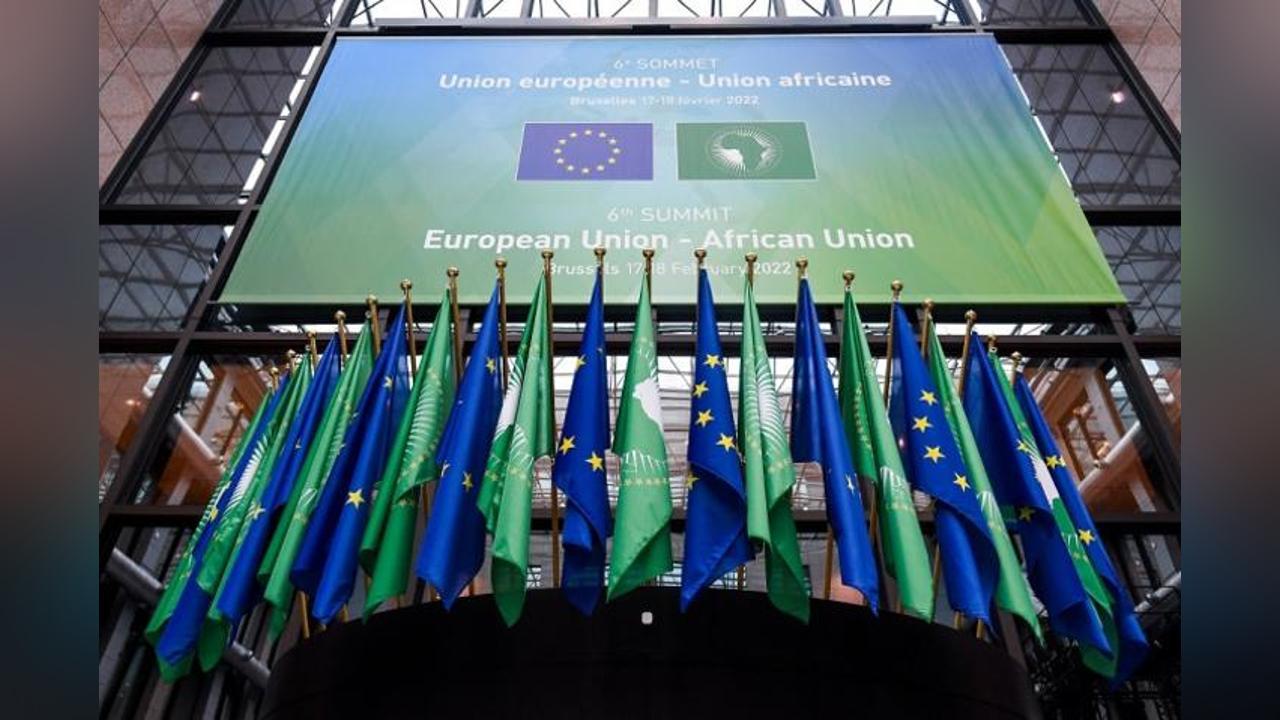
Every day we work to make the EU-AU partnership stronger and closer to the peoples of Africa and Europe. Our daily commitment demonstrates that the relationship between Europe and Africa is made up of unparalleled human, cultural, geographical and economic links, and not of incantations, promises and affirmations. At the 6th European Union (EU) – African Union (AU) Summit in February 2022, more than 80 leaders from Africa and Europe gathered in Brussels to adopt an ambitious agenda and support a partnership of peace, security, solidarity and prosperity based on equality, mutual respect and understanding.
Europe and Africa need each other to provide a strong and lasting response to global and common challenges, be it climate change, peace and security or economic development. , which concerns us all. The partnership between the European Union and the African Union, rooted in dialogue and multilateralism, is solution-oriented and forward-looking.
Europe and Africa are together stakeholders in a multilateral international system based on the rules of law. The EU and its Member States were among the first to express their full support for the integration of the AU into the G20; the EU supports Africa in its ambitions to become a leading global player. Together, the AU and the EU can be the pillars of the defense of a world based on the rule of law, where sovereignty, territorial integrity and the right to self-determination are preserved.The European Union is deeply committed to the security and prosperity of its neighbours, because it is a condition of our security and our prosperity, and because we strive to be a reliable and predictable partner. In these times of growing global food insecurity, the EU remains true to its commitment to facilitate the export of cereals and other agricultural products from Ukraine. We would like to point out that from the outset, the EU exempted foodstuffs and agricultural inputs (including fertilizers) from the sanctions it imposed on the Russian Federation. Complementing the Black Sea Grains Initiative, the EU has set up the EU-Ukraine Solidarity Corridors through which nearly 61 million tonnes of grain have been able to leave Ukraine overland.
Although it is often said that only a small percentage of agricultural products exported from Ukraine have reached African consumers directly, the combined economic effects of the Black Sea Grains Initiative and the Solidarity Corridors have led to a decline 23% of the cereal price index on the world market.
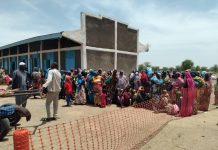
Beyond the immediate need to mitigate the volatility of food prices on the world market, the European Union will have mobilized by 2024 nearly 7 billion euros to improve food security in Africa; of which more than 3 billion euros have already been disbursed. This amount notably includes EU contributions to the IMF’s Poverty Reduction and Growth Trust Fund. Other initiatives, such as the Alliance for Sustainable Cocoa (EU, Côte d’Ivoire and Ghana), strengthen the resilience of food systems and the sustainability of agricultural value chains.As agreed at the 6th EU-AU Summit, to strengthen quality infrastructure, nearly €150 billion of investments will be mobilized by 2027 in Africa under the “Global Gateway Investment” strategy. These investments are already bearing fruit, enabling the European Union to materialize the commitments made at the summit.
In Kenya, support is provided for the installation of fiber optics and the development of a rapid bus system in Nairobi. In Burkina Faso, the EU is the main partner for rural and renewable electrification projects, notably the Yelen project, which benefits 110,000 households. Investments in health (Global Gateway’s flagship MAV+ initiative on vaccine manufacturing and access with over €1 billion of investments in Rwanda, South Africa, Senegal and Ghana) and digital (investment of 820 million euros in the digital transformation of Nigeria) are just two other examples.
The concrete and tangible results are there. They confirm that the European Union is Africa’s first partner at all levels, whether in trade, investment or development. Europe is and will remain a long-term partner of Africa – the recent renewal of the agreement with the countries of Africa, the Caribbean and the Pacific, which has existed since 1975, is just another demonstration of our engagement.With regard to peace and security, the EU has maintained its support for African peace support operations, in particular those led by the AU, despite the multiple crises raging in the world. Here again, the commitments made at the last EU-AU summit are translating into concrete actions. For the period 2022-2024, €600 million is allocated to these missions through the European Peace Facility (EPF), in addition to support provided under other development instruments. An example of this is the EU support to the African Union Transition Mission in Somalia (AMISOM/ATMIS), which amounts to €2.7 billion since 2007. The eleven training and assistance missions on the continent are further testimony to the EU’s support for the peace and security objectives of African partners. Africa has and will continue to have critical support through the FEP for these operations.
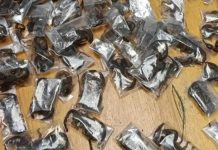
The total commitment of Team Europe in support of conflict prevention, mediation, peace and security initiatives at national and regional level will amount to 1.5 billion euros between 2021 and 2027.In the spirit of its Indo-Pacific Strategy, the European Union is a reliable partner and provider of maritime security for the countries of the South West Indian Ocean region. We have been working with the Seychelles for several years now to promote ocean governance and strengthen national capacities in maritime security (information exchange and operations at sea), physical security of ports, safety of navigation and the fight against illegal fishing. We have invested in a regional maritime security architecture around two regional centres, the Regional Center for the Fusion of Maritime Information in Madagascar (CRFIM) and the Regional Center for the Coordination of Operations in the Seychelles (CRCO), whose activities we support. Since 2008, we have mobilized the European naval force EUNAVFOR – Operation Atalanta, which has helped to eliminate acts of piracy and whose expanded mandate also extends to the fight against arms trafficking and drug trafficking. Since 2022, a number of French surveillance vessels have also participated in actions at sea within Operation Atalanta which have led to the seizure of several tonnes of drugs. We are also working with the Seychelles authorities on an agreement that extends the “legal finish”, – applicable to piracy since the agreement signed in 2009 by the EU and the Seychelles – namely the availability of the Seychellois justice system to try criminals arrested by our naval fleet to these two other types of crime. Finally, a few months ago we initiated talks with other countries in the region in view of the rapid growth of this trafficking and its dangerousness for our societies.While others seek to divide, the EU, in its partnership with Africa, seeks to achieve results and foster cooperation. The commitments made by some countries do not stand the test of time. In counterpoint, the EU and its Member States have always invested in Africa and facilitated duty-free access for African exports to the EU.
Tangible proof of our willingness to engage in a partnership that concretely benefits Africa, 33 of the least developed African countries have benefited from the most favorable customs regime in the world, eliminating customs duties and quotas for all imports from goods – with the exception of weapons and ammunition. To date, the EU is by far the main trading partner of the African continent, with a total volume of €268 billion in 2021 and 90% of African exports entering the European Union duty-free. The EU welcomes the potential of the AfCFTA, which it has supported since the beginning, within the framework of a “Team Europe” approach, through expertise, capacity building and exchanges on the lessons learned from our experience.The EU has its share of responsibility for global warming and is investing heavily to reduce emissions in Europe. It also stands alongside countries that are victims or suffer from the consequences of global warming and that need support in their climate transition. We support the AU’s Great Green Wall Initiative for Climate Adaptation with €700 million and are behind the decision to allocate $100 billion in Special Drawing Rights (or equivalent contributions) to the most vulnerable countries, particularly in Africa. The Summit for a New Global Financial Pact, held in Paris at the end of June and attended by 25 African Heads of State as well as AU and EU leaders, effectively contributed to achieving this goal – without having to choose between poverty reduction and ecological transition – and paved the way for the next African Climate Summit to be held in Kenya in September. Thanks to the common framework of the G20 and the Paris Club, an agreement was notably reached on the treatment of Zambia’s debt, a historic step for this country and the Zambian people.
In all these developments, Europe is keeping its promises. Overall funding for development cooperation by Team Europe increased by almost 30% in 2022 worldwide, and EU aid to Africa increased by 11% for the period 2021-2027 , compared to the period 2014-2020.As we work towards the organization of the next ministerial meeting between the African Union and the European Union, during which we will take stock of our common achievements, we wish to reaffirm our continued determination and commitment to strengthen our partnership of solidarity. with Africa, with a view to contributing together to peace, security and prosperity in the world.
Source: nation
For More News And Analysis About Seychelles Follow Africa-Press