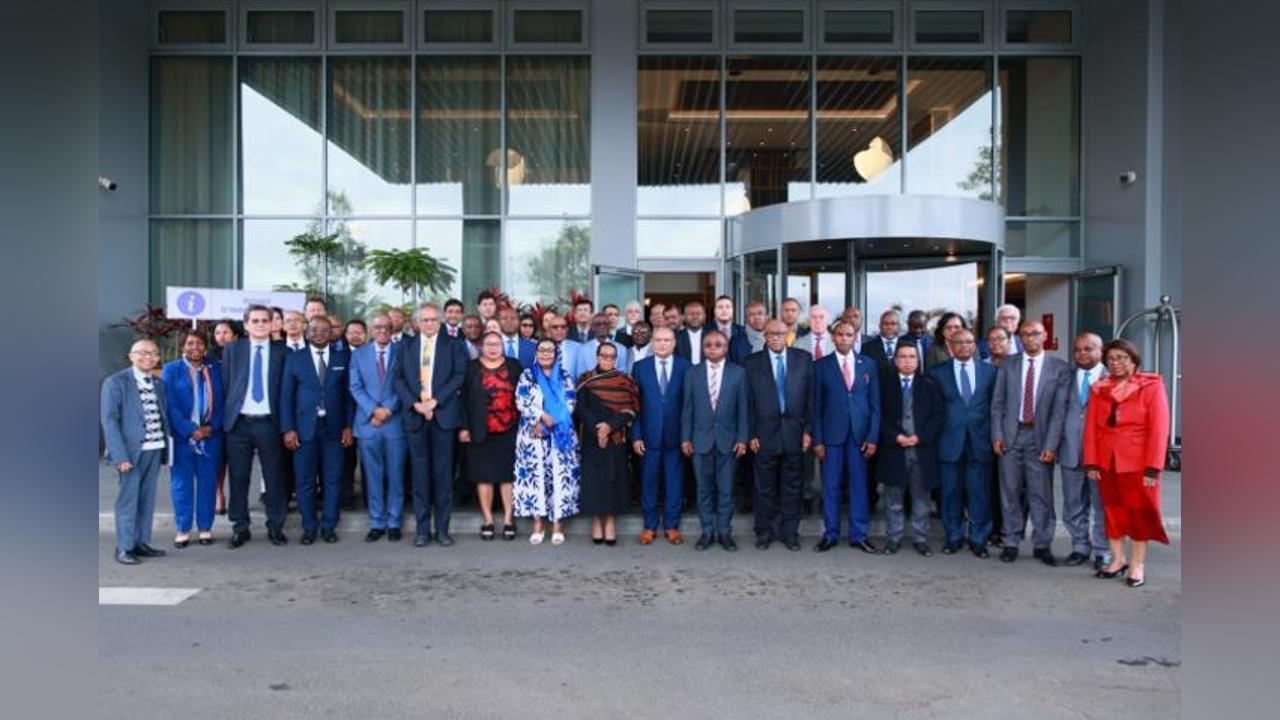
Africa-Press – Seychelles. From August 30 to September 1, some fifty representatives of electoral management bodies, elected officials, media and regulators from member states of the Indian Ocean Commission (IOC) took part in a regional conference for peace and stability in electoral processes. This conference was organized in Antananarivo, Madagascar by the Governance, Peace and Stability (GPS) project of the IOC in collaboration with the Indian Ocean Electoral Network (REOI).
The Antananarivo conference follows a request from REOI. This network, created in October 2022 with the support of the IOC, brings together the election management bodies of IOC Member States. Objective: to have time to discuss good practices in electoral situations and the role of electoral administrations, political parties and the media.
According to Prof. Vêlayoudom Marimoutou, Secretary General of the IOC, “the effective participation of the main electoral players – election management bodies, political parties and the media – bears witness to the acceptance by all of the principle of a of exchange, sharing and consultation for the organization of peaceful and stable elections by strengthening knowledge of the roles and responsibilities of each of the actors, and by laying the foundations for a renewed relationship of trust. »The GPS project team, accompanied by international experts, presented a comparative study on the electoral systems of Comoros, Madagascar, Mauritius and Seychelles. This publication, soon available on the IOC website, is a useful source of information for understanding electoral laws, processes and frameworks.
Reflections on good practices in the organization of electoral processes
The fifty or so participants had frank exchanges allowing reflections to be retained to improve, on the one hand, the dialogue between the actors of the electoral process, and, on the other hand, to establish practices of peace and stability.
Among these thoughts are:
• Revise, two to three years before elections, legal frameworks with a view to systematic improvement;
• Document lessons learned from electoral processes;
• Generalize the promotion of a democratic culture. Mobilize youth, set up awareness programs with the press, include in school programs learning about citizenship and civic practice;• Create and train pools of electoral mediators who can be mobilized as needed;
Hold more regular consultations between EMBs, elected officials and the media in order to strengthen mutual knowledge of each other’s working frameworks.
What role for the IOC for preventive diplomacy and support for electoral processes?
Four IOC Secretaries General shared their experience and thoughts on the added value of regional cooperation for peace and stability.
Monique Andreas Esoavelomandroso (2004-2008), Jean Claude de l’Estrac (2012-2016), Hamada Madi (2016-2020) and Pr. Marimoutou, Secretary General in office, gave the following reflections:
• Cultural and linguistic proximity, existing interpersonal relationships or to nurture, constitute assets in the action of the IOC for stability in electoral processes or for mediations;
• Listening and dialogue missions are useful for taking the pulse in an electoral context and identifying points of vigilance. Nevertheless, it is necessary for the IOC to also be present during the holding of the elections. As such, the IOC’s election observation missions would be complementary to those deployed by the international community.
• The IOC has every interest in deepening and systematizing collaboration with other regional organizations, including COMESA, on actions for governance and stability.
• The sustainability and effective mobilization of the networks driven by the IOC, particularly the Association of Parliaments of the Member States of the IOC and the Indian Ocean Electoral Network, must participate in the prevention of crises and the strengthening of electoral processes.
• Beyond the electoral deadlines, it is necessary to implement long-term activities to discuss thorny issues, with all regional actors, such as the financing of political parties, and to identify good practices that can be reproduced . In doing so, it is also a question of better engaging and sensitizing citizens, particularly women and young people, on the electoral process.
Source: nation
For More News And Analysis About Seychelles Follow Africa-Press