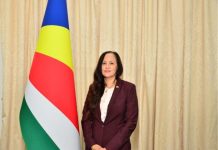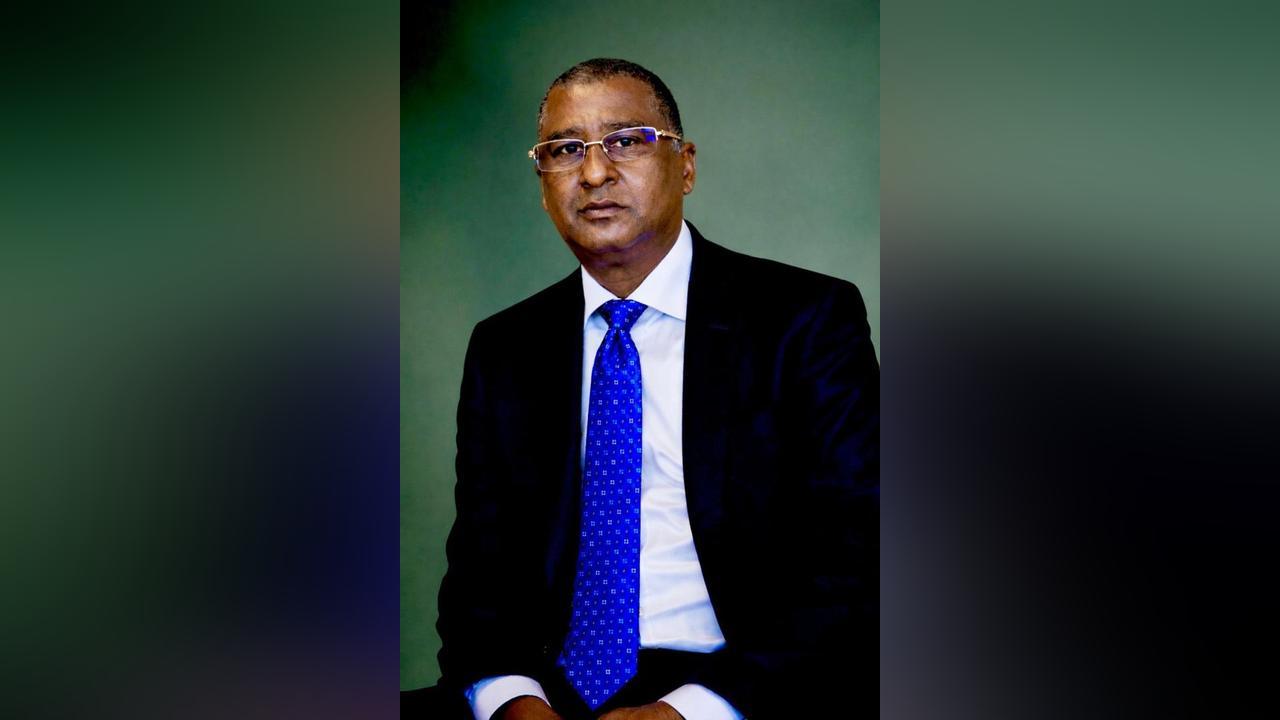
Africa-Press – Seychelles. The Indian Ocean Commission (IOC) has a new Secretary General. Meeting in an extraordinary session on Tuesday, April 7, the members of the Council of Ministers appointed Dr. Ibrahim Norbert Richard to head the General Secretariat of the regional organization.
This decision follows the end of Mr. Edgard Razafindravahy’s term, which expired on April 7, 2026. Member States commended his commitment and contribution to strengthening regional cooperation since he took office in July 2024.
Nominated by Madagascar, Dr. Ibrahim Norbert Richard assumes his duties with immediate effect. He will lead the General Secretariat for the remainder of the current term, which extends until July 2028. He thus becomes the 11th Secretary General of the IOC.
A career diplomat and holder of a doctorate in law, Dr. Ibrahim Norbert Richard has extensive experience in international organizations and strategic negotiations. A graduate of the Malagasy Ministry of Foreign Affairs, he had served as Diplomatic Advisor to the Prime Minister since November 2025.
Previously, he spent five years as Assistant Secretary-General of the Organisation of African, Caribbean and Pacific States (OACPS), where he focused on issues related to politics and human development. In this capacity, he participated in several strategic dialogues with the European Union and other international partners.
During his career, he also served as Chargé d’Affaires at the Embassy of Madagascar in Brussels, as a research officer at the Center for Strategic Studies and Analysis of the Malagasy Ministry of Foreign Affairs, and as head of the Africa and Consular and General Affairs divisions.
A specialist in international relations and development aid, Dr. Ibrahim Norbert Richard has also been involved in training future diplomatic leaders by teaching at the National School of Administration of Madagascar.
The Record of Edgard Razafindravahy’s Mandate as Secretary General of the IOC
The record of Edgard Razafindravahy’s mandate as Secretary General, covering the period from July 2024 to April 2026, demonstrates a commitment to modernizing the institution and focusing its actions on strategic priorities for the region.
Food Security and Fisheries
Considered an absolute priority, this area was marked by the promotion of an “IOC agricultural zone” aimed at opening up production land to regional investment. Concrete results include: technical support to 23,379 smallholder farmers, the majority of whom are women; the production of 43 tons of improved seeds (maize, potato, pulses) adapted to climate change; and the organization of regional fisheries surveillance patrols, which notably led to the apprehension of vessels in violation of regulations.
Health and Maritime Safety
Health: Strengthening the SEGA-One Health network with the creation of a dedicated regional fund and the training of 900 healthcare professionals, including the first 16 graduates of a regional Master’s program in epidemiology.
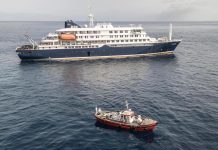
Maritime Safety: Coordination of 19 at-sea operations resulting in the seizure of over 3.5 tons of drugs. Marine pollution simulation exercises were also conducted to test regional responsiveness.
Climate, Environment, and Ecological Transition
Coastal Resilience: Funding of 7 national initiatives (Comoros, Madagascar, Mauritius) totaling €950,000 through the RECOS project.
Plastic Pollution: Organization of the regional tour of the Plastic Odyssey vessel (raising awareness among over 2,000 schoolchildren) and launch of the first major regional scientific expedition on plastics with 20 researchers.
Energy: Support for projects to convert waste into biogas and eco-friendly charcoal.
Culture, Youth, and Entrepreneurship
Culture: Support for 81 mobility projects and grants awarded to 63 cultural organizations. An inventory of traditional architecture (366 entries) was compiled to preserve heritage.
Youth: Creation and launch of the Indian Ocean Regional Youth Parliament to strengthen the voice of young people in public debate.
Entrepreneurship: Support for over 20 young entrepreneurs at international trade fairs and training for 100 business operators.
Institutional Modernization and Governance
The mandate was marked by a sustained effort toward transparency and rigor:
Accreditations: Accreditation obtained from the Green Climate Fund in 2024, with processes underway for the Adaptation Fund and the EU’s “9 Pillars.”
For More News And Analysis About Seychelles Follow Africa-Press