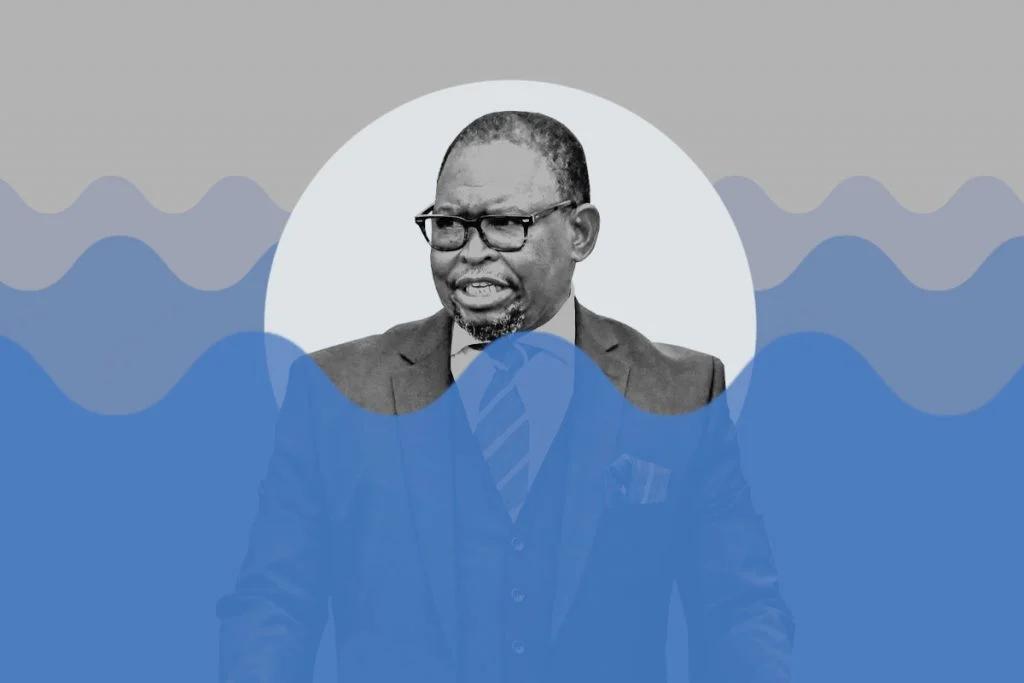
Africa-Press – South-Africa. South Africa is in deep financial trouble, and experts have raised some major concerns while Finance Minister Enoch Godongwana admitted his Budget Speech scheduled for next month will be a tough one.
Finance Minister Enoch Godongwana tabled his Medium-Term Budget Policy Statement in Parliament in November 2023, noting that gross debt will rise from R4.8 trillion in the current financial year to R5.2 trillion in the next financial year. By 2025/26, it will exceed R6 trillion.
“We expect gross government debt to stabilise at 77% of GDP by 2025/26. This is higher than the level we forecasted in February (73.6%),” the Minister said.
The increase in government debt is especially concerning when we consider that, in 2009, debt was only 23% of GDP. According to budget projections, for every R1 the government spends, 22 cents are allocated to paying off debts, which is a significant rise from 7 cents in 2009.
Despite the dire financial position South Africa finds itself in, experts warn the situation is likely even worse when you factor in the bailouts excused from the State’s debt and deficit numbers.
Renowned economist Dawie Roodt said the finance minister is ‘economical with the truth’ when it comes to South Africa’s financial reality.
“He did not include many items in his debt and deficit numbers,” Roodt said.
He highlighted that Godongwana excluded the R254 billion debt it will take over from Eskom in the state’s debt. The same goes for local municipalities.
Godongwana indicated that he would write off around R20 billion of their debt. That is also not included in the numbers.
“These bailouts and write-offs not included in the deficit or the debt numbers skew the view of the country’s true financial position,” said Roodt.
“The fiscal deficit is not going to be 4.9% of GDP, as the Minister said. It is more likely to be between 6% and 6.5% of GDP. We will see 77% debt-to-GDP next year, and it will continue to go up after that.
“South Africa is in very deep trouble. The debt numbers are much worse than what the numbers the Minister shared suggest,” added Roodt.
Godongwana’s options
Considering South Africa’s precarious fiscal position, the National Treasury proposed drastic steps to rein in spending to rescue the government from running out of money and facing a debt trap.
These included a freeze on new public service jobs, stopping procurement contracts for all infrastructure projects, and keeping public servant salary increases in check.
In response to the Treasury and addressing the action needed to stabilise the country’s finances, Godongwana said there are three ways to address the revenue shortfall and fiscal deficit.
Increase taxes, which is challenging and unpopular.
Borrow more money, which is limited, and
Budget cuts also have limitations before hurting the system.
These measures weren’t received lightly by many public stakeholders – especially the idea of cuts in spending – with some saying “Chaotic budget cuts” are not the answer to the shortfall between tax collections and government spending.
In a bid to temper concerns surrounding budget cuts, the Parliamentary Budget Office (PBO) recommended increasing taxes.
The budget office said there are several potential areas for more tax to be collected, including an excess profits tax, a progressive tax on wealth, and a removal of some tax incentives – among others.
Godongwana noted during the Kgalema Motlanthe Foundation annual Drakensberg inclusive growth forum at the end of last year that while the cuts would not be as severe as initially expected because the government would have to borrow more funds, there must be some cut in spending.
Social and economic risks
South Africa’s financial predicament is dire, and Godongwana recently noted on the sidelines of the World Economic Forum in Davos that the message he will likely put across in February is going to be a difficult one.
This is likely because the two main avenues of addressing the financial shortfall – budget cuts or increased taxes – bring with them major risks.
Momentum warned that too much austerity could have dire consequences for South Africa in the form of social unrest and protests across the country.
“With real government spending in per capita terms stagnating over the past decade, proposed austerity measures are likely to weigh more heavily on the fragile social fabric of the country. This risks an elevation in service delivery protests in the medium to longer term, in our opinion,” Momentum said.
On the other hand, increasing taxes risks increased tax evasion and capital flight, as many of those who will have to shoulder the increased tax will simply choose to leave the country.
According to Roodt, only 1.12% of taxpayers (roughly 163,702 South Africans) pay 30% of total personal income taxes in the country, while 19% pay a whopping 87% of total personal income taxes.
Additionally, a staggering 0.09% of corporate taxpayers (only 770 companies) pay 62.5% of total corporate income tax, with 4.4% paying 95% of total CIT.
“This means the country has an alarmingly narrow tax base, which is a massive concern for the state’s finances. You cannot increase this.
“If this increases, the tax base will collapse as many of the 1.12%, as well as businesses, will simply leave the country – which they are already doing,” said Roodt.
For More News And Analysis About South-Africa Follow Africa-Press