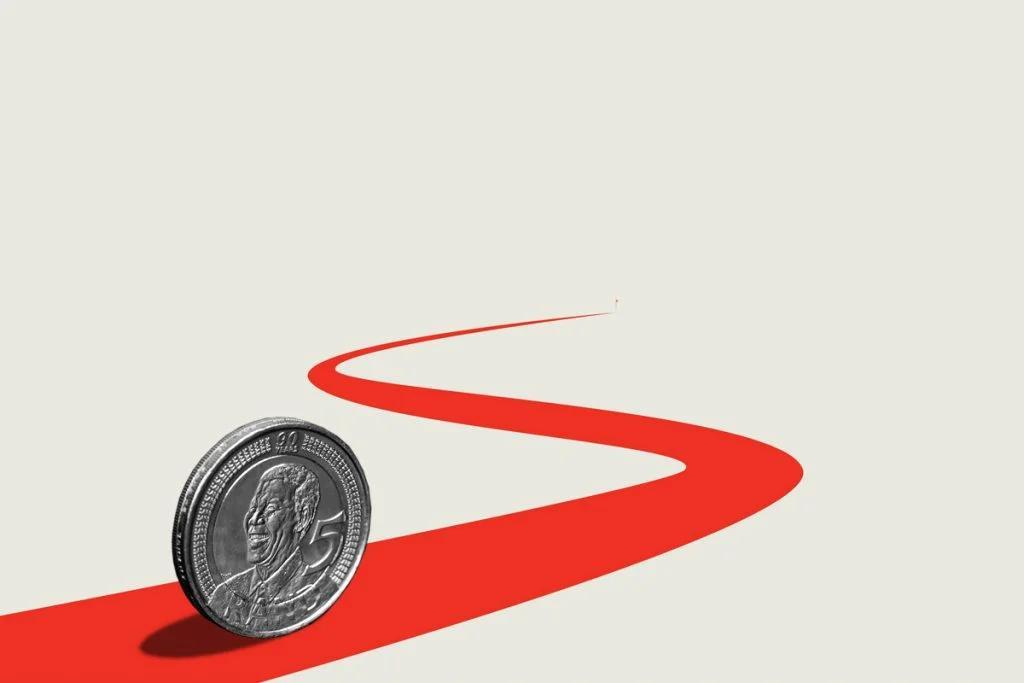
Africa-Press – South-Africa. South Africa, like the rest of the world, is set to enter the ‘great unknown’, where political uncertainty begets market volatility.
This is according to Discretionary Fund Manager Cogence, a partnership between Discovery and the world’s largest asset manager, Blackrock, which believes that the debate around whether the world will achieve a soft landing in 2024 is misplaced.
Cogence CEO and CIO Jonel Matthee-Ferreira said that an unexpected rally in the global equity market in 2023 is welcome but not universal.
“What shouldn’t be overlooked is just how narrow this has been – led by a mere handful of mega-cap American tech companies benefitting from the normalisation of the United States economy after the pandemic,” said Matthee-Ferreira.
Cogence said that the impact of profound structural shifts currently underway is a more relevant conversation for the coming years.
The global investment regime is changing from Great Moderation – a long period of stable growth and inflation – to the Great Unknown – characterised by geopolitical fracturing and higher interest and inflation rates.
Matthee-Ferreira and Cogence investment specialist Kerri-Ann Sattary sat down with BusinessTech to explain what the ‘Great Unkown’ means for South Africa:
Interest rates
Matthee-Ferreira said that global interest rates will likely stay higher longer as inflation remains sticky.
The US economy has been resilient despite elevated inflation and interest rates.
Considering the USA’s 2.5% growth in GPD in 2023, there is less urgency for the Federal Reserve to cut interest rates to boost economic growth.
Although South Africa’s GDP growth was only 0.6% in 2023, any interest rate cuts from the South African Reserve Bank (SARB) will likely only follow cuts in the US.
However, rate cuts in South Africa are still expected to occur in the second half of 2024, with inflation expected to be within the SARB’s target range and the need to stimulate the economy.
Inflation
Inflation is set to be higher for longer compared to the past due to the weakness of the rand and the struggles in the electricity and logistics sector.
However, South Africa is not isolated in this, with geopolitical fragmentation, shrinking workforces and the transition to low-carbon energy likely to prevent economies from growing at pre-pandemic levels without stocking inflation.
“Central banks are in a wholly different position now compared to where they were a decade ago. They can no longer flood the market with cheap money to accelerate growth,” said Matthee-Ferreira.
Rand
Matthee-Ferreira said that although the rand may strengthen somewhat this year, it is unlikely to be anything substantial.
Large amounts of uncertainty are linked to the 2024 South African election, with markets waiting to see the outcome in what is expected to be the most hotly-contested election in South Africa’s history.
Elections
Despite the election anxiety facing investors, once the polls have closed at the end of May and the administration officially takes over, sentiment should improve.
Investors currently sitting on the fence should start committing more capital once they know who will be running the country, especially in the renewable energy sector.
South Africa is not alone in having a national election this year, with 49% of the world’s population headline to the polls.
The USA is set for a Joe Biden and Donald Trump rematch this year, with positives and negatives for South Africa no matter what happens.
The US economy tends to remain resilient no matter who the president is. Although Cogence looks to diversify risk and is less focused on country-specific risk, the rest of the world tends to do well when the USA’s economy does well.
However, the USA has been known to flip-flop with its policy on emerging markets, as is the case with its chip war with China, which poses a potential risk for South Africa.
For More News And Analysis About South-Africa Follow Africa-Press