Africa-Press – South-Africa. Cape Town – Parliamentarians told the country’s top law enforcement agencies that they did not want fancy presentations on the work they do, but a demonstration of the progress from their previous reports.
This emerged when three law enforcement agencies came under criticism from the MPs over the report they provided to the justice and correctional services portfolio committee.
The Special Investigating Unit (SIU), National Prosecuting Authority and Hawks were reporting on investigations into the Master’s Office, Office of the State Attorney and Covid-19 cases.
The committee was not impressed with the report which was found not to show a fundamental shift from the one presented previously.
MPs complained about finalisation of cases, with some taking up to 10 years to get on to the court roll.
DA MP Glynnis Breytenbach said the presentation made things sound rosy, as if everything was under control.
“My fear is that that is not the case,” Breytenbach said.
Breytenbach said the presentation did not deal with “nitty-gritties”, and that they did not have financial or human resources.
“Even if you have resources, what is the level of resources? Can they deal with these matters?” Breytenbach asked.
ANC MP Xola Nqola applauded the collaboration between the entities but was concerned with finalisation of cases.
“We plead with all entities to always finalise matters sitting with them within a reasonable space of time,” Nqola said.
Committee chairperson Bulelani Mangwanishe said he did not see a fundamental shift from the last report to the one presented on Tuesday.
Mangwanishe mentioned an update on the State Attorney Offices where the pension of an official was stopped from being paid out for a third time.
“You are giving us an internal management report. These updates are not adding anything … This is something that needs to be addressed urgently,” he said.
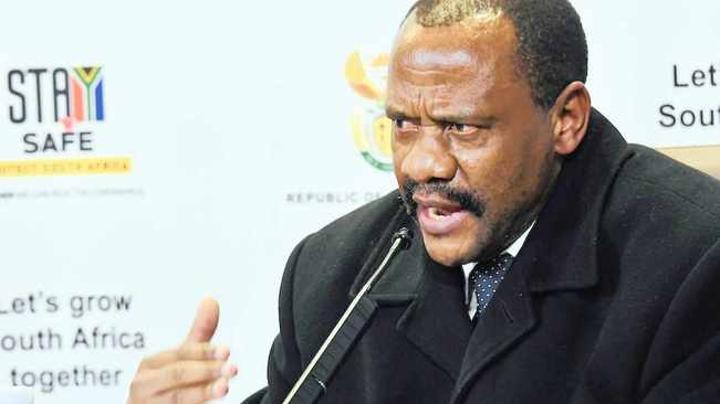
Responding to matters involving his unit, Directorate of Priority Crime Investigations (DPCI-Hawks) head Godfrey Lebeya said they had received additional vehicles and would receive additional 103 personnel.
“From where we were and where we are, there is improvement with capacitation. We are operating at 47% so we are moving towards 100%, which will take a little bit of time.”
Lebeya told the MPs that the unit has 21 000 cases and fewer than 2 000 investigators.
He said the workload was higher compared to personnel they had.
“The workload is more than what we are able to finalise speedily,” he said.
SIU head Andy Mothibi said they did not wait for the outcomes of their investigations to take action. He told of referrals made in between to the DPCI, NPA and also recovery of state money through civil litigation with immediate effect, including holding officials accountable.
Rodney de Kock, Deputy National Director of Public Prosecutions, said they were working on five areas to substantially change the operating model of law enforcement. He said at operational level they were sharing information and looking at the workload of prosecutors in the specialised commercial crime unit.
“We changed case selection criteria and only focus on priority crimes,” De Kock said, adding that the most experienced prosecutors were assigned to the most difficult cases.
“When cases get into this (priority) list we must ensure that all resources including forensic capability are attached and there are resources in the prosecution.”
He said the special commercial crime unit filed 154 prosecutorial posts last year and added 21 contract posts after obtaining a deviation request form the National Treasury.
National Director of Public Prosecutions Shamila Batohi said while things were not rosy, they were largely under control.
“At strategic level there has been a shift. At operational there are challenges but the important issue is colleagues work hard to enhance various methodologies of operations.”
She said they could not do everything, they had to prioritise.
Batohi, however, said capacitation of the DPCI was critical if the battle against corruption was to be won.
“The reality is we are nowhere near to having all the capacity to deal with all the challenges and the large percentage of cases that are before us,” she said.
[email protected]
Political Bureau