Africa-Press – South-Africa. To mitigate against the impact of tariffs on South African goods exported to the United States, the country has looked to increase its trade with other partners, particularly China and the European Union (EU).
China and the EU consume close to 40% of South Africa’s exports, making them valuable trading partners.
Increasing trade with these partners will bring immense benefits to South Africa and potentially consume the exports initially intended for the American market.
However, this plan B has problems of its own, as it is extremely difficult to replace the American consumer, and the Chinese and European economies look increasingly fragile.
China and the EU are likely to experience headwinds from United States tariffs alongside South Africa, slowing their economic growth and, thus, reducing demand for imports.
The growth prospects of two of South Africa’s key non-US export markets continue to flag, constrained by growth challenges, political instability and uncertainty, the Centre for Risk Analysis (CRA) said.
In China, a long-term depressed domestic housing market, coupled with weakening manufacturing and factory output, has dropped the country’s GDP growth rate into the 4% to 5% range, down from 6% to 10% in the decade before the Covid-19 pandemic.
With the total government debt-to-GDP ratio at 300%, the state has less room to stimulate the economy than ten years ago, when debt to GDP stood at around 200%.
The new normal of higher US tariffs will also pressure Chinese growth, with exports from the Asian country to America already declining significantly.
China has been working hard to diversify its exports outside of the United States, insulating it from the worst effects of tariffs. However, it is finding it increasingly difficult to replace the American market.
The Asian economy is particularly important for South Africa, with it consuming R220 billion worth, or 15.9%, of the country’s exports.
In 2023, foreign direct investment (FDI) from China into South Africa totalled R104.8 billion, or 5% of the total FDI received by South Africa. For comparison, 8% came from the United States.
As the world’s largest consumer of commodities and the driver of commodity prices, any weakness in China will impact South Africa.
“Lower commodity prices from lower demand in China will result in a balance of payments shock to South Africa and other African economies,” Standard Bank chief economist Goolam Ballim explained to Daily Investor.
“A reduction in volumes and prices of commodities can result in weaker currencies due to this balance of payment shock. Weaker currencies lead to higher inflation that can trigger higher interest rates.”
“Through that, you get a sense of how low commodity prices and volumes can foster a vicious cycle of reduced exports, a weaker currency, high inflation, tighter monetary policy, weaker consumer spending, weaker investment appetite, and slower growth.”
European quagmire
On the surface, the European economy appears resilient, with low inflation enabling reduced interest rates and looser monetary policy.
This has boosted spending, eased debt-servicing costs, and encouraged investment in the economic bloc.
Furthermore, it has benefited from a pivot away from traditional safe-haven assets in the United States, with the Euro strengthening amid geopolitical uncertainty.
Europe’s largest economy, Germany, has also unveiled a significant stimulus package, increasing government spending on infrastructure and defence.
This is set to boost its ailing industrial sector, the historic backbone of the German and European economy.
However, the CRA said this masks the significant political upheaval and uncertainty experienced across the continent.
For example, the Dutch Prime Minister Dick Schoof and his cabinet narrowly survived a recent motion of no confidence. Snap elections are scheduled for 29 October.
In June, Geert Wilders’ Freedom Party pulled out of the ruling coalition, and the government has experienced bouts of increased turbulence and uncertainty since.
In France, Prime Minister François Bayrou called a confidence vote for 8 September, with mounting debt representing an existential threat for the government. With Bayrou likely to lose the vote, President Emmanuel Macron will need to name a replacement.
Last year, the EU accounted for 20.6% of total South African merchandise exports, with a value of R372.1 billion.
In 2023, South Africa attracted R1.5 billion of foreign direct investment from Europe, representing 73% of all FDI into South Africa.
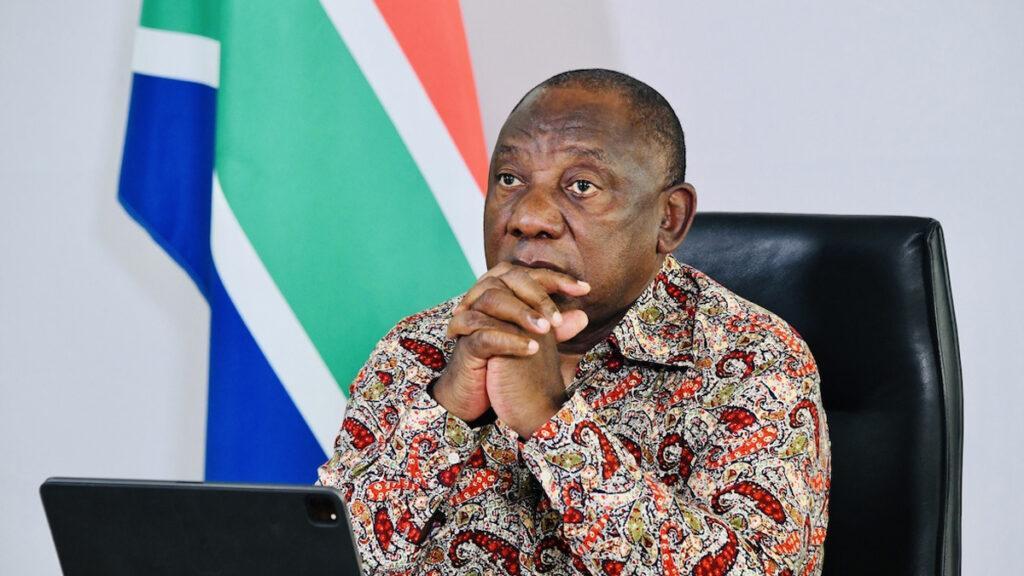
While President Cyril Ramaphosa has talked a big game about developing alternative export markets, the poor growth forecasts of China and the EU will continue to weigh on South Africa’s export opportunities, the CRA said.
For More News And Analysis About South-Africa Follow Africa-Press