Africa-Press – South-Africa. The SA Human Rights Commission (SAHRC) says socioeconomic rights remain the most reported area of concern in the country, with thousands of citizens raising issues about health care, food, water and social security in the past financial year.
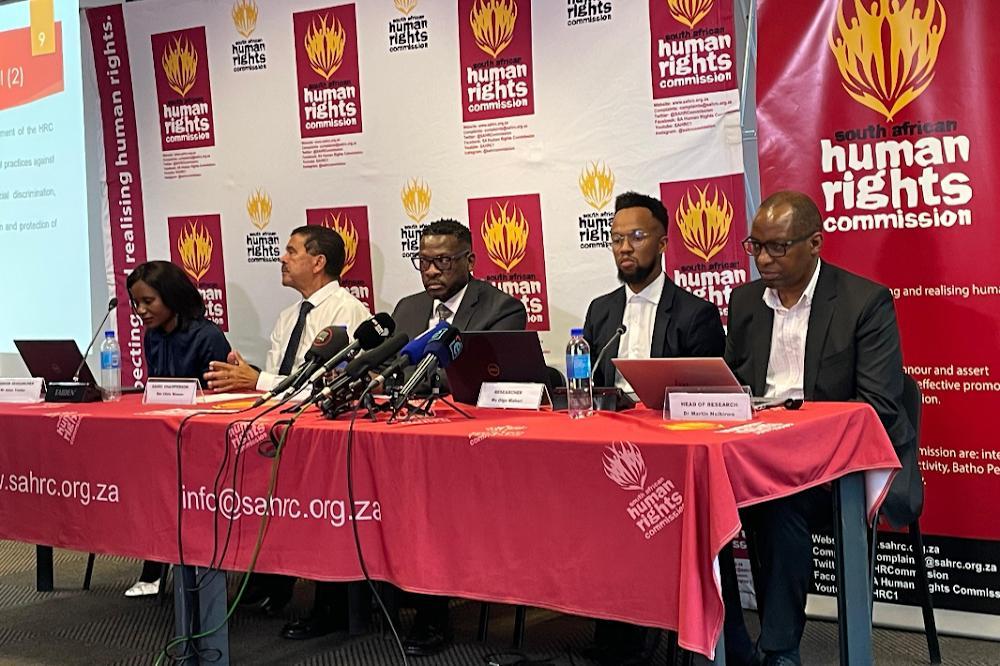
The commission released four reports on service delivery issues in Parktown, Joburg, on Tuesday.
Head of research Dr Martin Nsibirwa said this was the first time the commission had compiled the “State of Human Rights Report” in its current form. He said the HRC received 3,352 complaints in the 2024/2025 financial year.
It undertook 125 initiatives, was involved in 21 court cases and monitored more than 1,394 facilities.
The largest number of complaints were directed at the department of home affairs.
“[These were] people having issues with their identification,” Nsibirwa said. “In terms of municipalities, the highest number of complaints were against eThekwini, followed by others such as Rustenburg and Polokwane.”
Racism and xenophobia remain widespread, with race-based cases forming the bulk of equality-related complaints, the commission noted.
Bullying accounted for 68% of school-related cases and nearly half of South Africa’s health facilities lack backup power during power cuts, it said.
“The first one is the failure by the state and private individuals or parties to observe human rights of people who are alleged to be in conflict with the law… The second issue, which we picked up through our monitoring, was the issue of inadequate provision of basic services. [This] is most evident in the area of health-care access [and] water,” Nsibirwa said.
Researcher Olga Majoro presented a report which evaluates whether organs of state are realising the socioeconomic rights guaranteed in the Bill of Rights. She said only five out of seven government departments responded to the commission’s requests for information, revealing major shortcomings in housing, health care, water, social security and education.
“What we are seeing is persistent underutilisation of funds in housing, serious misalignment between budgets and actual demand, and growing backlogs that force people into overcrowded or informal settlements,” Majoro said.
She warned that shortages of doctors, long waiting times and crumbling facilities are undermining constitutional rights.
“Many hospitals and clinics are in poor condition, some without clean water or electricity. These are basic resources yet their absence makes it impossible to deliver quality care.
“People in rural areas and informal settlements continue to lack access to clean water and decent sanitation. Communities face frequent supply disruptions and sewage spillages because of infrastructure backlogs,” she said.
Majoro said education gaps persist, particularly between rural and urban schools.
“Schools in rural areas are still without the same level of infrastructure and resources available in big towns and cities. This inequality continues to undermine the right to basic education.”
Majoro made recommendations to the basic education department to act decisively.
“The housing finance model must be restructured to support the gap market, accountability in housing budgets must be strengthened, and urgent measures are needed in health, water and education to reverse these trends.”
For More News And Analysis About South-Africa Follow Africa-Press