Africa-Press – South-Africa. While South Africa’s economy showed strong growth in the second quarter of this year, fixed capital formation – the so-called ‘kingpin’ of economic growth – remained negative.
This weak link in the economy spells bad news for South Africa’s recovery, as the country needs more investment in infrastructure to reach the government’s lofty 3% growth goal.
This is feedback from NWU Business School economist Professor Raymond Parsons, who recently commented on South Africa’s second-quarter GDP figures.
South Africa’s economy grew by 0.8% in the second quarter of 2025, a significant improvement from 0.1% in the first quarter.
“As broadly expected, the latest GDP figures confirm that the incipient economic recovery has accelerated and widened in the second quarter by involving several more sectors in supporting economic growth,” Parsons said.
He highlighted positive household and government spending, the main drivers of an improved GDP performance, as encouraging.
However, he said the challenge now is getting the economy up to the Government of National Unity’s (GNU) growth target of 3% in the medium term.
“GDP growth is still expected to be only about 1% for 2025 as a whole, and is not good enough for South Africa’s urgent socioeconomic needs.”
“As high-frequency data in the third quarter of 2025 still seems mixed, there remain potential vulnerabilities in the present economic outlook.”
Parsons singled out the continued negative performance of fixed capital formation as a weak link in South Africa’s economic scenario.
He referred to fixed capital formation as the “kingpin of sustained economic growth” and explained that South Africa now needs to build on and expand its incipient economic recovery.
“Both new global headwinds, as well as continued domestic policy challenges, require economic reforms to go further and faster and boost investor confidence,” he said.
“This will help to strengthen economic resilience and maximise investment and growth.”
Building South Africa back up
A lack of fixed capital formation has been a serious concern for South Africa over the past decade.
Fixed capital formation, or fixed investment, is the total investment a government or the private sector makes in fixed, productive assets, like roads, power plants, machinery and buildings.
In healthy and developed economies like the United States, fixed investment would usually make up around 25% of GDP. In South Africa, this figure has been stagnant at around 15%.
The Bureau for Economic Research’s Roy Havemann explained in a recent research note that South Africa’s economy was on the right track at the turn of the century.
From 1994 to 2004, South Africa’s growth accelerated from near zero to 5%, but the country experienced a remarkable economic growth deterioration between 2005 and 2025.
Havemann said this largely reflects the impact of South Africa’s state-capture decade, in the years after 2010.
This era crowded out private sector investment, which has remained stagnant in real terms at around R500 billion a year.
He explained that this was far too little to support a meaningful and much-needed expansion of the capital stock.
At the same time, South Africa’s fiscal policy directed resources to unproductive uses and tax rates rose further, dampening growth further.
He pointed out that, in the post-Covid period, productivity has returned, but investment is exceptionally weak.
“Indeed, investment growth has been negative during 2024 to 2025. The total capital stock grew by an average of 0.4% between 2022 and 2024,” he said.
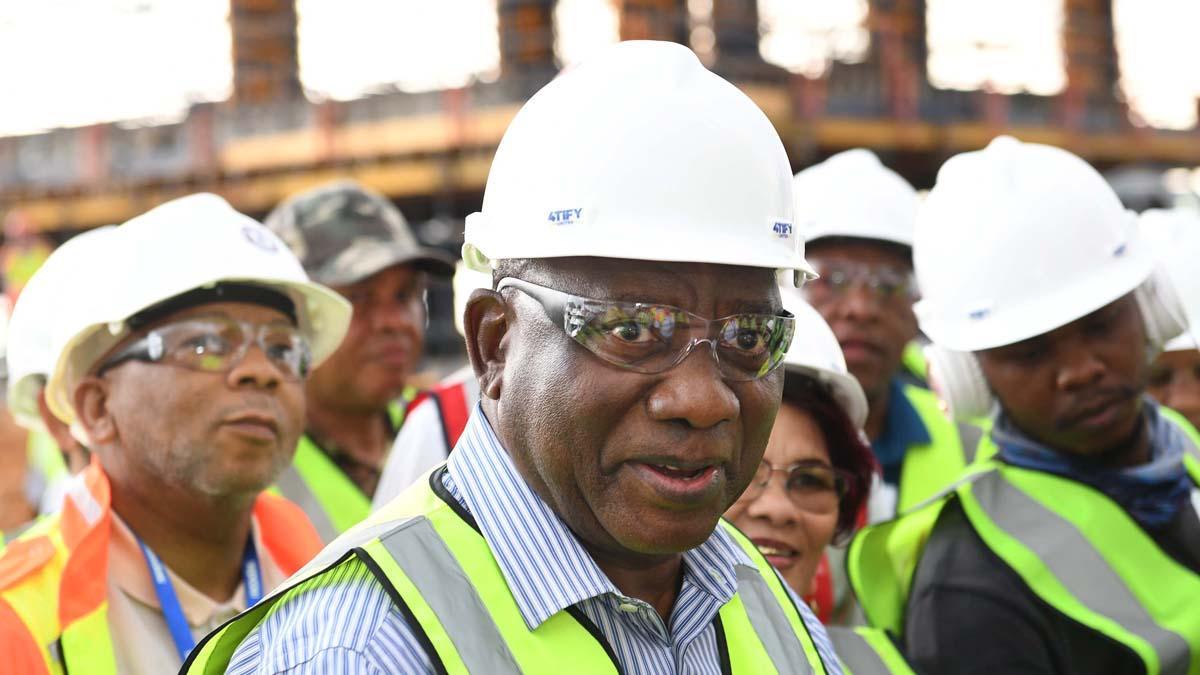
To address this, the GNU has committed R1 trillion towards infrastructure spending over the next five years.
However, Nedbank chief economist Nicky Weimar recently explained that while the government’s priorities are in the right place, this investment may not have the intended impact.
This is mainly because much of this funding will be allocated through South Africa’s public enterprises, which do not have the best track record for efficient and productive spending.
The decline in infrastructure spending in South Africa can be seen in the graph below, courtesy of Weimar. Note that this graph does not include data from the second quarter of 2025.
For More News And Analysis About South-Africa Follow Africa-Press