Africa-Press – South-Africa. South Africa is set to be severely impacted by the expiry of the African Growth and Opportunity Act (AGOA) on 30 September 2025.
The Act, and all its benefits for South Africa and other members, will expire unless the United States Congress acts to extend it or modify its provisions.
While a bill to extend and improve AGOA has been introduced and there are high hopes for the Act’s renewal, its future remains uncertain.
The Centre for Risk Analaysis’ (CRA) Ofentse Davhie explained the impact this expiry will have and the looming tariff shock on South African exports.
AGOA offers sub-Saharan African countries duty-free access to the US market for over 1,800 products since 2000, and has greatly benefited members.
South Africa, for example, runs a notable trade surplus with the United States alongside many of its peers on the continent.
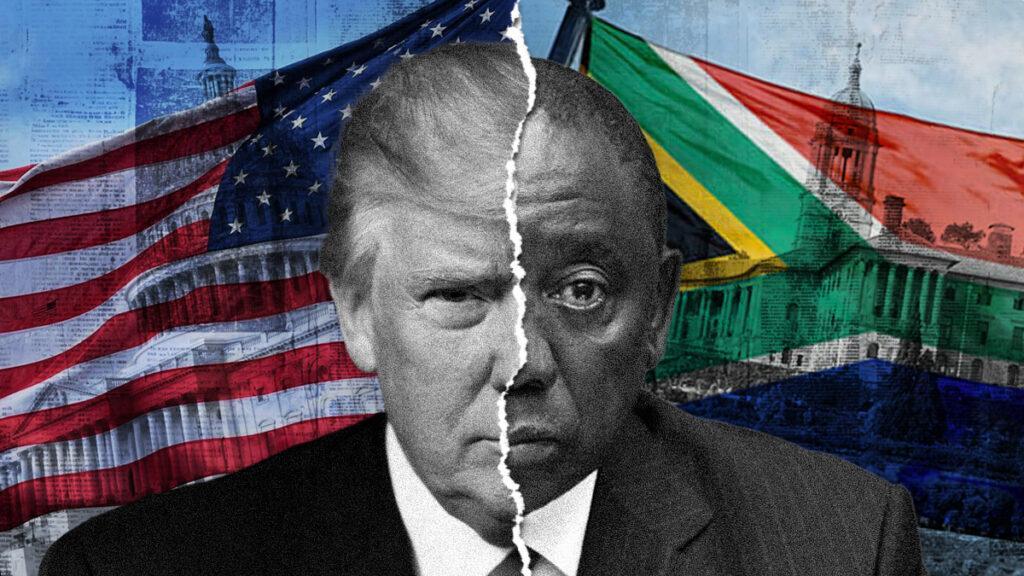
The expiry of AGOA comes amid a 30% reciprocal tariff on South African exports imposed by US President Donald Trump in his April 2025 “Liberation Day” executive order.
The reciprocal tariffs diminish AGOA’s benefits without eliminating them entirely, with the Act still shielding South Africa from the worst effects of the increased duties.
Reciprocal tariffs imposed by the US are applied in addition to the Most Favoured Nation (MFN) tariffs that the US levies on imports from all World Trade Organisation members.
Under AGOA, eligible products exported to the US enter the American market duty-free, overriding MFN tariffs, Davhie explained.
The reciprocal tariffs raised duties on those goods from 0% to 30%, but AGOA still shielded them from MFN charges.
With AGOA’s expiration, those products are now exposed to both the 30% tariff and MFN duties, sharply increasing costs for South African exporters to the United States.
South African exporters reliant on AGOA preferences face strained margins, potential restructuring, and further job losses, Davhie warned.
US buyers may shift to other countries, as South Africa’s tariff burden exceeds most countries’ rates, which average 10%-15%.
Pretoria’s trade delegation in the US must now secure a deal to ease market access. However, no bilateral deal can replicate AGOA’s 25-year trade benefits free from Mr Trump’s reciprocal tariffs.
Although President Ramaphosa last week called for AGOA to be renewed at a meeting in New York, this call is unlikely to be heeded.
South Africa sleepwalking into serious trouble
South Africa, unlike many of its emerging market peers, has been unable to secure a trade deal with the United States to ease access to the American market for its exports.
This has left many South African exporters on the back foot, with competitors facing significantly lower duties on goods entering the US market.
South Africa has been hit with one of the highest tariff rates of any country and has made little progress in addressing Washington’s conditions for a trade deal.
So far, the country has avoided the worst consequences as its main export to the United States, precious metals and minerals, are exempt from tariffs.
However, manufacturing exports such as automotive parts and vehicles, as well as agricultural exports, are set to be hit hard.
As tariffs impact global trade and growth, South Africa will not be spared, and the country’s already stagnant economy could be tipped into recession.
South Africa’s largest banks expect the biggest threat from tariffs to come from the secondary effects on increased duties being imposed on the country’s largest trading partners, rather than those placed directly on its exports.
Tariffs on South Africa’s largest trading partners, particularly China and the European Union, will slow their demand for local goods and put pressure on the local economy.
With South Africa being a small, highly open economy, it is heavily reliant on global growth to drive demand for its commodity exports and its broader economic performance.
If global growth slows, it is likely that South Africa’s economy will also fail to expand as much as previously anticipated.
“When big economies slow down, they buy fewer of our exports, invest less in our markets, and often pull back on development loans or aid,” Nedbank explained.
“That can mean higher prices on imported goods, fewer jobs tied to exports, and less money flowing into our economy from abroad.”
China is particularly important in this regard as it is the largest consumer of South African commodities, and its economic performance has a major impact on local businesses.
“Lower commodity prices from lower demand in China will result in a balance of payments shock to South Africa and other African economies,” Standard Bank chief economist Goolam Ballim explained to Daily Investor.
“A reduction in volumes and prices of commodities can result in weaker currencies due to this balance of payment shock. Weaker currencies lead to higher inflation that can trigger higher interest rates.”
“Through that, you get a sense of how low commodity prices and volumes can foster a vicious cycle of reduced exports, a weaker currency, high inflation, tighter monetary policy, weaker consumer spending, weaker investment appetite, and slower growth.”
This can also work in the inverse way, with stronger demand from China driving African currencies higher, resulting in lower inflation and faster economic growth.
“We think that, for the most part, South Africa has been closer to a vicious cycle in recent months because of the potential trade war and elevated tariffs, resulting in Chinese growth slipping to 4% year-on-year.”
However, Ballim did note that China is showing signs of resilience amid successive economic shocks, which bodes well for commodity demand in the coming years.
For More News And Analysis About South-Africa Follow Africa-Press