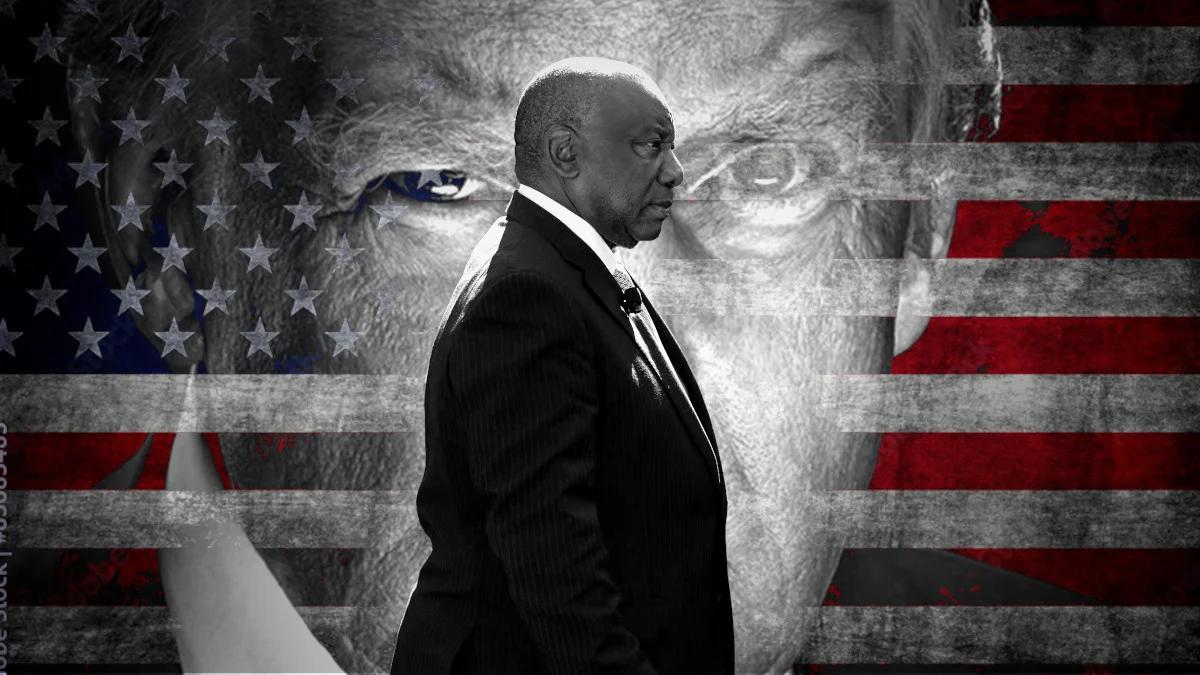
Africa-Press – South-Africa. The ANC and the government of national unity (GNU) have not implemented any of the demands from the United States to mend relations with South Africa.
In June 2025, the United States made demands related to farm attacks, land expropriation, BEE, and “Kill the Boer” as preconditions to mend relations with South Africa.
This information was shared by a South African delegation of Afrikaner leaders who met with senior White House officials.
The delegation included FF+ leader Corné Mulder, Southern African Agri Initiative chairman Theo de Jager, and National Employers’ Association CEO Gerhard Papenfus.
They met with senior White House officials, including representatives from the Office of the Vice President, the National Security Council, and the Homeland Security Council.
During the meeting in Washington, DC, the United States officials communicated the Administration’s official position regarding South Africa.
This included the necessary preconditions for the normalisation of bilateral relations between the United States and South Africa. These preconditions are:
The classification of farm attacks as a priority crime. The White House officials pointed out that farm attacks are not addressed with the same urgency and resources as rhino poaching and cash-in-transit heists. Each farm attack should be investigated by the Hawks.
A clear and unequivocal public condemnation by the ANC of “Kill the Boer, kill the Farmer”, whether used in song or any other context.
No land expropriation without fair market compensation. Expropriation should only proceed after all legal processes have been fully exhausted.
Exemption of USA entities from all Black Economic Empowerment (BEE) requirements. Any race-based legislation that may constitute a non-tariff trade barrier should not apply to USA entities.
Most of these issues made headlines before and after South African President Cyril Ramaphosa’s meeting with US President Donald Trump.
According to Mulder, the White House officials expressed concern that these conditions have not been adequately addressed.
He added that US officials communicated these conditions to the South African government multiple times.
The ANC and the government double down on BEE and expropriation
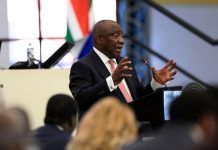
Deputy President Paul Mashatile
Despite the clear demands from the United States, the ANC and the government have doubled down on these controversial policies.
There have been numerous requests that farm attacks be classified as a “national priority crime”, but there has been no action on this front.
The EFF and other groups continue to sing “Kill the Boer, kill the Farmer” at events. The ANC remains mum on the matter.
In August 2025, the EFF sang “Kill the Boer” at a protest march in Kraaifontein in the Western Cape after an adverse ruling against its leader, Julius Malema, for hate speech.
More recently, the EFF openly sang the controversial “Kill the Boer” song on the Potchefstroom campus at the North-West University.
The ANC has also doubled down on land expropriation without fair market compensation, with a new legal battle around the issue.
The City of Ekurhuleni in the Gauteng province has expropriated a 34-hectare property, known as portion 406 of the Farm Driefontein, without compensation.
At the time of expropriation, the owner was applying for development rights, and the property was valued at a minimum of R30 million.
However, the city refused to pay for the property, arguing that nil compensation was just and equitable.
The ANC is also doubling down on BEE, arguing that it is good for the economy and that it remains central to the transformation agenda.
Deputy President Paul Mashatile has said BBBEE is “not a failed policy” and must be implemented more rigorously. He also likened scrapping it to going back to apartheid.
This means that the ANC, and hence, the government, is dismissing the United States’ demands, which resulted in high tariffs on South African goods.
These tariffs have a significant impact on South Africa, including lost trade, job losses, and strained international relationships.
The Reserve Bank Governor, Lesetja Kganyago, said the 30 % US tariffs could lead to as many as 100,000 job losses, with agriculture and automotive among the hardest hit sectors.
For More News And Analysis About South-Africa Follow Africa-Press