Africa-Press – South-Africa. In September 2025, Johannesburg continues to be the most expensive city among South Africa’s three major metros for groceries for five consecutive months, followed by Cape Town and then Durban.
This is according to data from the Pietermaritzburg Economic Justice and Dignity (PMBEJD) group, which tracks the cost of a household food basket across the three major provinces.
The PMBEJD report found that while 14 of the 44 tracked food items became cheaper or saw no increases year-on-year, 30 experienced price hikes, with seven items seeing double-digit inflation.
Despite this, Annual consumer price inflation dropped from 3.5% in July 2025 to 3.3% in August 2025. Softer food and fuel inflation took some heat off the headline rate.
CPI decreased by 0.1% month-on-month in August 2025, with four of the 13 categories seeing monthly declines.
Annual inflation for food & non-alcoholic beverages subsided to 5.2% from 5.7% in July.
Several categories recorded lower rates, including cereal products; fish & other seafood; milk, other dairy products & eggs; fruits & nuts; and vegetables.
Some staples are cheaper than a year ago, including hot cereals (-7.8%) and white rice (-7.2%). Bread and pasta products recorded zero or low price increases.
However, other staple items are becoming far more expensive, including samp (+14.8%) and maize meal (+8.2%).
Beef products continued to register high annual rates, even if the monthly price increase in August was the lowest since April.
Beef mince saw a 12-month change of 27.2% and a monthly rise of 0.2%. Stewing beef grew at an annual rate of 32.3% while its monthly change was 0.6%.
Beef steak prices were 28.6% higher than a year ago, even if they were down by 1.2% between July and August.
The rise in beef prices follows an outbreak of foot and mouth disease at the country’s largest feedlots, which put extreme pressure on supply.
The annual rate for fuel was -5.7%, down from -5.5% recorded in July. Petrol prices decreased 28c per litre, resulting in a 1.3% monthly decline. That said, diesel prices increased by 2.5% between July and August.
Products recorded significant annual price decreases include potatoes, eggs, white rice, hot cereals and corned meat.
Non-food and beverage items that registered sharp annual increases include books (+30.8%), movie tickets (+15.9%) and video games (+14.7%).
Most expensive city for groceries
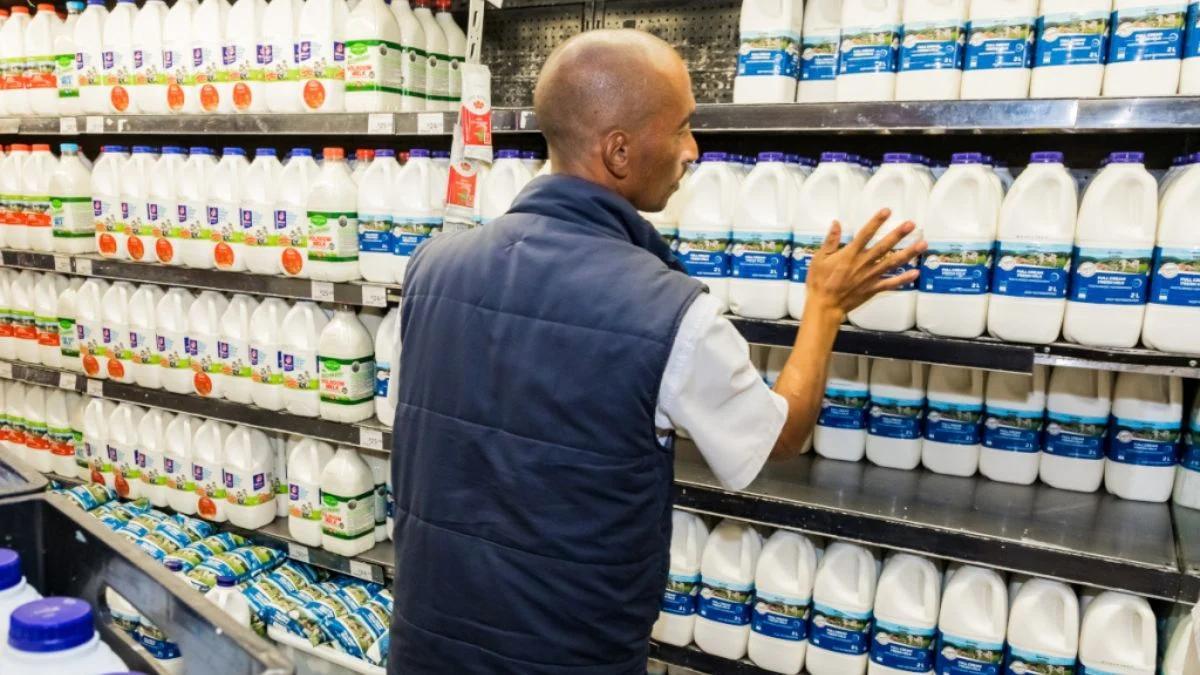
As of the end of September 2025, the average cost of a household food basket in South Africa, comprising 44 essential items that reflect typical purchasing patterns, reached R5,379.42.
This is a 2.4% annual increase of R123.74 compared to September 2024. Month-on-month, the basket price decreased by only R1.20 compared to August 2025.
However, a breakdown of costs in each city shows that the change in food prices is higher in some areas than others.
In September 2025, the household food basket cost R5,554.41 in Johannesburg, a 1.3% increase of R71.76 from the previous year. This is also R6.42 more than the recorded basket price of R5,547.99 in August.
Joburg’s basket price surpassed the national average by R174.99, making Johannesburg the most expensive metro for groceries.
In comparison, Durban overtook Cape Town as the cheapest city for groceries, although it still recorded an annual increase.
Cape Town’s food basket, recorded at R5,364.04, increased by R52.46 (1.0%) from R5,311.59 in August 2025.
The city also saw an annual increase of 6.4%, or R323.86, from R5,040.18 in September 2024. Despite the notable increase, it is still R190.37 less expensive than Johannesdurg.
Durban’s food basket decreased by R23.97 (0.5%) from R5,253.08 in August 2025 to R5,229.11 in September 2025.
Additionally, year-on-year, the Durban household food basket cost increased by only R2.38 (0,0%) from R5,226.74 in September 2024.
Food basket comparison between the three major cities
For More News And Analysis About South-Africa Follow Africa-Press