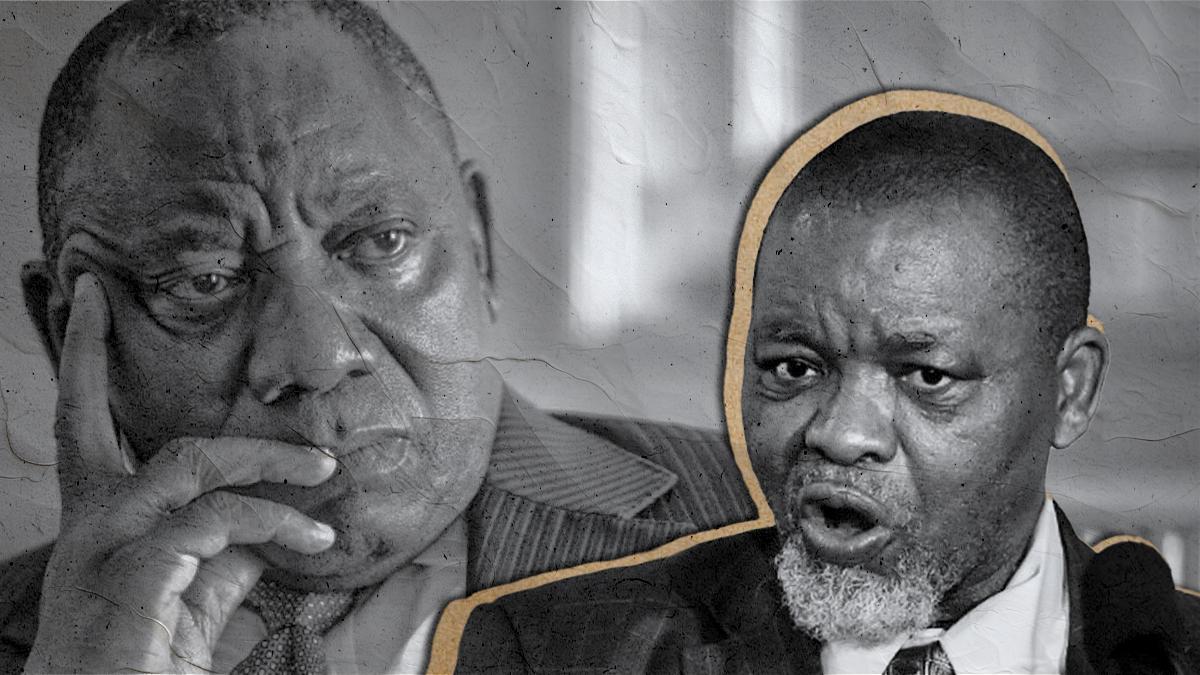
Africa-Press – South-Africa. President Cyril Ramaphosa and Minister Gwede Mantashe have overseen the loss of hundreds of thousands of jobs in South Africa’s mining sector.
This is largely due to their inability to address the concerns raised by the local mining industry, which has been plagued by policy uncertainty, threats of nationalisation, and deteriorating infrastructure.
South Africa’s mining output has been flat for the past 20 years as companies are hesitant to invest in new projects or expand existing operations.
More worryingly, no new exploration for minerals has occurred in South Africa for the past two decades, resulting in an entire lost generation of mines.
Modern Corporate Solutions mining analyst Peter Major told BizNews that the warning lights have been flashing for years, with the reality finally beginning to hit home.
Major pointed to the closing address of the Joburg Mining Indaba, delivered by Mineral and Petroleum Resources Minister Gwede Mantashe, as an example of the government’s lack of care for the industry.
“I remember telling people around me, ‘This guy has a big opportunity’. People remember what you say last and what you do last, the most,” Major said.
“He had a chance to go up there at the end of the Indaba, and he can be a hero. He does not have to do much, and we would forget, ignore, and pretend so much of this past decade did not happen.”
However, this opportunity, like with many others, was not taken by Mantashe, with no fresh ideas to revive the once-powerful industry in South Africa.
“He just ignored the entire panel before him, which outlined all of the challenges the mining industry is facing in South Africa,” Major said.
“It is very disappointing. It is almost like he does not want to be remembered or he wants to be remembered poorly.”
“That was the perfect opportunity for Gwede to rise to the occasion, instead of totally ignoring it and those people who were making a really good contribution.”
“It would have been so easy to rise to the occasion and show some concern for the 450,000 gold miners that he and Cyril have helped to lay off and for probably another 100,000 miners in other sectors that have been laid off unnecessarily. But, he does not seem to care about those people.”
The collapse of mining in South Africa
Mining expert Peter Major
South Africa’s mining industry has seen its output stagnate over the past 20 years as it became one of the worst jurisdictions to operate in around the world.
This marks a stark contrast to the industry, which was once the envy of the world, producing over 650 tonnes of gold a year and being the dominant source of platinum and manganese.
“We were a leviathan in 1980. Nobody could beat us. Anglo American was the largest investor in the United States. The Americans were terrified of us,” Major said.
“You are seeing what happened in Zambia and in Zimbabwe now happening in South Africa. It has not turned around. It is still going down.”
This was the result of decades of stable policy, efficient service delivery, and light-touch regulation from the government.
However, things changed quickly once the ANC came to power, with many leaders who called for the nationalisation of mines finding themselves in powerful positions.
On top of this, the ANC began implementing onerous transformation requirements and onerous regulations, making South Africa a less attractive investment destination.
The historic backbone of South Africa’s economy, mining output has steadily dropped over the past two decades, declining by 0.4% annually since the 1990s.
“When the new administration took over, it decided to try to totally revamp mining law in South Africa and copy what other African nations did,” Major said.
“It said, ‘We will nationalise these mines and take them back. They are no longer private property but are the state’s property.’”
“You can imagine. You put billions into projects for 100 years and are now threatened with state ownership. New investment just stopped. Exploration and expansion just stopped. Why put money in something the state owns?”
“They were also changing legislation non-stop. You first had to have a BEE partner that owned 25%, and that quickly increased to 30%. And then, they said 70% of the money you spend had to go to BEE suppliers.”
“As if nationalising property was not enough, they put on all these horrendous conditions that drove capital away.”
For More News And Analysis About South-Africa Follow Africa-Press