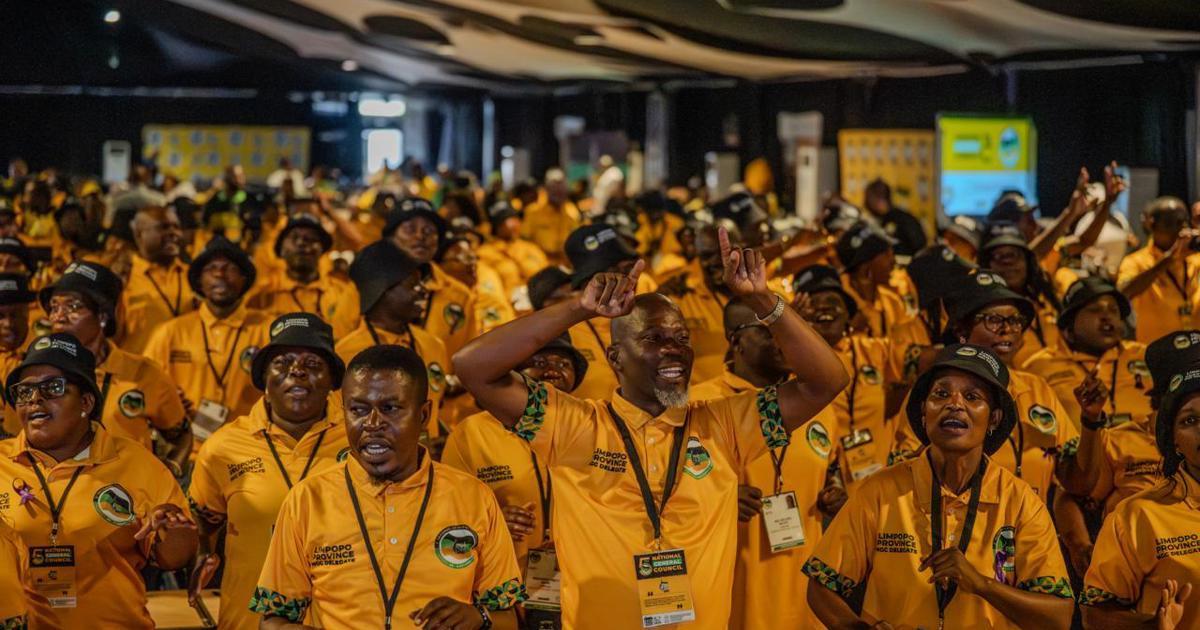
Africa-Press – South-Africa. After four days of deliberations, the ANC’s fifth National General Council (NGC) has finally concluded. So, what were the key outcomes from those four days?
Firstly, what is the National General Council? The NGC is a midterm review of the party since the last elective conference. The last elective conference took place in 2022 and several resolutions and policies were adopted for implementation.
In 2026, the ANC will be looking back at those commitments and assessing whether they have been implemented.
Renewal: The central theme
One of the words that featured prominently throughout the NGC is “renewal.”
This is not a new concept for the ANC, it dates back as far as 2010. Renewal refers to both the renewal of the organisation and its membership. This is central to the ANC’s strategy, as the party believes issues such as corruption, factionalism and ideological differences require organisational and membership renewal.
The only new element adopted at this NGC is the commitment to develop a “renewal chapter,” which should be adopted by 2032.
The ANC has also set performance targets it believes are achievable.
ANC President Cyril Ramaphosa spoke about the party’s efforts to tackle corruption. Under the ANC government, the Investigating Directorate Against Corruption (IDEC) and the Special Investigating Unit (SIU) were established.
These bodies have investigated several senior ANC members, including former Speaker Nosiviwe Mapisa-Nqakulaand former ANC spokespersons Pule Mabe and Zizi Kodwa. The party cites this as an example of its renewal process.
Quoting ANC veteran Jeff Radebe: “Renewal is not a one-night stand.” He argued that it must be a continuous process, and the ANC says it is committed to that, whether people believe it or not.
Local Government Elections: Regaining lost ground
With local government elections coming up next year, the NGC also focused heavily on the party’s local election strategy.
President Ramaphosa said the ANC did not conduct a proper door-to-door campaign in the 2024 general elections, leading to the party losing touch with communities.
The renewed strategy emphasises returning to intimate and genuine door-to-door engagement. He believes the ANC can arrest its electoral decline.
However, since the mid-2000s, the ANC has consistently been losing support nationally and locally, with no instance of regaining lost ground.
In the last local government elections, the ANC secured about 45% of the vote, and polling suggests the party may suffer another decline.
The ANC also discussed coalitions and the Government of National Unity (GNU).
Ramaphosa raised concerns about parties within the GNU attempting to undo transformation policies such as the National Health Insurance, Broad-Based Black Economic Empowerment, and the Expropriation Act.
The NGC declaredthat the ANC must do everything in its power to ensure these policies remain in place. How far the party is willing to go, even potentially breaking up the GNU, remains to be seen.
ALSO READ: Ramaphosa: NGC vows to defend BBBEE, NHI against GNU challenges
Tensions with the SACP
Another major topic was the ongoing impasse between the ANC and the South African Communist Party (SACP).
Tensions have increased since the SACP resolved to contest elections independently.
The ANC accepts that it cannot persuade the SACP to reverse its decision, as it was taken at branch level during the SACP Congress.
The NGC declared that SACP members may no longer attend ANC election strategy meetings. Earlier this year, ANC First Deputy Secretary-General Nomvula Mokonyane removed SACP members from such a meeting, arguing that the two parties are competing for the same voters.
This has now een formalised as policy.
Questions remain about members with dual ANC–SACP membership, including senior figures like Gwede Mantashe, Buti Manamela and Limpopo chairperson Dr Popi Ramathupa.
Many ANC members on the ground hold dual memberships. The ANC says it does not want to force people to choose, although Mantashe has publicly said that if he had to choose, he would choose the ANC.
Succession talk gains momentum
Finally, succession talks, an unavoidable topic. Although the NGC is neither an elective conference nor a policy conference, it often serves as a barometer for leadership hopefuls. The NGC comprises about 1,800 delegates from across the country, the same people who will vote at the next elective conference.
There have been reports that the Speaker of Parliament, Thoko Didiza, is quietly gathering support for a presidential run.
Electricity Minister Kgosientsho Ramokgopa credited with drastically reducing load-shedding, has also begun exploring a potential senior ANC role.
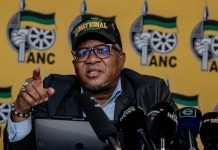
The ANC Secretary-General, Fikile Mbalula, received a lengthy standing ovation after delivering the midterm report, signalling strong support among delegates.
The current ANC top seven leadership term ends in 2027. President Cyril Ramaphosa has made it clear he will not seek a third term. ANC national chairperson Gwede Mantashe has indicated he will retire. This means several key leadership positions will be vacant heading into 2027.
For now, the ANC says its focus is on the upcoming local government elections and regaining the support it has lost since the mid-2000s.
For More News And Analysis About South-Africa Follow Africa-Press