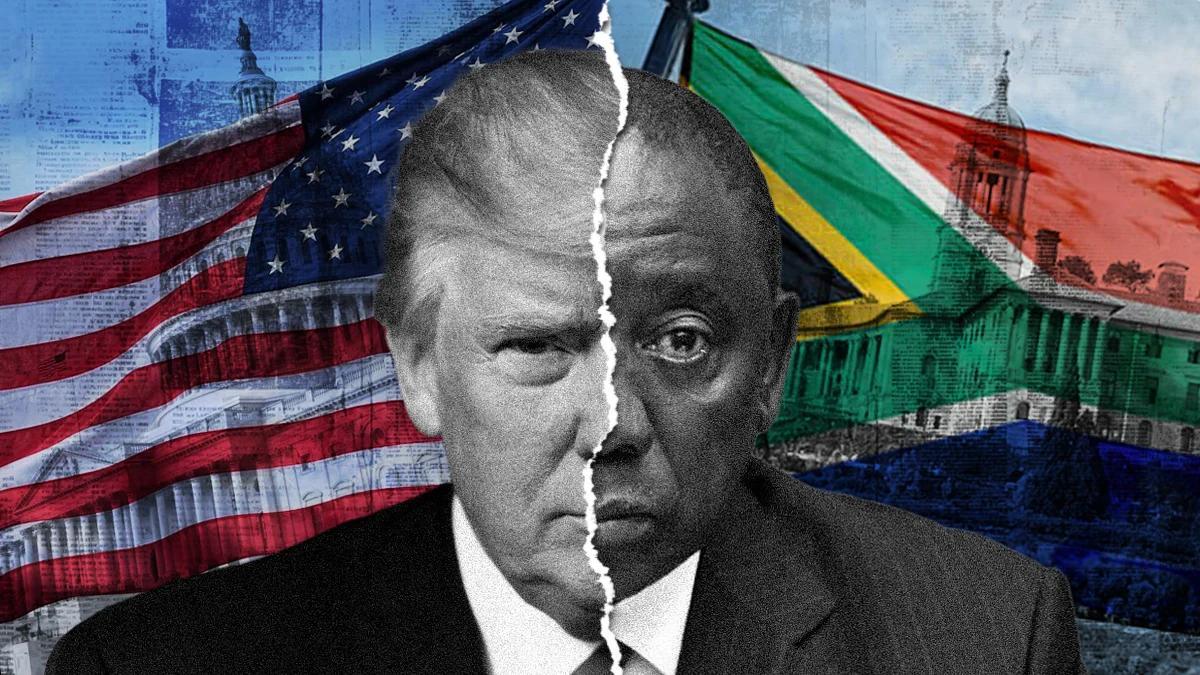
Africa-Press – South-Africa. The confirmation of Leo Brent Bozell III as the new Ambassador of the United States to South Africa means that elevated tension between the two countries is inevitable.
In this case, South Africa is likely to come off second best, with the country needing to shift the relationship away from political disagreements towards trade, investment and deeper diplomatic ties.
This is feedback from the Centre for Risk Analysis’ (CRA) Ofentse Donald Davhie, who outlined the potential impacts of Bozell’s appointment as Ambassador to South Africa.
Davhie explained that the appointment comes amidst increasingly tense relations between South Africa and the United States, with little progress being made on finding common ground.
Washington has become increasingly frustrated by South Africa’s inability to meaningfully address its demands in negotiations over a trade deal.
Relations began deteriorating between the two countries in 2023, when Ambassador Reuben E. Brigety II accused South Africa of supplying military equipment to Russia.
South Africa’s consistent United Nations voting alignment with China, Iran, Russia, Venezuela, and other US adversaries also attracted Washington’s unfavourable attention.
Since January 2025, the Trump administration and Congress have subjected South Africa to unprecedented scrutiny.
Several Bills have been introduced in Congress to demand that the US government formally review its relationship with South Africa, although to date, none have passed.
This legislation largely targets specific individuals and, more particularly, targets senior ANC politicians and not South Africa as a whole.
This has been coupled with the US State Department placing South Africa on a human trafficking watch list, which means it must crack down on the activity or face sanctions from America.
The Trump administration also declared South Africa’s ambassador to Washington, Ebrahim Rasool, persona non grata after he made undiplomatic remarks about US President Donald Trump.
South Africa has also been subjected to higher tariffs than any other African nation, a further sign of US displeasure with the country. The United States also boycotted the G20 Summit held in Johannesburg.
Trouble on the horizon
Leo Brent Bozell III
Davhie said Bozell’s appointment indicates that political friction is inevitable between South Africa and the United States in the future.
Previously, Davhie warned that Bozell’s nomination was evidence of a sustained hardline US stance towards South Africa.
His swift nomination and confirmation process, compared to Trump’s first-term ambassadorial pick, indicated elevated urgency and intent.
South African stakeholders should expect direct, robust engagements from an ambassador with extensive media experience, and who combines ideological conviction with a clear Trump mandate.
Should he present credentials promptly and remain in his post until January 2029 – the conclusion of the second Trump administration – he could achieve a significantly longer tenure than his recent predecessors.
Given Bozell’s right-wing pedigree, coupled with the conservative stance of the Trump administration, and the ANC-led coalition government’s left-leaning orientation, political friction is inevitable.
This friction will be exaggerated if Pretoria continues moral posturing on global issues while struggling to tackle domestic challenges.
Pretoria should not expect an easy ride with Bozell in the ambassadorial post. Successful cooperation will depend on a shift away from political disagreements to leaning towards trade, investment, and people-to-people ties, Davhie said.
One thing that is not likely, according to Davhie, is a ban on US companies investing in South African assets, which is a far-fetched and unlikely scenario, with it being given a low alert level by the CRA.
However, the threat of sanctions on South African leaders and a formal review of relations between the countries is much more real.
“In terms of the US-SA Bilateral Relations Review Act, which is currently a Bill, we have seen two forms of it. One is at the House level and one at the Senate level,” Davhie explained.
“The fact that there are two of them shows that there is an appetite for this Bill to pass and that this is very much on the agenda in Washington.”
“The Review Act only targets specific individuals and, to be more particular, it targets ANC politicians and lists a few in those bills.”
“This is the real threat that the ANC is probably anticipating, and they are seeing it coming, especially because they are not moving the needle in terms of the demands that Trump has made.”
Davhie said that Trump has been clear in his demands in relation to BEE, expropriation without compensation, and addressing farm murders.
“They seem not to have made any attempt to address these issues meaningfully. The only attempt they have made to secure a deal has been on the trade side, with little political action,” he said.
“To give them their credit, the Department of Trade has been working for a trade deal and has regularly communicated with the US Trade Representative.”
For More News And Analysis About South-Africa Follow Africa-Press