Africa-Press – South-Africa. The government’s plan to channel R100 billion into black-owned businesses through a Transformation Fund has come under fire, with critics warning that it risks becoming another poorly governed, corruption-prone initiative with limited real economic impact.
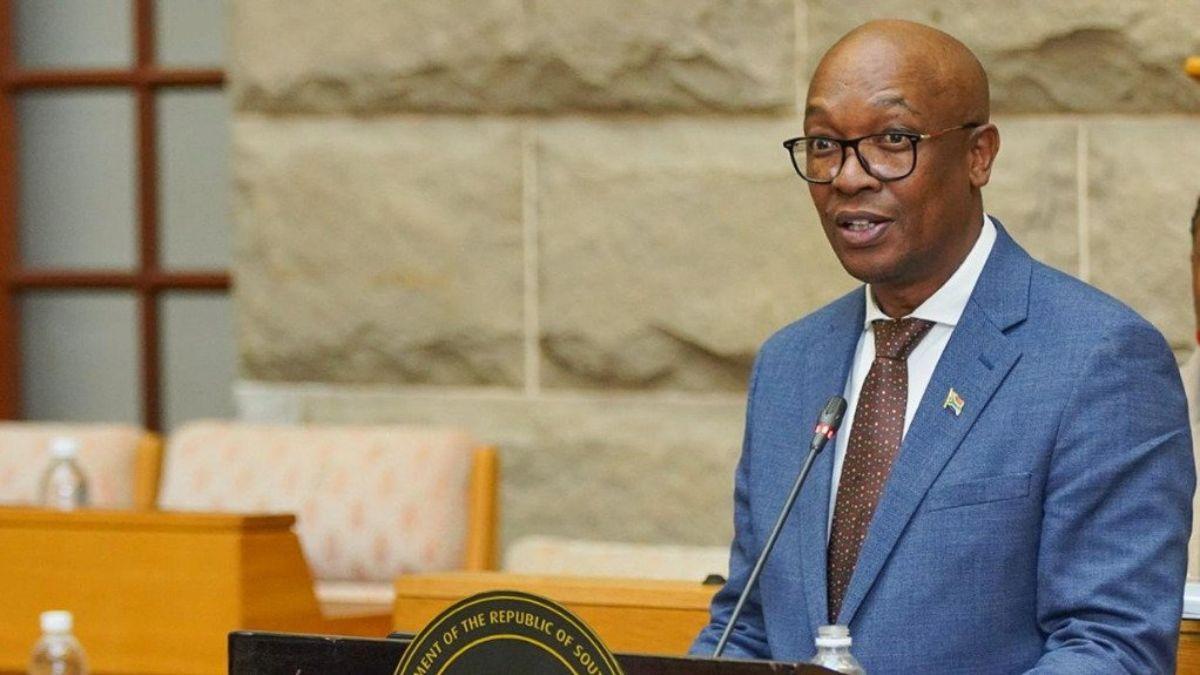
On 19 March 2025, Minister of Trade, Industry and Competition Parks Tau published the Draft Transformation Fund concept document for public comment.
The proposal outlines a fund capitalised at R100 billion over five years, effectively allocating about R20 billion a year to black-owned and controlled enterprises.
Broken down further, this equates to around R55 million a day, or roughly R80 million per working day, aimed at boosting black participation across key sectors of the economy.
The fund is intended to consolidate enterprise and supplier development (ESD) contributions that companies already make under South Africa’s Broad-Based Black Economic Empowerment (B-BBEE) codes.
Under existing rules, firms are expected to spend 3% of their net profit after tax on developing black suppliers, black industrialists, and small and medium enterprises.
The Department of Trade, Industry and Competition (DTIC) has stressed that the Transformation Fund does not introduce a new financial burden, but rather restructures how these obligations are pooled and managed.
Tau has argued that centralising these contributions will create a more coordinated and efficient system, allowing the state to offer both financial and non-financial support, including mentoring, market access, and capacity building.
The draft document lists objectives that include improving access to funding for black-owned businesses, increasing their participation in economic value chains, and mobilising public and private resources to drive broader economic inclusion.
The proposal has gained further prominence following the government’s move to amend B-BBEE regulations.
In January 2026, Tau noted that under the draft amendments, white-owned companies would be allowed to earn empowerment points by contributing to the Transformation Fund.
Growing opposition
However, stakeholders and political parties have objected to the plan. Trade union Solidarity has sent a letter of demand to the DTIC, accusing the department of misleading the public about the readiness and design of the fund.
According to Solidarity deputy chief executive Anton van der Bijl, there are material contradictions between earlier responses the department gave under the Promotion of Access to Information Act (PAIA) and information now circulating publicly.
Van der Bijl said the department previously claimed the fund was insufficiently developed to disclose key documents, costings, and impact studies.
“Now it is being reported that the fund could be ready to launch as early as next week, with billions of rands in financial commitments, a fixed governance model and a defined incentive structure,” he said.
Solidarity has questioned how a fund reportedly backed by early commitments of around R13 billion, including from public entities such as the Unemployment Insurance Fund, the Industrial Development Corporation and the Development Bank of Southern Africa, could exist without extensive internal studies and approvals.
It has also raised concerns about whether the use of contributors’ money by institutions like the UIF has been properly authorised.
The union warned that implementing the fund without full compliance with the Public Finance Management Act would be unlawful and constitutionally invalid.
“This looks and smells like another cadre-government looting fund,” Van der Bijl said, adding that taxpayers have a right to transparency and proper oversight.
Business leaders have echoed these concerns. Hiten Keshave, CEO of Unconventional CA, said the revised proposal does little to address fundamental flaws.
He warned that centralising large pools of money without a clear strategy risks wasting funds, especially given South Africa’s track record with similar schemes that have delivered limited benefits to small and black-owned businesses.
Political parties within the Government of National Unity have also voiced opposition. The Democratic Alliance, the second-largest party in government, said it would not support the plan.
Its trade spokesperson, Toby Chance, warned that the fund could become a “bottomless pit” for taxpayers’ money, arguing that race-based policies like B-BBEE have failed to close the inequality gap and that support should instead be allocated based on merit, viability, and growth potential.
For More News And Analysis About South-Africa Follow Africa-Press