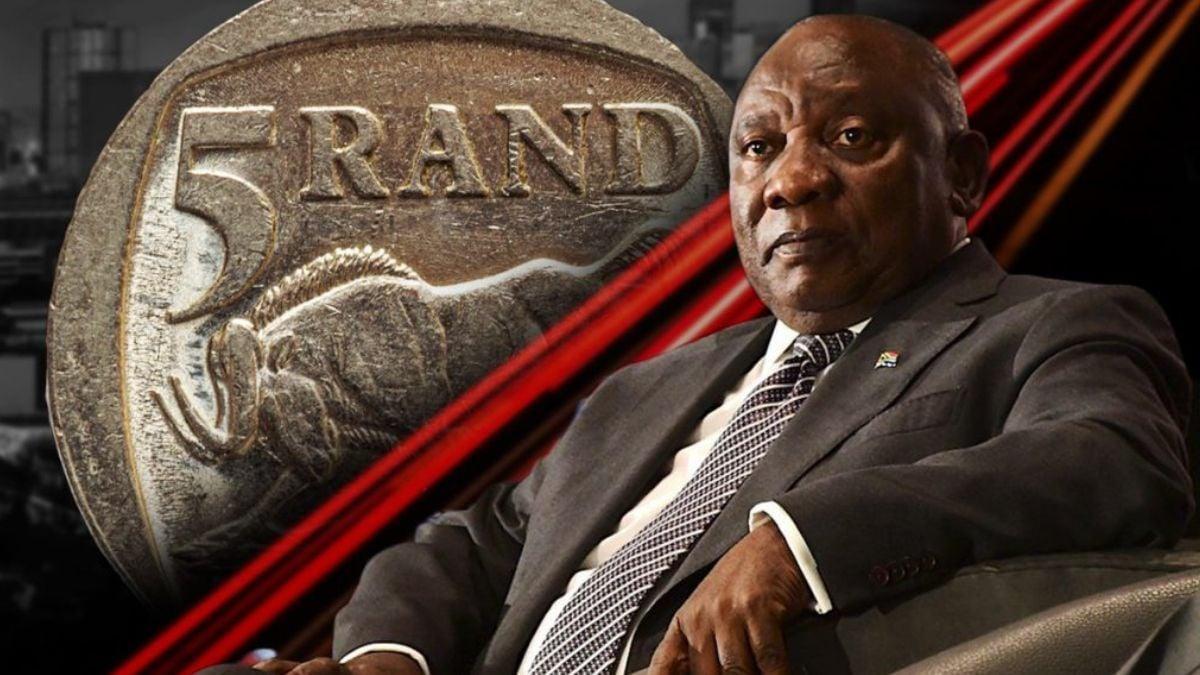
Africa-Press – South-Africa. While South Africa’s economy shows signs of recovery, marked by four straight quarters of growth, lower unemployment rates, and a decrease in poverty and inequality, President Cyril Ramaphosa warns that economic reform cannot be sustained without increased investment.
In his weekly newsletter to the country, the President noted that the country is seeing reform reflected in higher economic confidence, a strong stock market, and an inflation rate at its lowest in 20 years.
South Africa has been successfully removed from the Financial Action Task Force (FATF) grey list and has achieved a sovereign credit ratings upgrade, which the President points to as evidence of enhanced fiscal credibility.
However, while these signs indicate progress, he said increased investment is essential to maintain the change in South Africa’s economic path.
This has been echoed by several analysts, who agree that investment is the single most critical factor for moving South Africa’s economy from temporary stability to long-term growth.
“The scale of South Africa’s investment shortfall is underappreciated,” said Krutham Managing Director Peter Attard Montalto.
Montalto stressed the fragile state of investment in South Africa, citing the condition of the country’s biggest city, Johannesburg, as the most notable example of the investment shortfall.
“In the third quarter of 2025, total investment in real terms was 14.4% lower than in the same quarter of 2019. That screams crisis, yet it is barely recognised,” said Krutham.
“That is true across the public and private sectors – the latter is down about 15.7%.”
Ramaphosa said that the recent momentum can be sustained by the government boosting public infrastructure spending and lowering the cost of doing business, focusing on structural reforms in electricity, logistics, and water.
President remains optimistic
Public investment in infrastructure is also needed to boost private investment. The President reported that over R1 trillion had been committed for infrastructure projects over the next three years.
Ramaphosa said that global growth is likely to remain slow due to rising trade and geopolitical tensions, underscoring the need for the country to expand markets more competitively, with particular focus on the African continent.
“Only if our own institutions are strong can we compete and remain responsive in a rapidly changing world,” said Ramaphosa.
He called on South Africans to unite in order to capitalise on the established momentum and create enduring benefits for the economy.
Ramaphosa assured that the progress seen over the last year will have a positive impact on the lives of South Africans this year, highlighting the importance of job creation and investment growth.
Krutham analysts broadly agree with the president’s position.
They believe that municipalities should ideally invest an additional R100 billion annually, primarily in infrastructure.
They explicitly agree with the President’s trade strategy, arguing that competition will increase as countries search for new markets.
“South Africa must clearly define and form coalitions of partners around its strengths – accelerating the African Continental Free Trade Area (AfCFTA) to open wider markets,” said Montalto.
He noted that the obligation to drive investment lies not just with the government but also with businesses.
However, the analyst is less optimistic than the president that this would be easily achieved.
Given the present circumstances, adopting a more self-serving approach would require quickly establishing trade and investment agreements across various markets, with the EU as a key focus.
To this end, he doubts that South Africa has the ability or flexibility to develop the necessary relationships and coalitions in a transformed global economy.
For More News And Analysis About South-Africa Follow Africa-Press