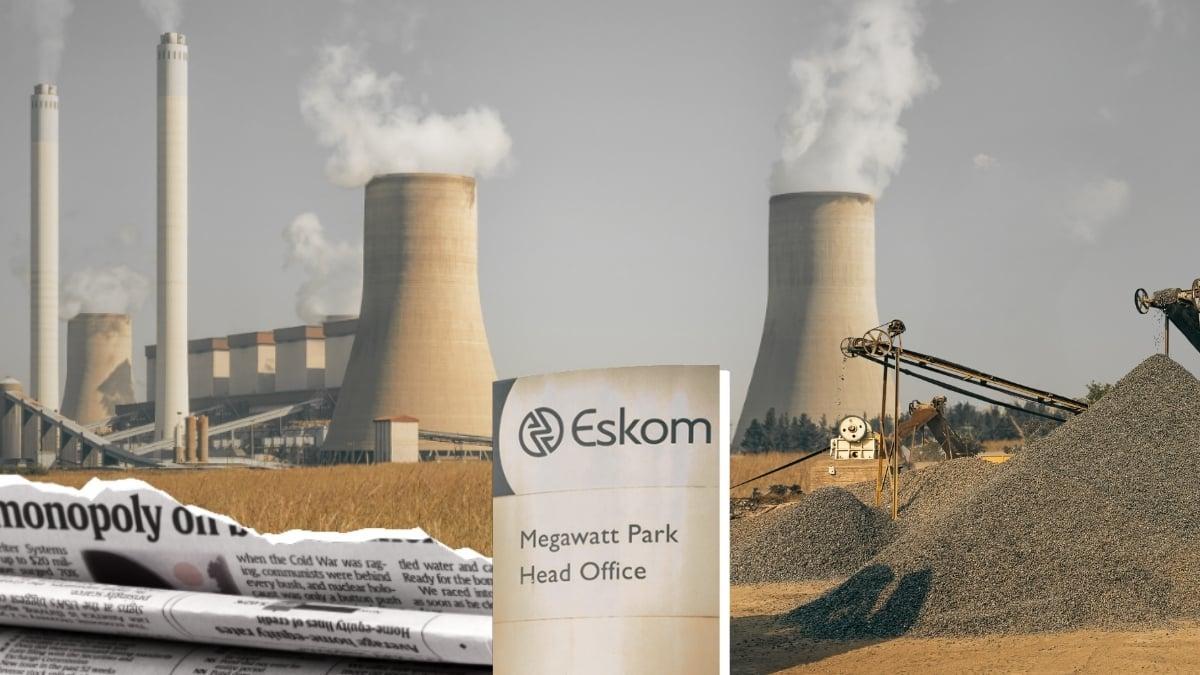
Africa-Press – South-Africa. Eskom’s 102-year reign as the only significant supplier of electricity in South Africa appears to be coming to an end as the government’s reform programme shifts from preparation to practical implementation.
These reforms are expected to end Eskom’s monopoly on generation and create an open, competitive electricity market.
This will significantly increase the role the private sector plays in South Africa’s electricity sector, with companies expected to compete on a level playing field with Eskom.
Legal experts at Webber Wentzel said these changes are the most significant structural reforms since Eskom’s inception, with the vertically-integrated monopoly being done away with.
Eskom will effectively become one of many electricity suppliers in South Africa, with the state-owned enterprise’s generation division competing with private players for customers.
The experts noted that while the Electricity Regulation Amendment (ERA) Act came into force on 1 January 2025, the real effects of this legislation will only be felt in the year to come.
This Act establishes the creation of a Transmission System Operator (TSO), which will operate the grid and be the central purchasing authority.
Coupled with this is the latest draft of the Market Code, released in the second half of 2025, which contains operational rules to be administered by the TSO.
A five-year transition period is currently envisioned for the new Market Code, with its launch being in April 2026 and full operation being reached by 2031.
This new Market Code will enable private participants to begin registering and onboarding with the TSO. However, Webber Wentzel warned that this process is likely to result in delays, with private players only admitted as functional participants in the years to come.
Ultimately, the aim of these two pieces of reform is to ensure that all generators of electricity, not just Eskom, will have equal access to the grid.
Energy expert and managing director of EE Business Intelligence, Chris Yelland, has said that this removes hurdles for private investment in South Africa’s energy sector because, in the past, preference has been given to Eskom’s generation division.
While the path towards this may not be smooth, the direction of travel towards a competitive electricity market and away from a vertically-integrated monopoly is clear.
Eskom fighting back
Eskom CEO Dan Marokane
Eskom has fought hard to maintain its monopoly over electricity generation and transmission, with its latest effort including engagements with creditors about how its unbundling will impact its debt obligations.
The utility wants its unbundled Transmission and Distribution divisions to remain under the Eskom Holdings umbrella, effectively ensuring it retains immense influence over supposedly independent operations.
Eskom recently announced a new unbundling plan that explicitly states the National Transmission Company South Africa would remain an Eskom Holdings subsidiary.
This means that Eskom would not transfer transmission assets to the new TSO that is being set up outside of the utility to ensure a fair playing field for all participants.
This has significant implications for the government’s reform programme, with fears that if Eskom exerts its influence over the TSO, it will do so to benefit its generation facilities over private players.
As a result, the playing field may not be level, discouraging private investment and increasing the risk of load-shedding in the future when Eskom decommissions its coal-fired power plants.
Another arena in which Eskom is attempting to handicap efforts to completely end its monopoly is the granting of trading licences to private companies by Nersa.
At the beginning of 2025, following the ERA Act coming into effect, Nersa issued five new electricity licences to private companies.
These licences were granted following extensive public participation, including by Eskom itself, Yelland explained.
However, after they were granted, Eskom launched a judicial review to set aside the licences, arguing that Nersa was reshaping national energy policy without clear trading rules or consultation.
Webber Wentzel’s experts noted that Eskom had not raised any objections to similar licences issued over the past decade. These new licences, however, risked upending the existing distribution framework, the utility said.
“This accusation reeks of institutional amnesia, denialism and resistance to long-standing reform commitments that Eskom itself has acknowledged for decades,” Yelland said.
Yelland explained that the emergence of electricity traders is not a deviation from the government’s reform agenda. Rather, it is the fulfilment of a long-standing policy commitment.
“Eskom knows this. And yet, in a desperate attempt to cling to its monopoly, Eskom’s court papers now argue that these licences represent ‘a unilateral policy shift that ‘has not been the subject of public consultation’,” Yelland said.
For More News And Analysis About South-Africa Follow Africa-Press