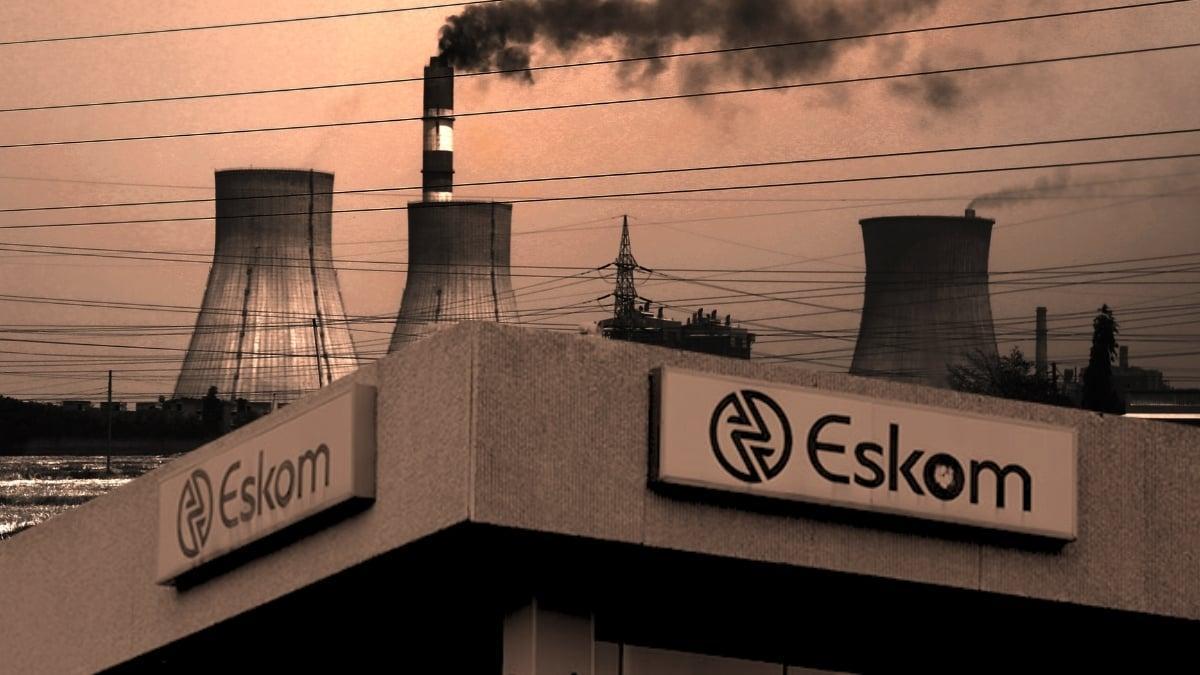
Africa-Press – South-Africa. Eskom is producing less electricity now than it did 20 years ago, yet the utility is charging more than ever for its product.
This dynamic is encouraging businesses and households to increasingly invest in alternative energy sources, such as rooftop solar.
Poorer individuals are also searching for alternatives, with many using other sources of energy to cook their food and heat their homes, such as gas, wood, and paraffin.
In some cases, individuals have even resorted to illegally connecting their homes to the electricity grid as they cannot afford to purchase Eskom’s product.
This has created a spiral for the utility, with it increasing prices to cover its costs from a dwindling customer base. These high prices then accelerate the decline in demand for its product.
All of this is despite Eskom stabilising its power supply, with its coal-fired power plants operating far more reliably and efficiently than over the past decade.
Symmetry chief investment strategist Izak Odendaal explained that the improved performance is not entirely due to Eskom’s performance, with the impact of private generators notable.
“Since 2022, private companies have been allowed to generate as much electricity as they want, and this policy change has been spectacularly successful,” Odendaal said.
“Hundreds of billions of rands are being invested in new generation projects, mostly solar and wind, and the pipeline of future projects is long.”
This has significantly eroded Eskom’s customer base, as many of these companies are its best clients, large users and reliable payers.
Coupled with households’ investment in rooftop solar, Eskom has found itself increasingly left with smaller electricity users who are unreliable payers.
Furthermore, the utility’s cost to produce electricity keeps rising, with Electricity Minister Kgosientsho Ramokgopa saying that around 45% of the final tariff is made up by the cost of primary energy, which is coal.
This indicates that the majority of the tariff comes from other factors, including Eskom’s cost of financing its debt, a notable driver over the past 15 years.
Ramokgopa told SABC that electricity costs at Eskom have risen by nearly 1,000% over the past 15 years, significantly outpacing inflation and resulting in the utility hiking its tariffs.
The dynamic of Eskom producing less electricity steadily, despite the end of load-shedding, and skyrocketing prices can be seen in the graph below, courtesy of Odendaal.
New challenges for Eskom
This tricky situation Eskom finds itself in is compounded by its need to invest heavily in maintaining and upgrading its transmission infrastructure.
Eskom does not have the balance sheet to fund this investment itself, and it now has to invest alongside the private sector to mobilise the money that is needed.
Chairman Mteto Nyati has consistently said that South Africa will need around R350 billion over the next decade to build out sufficient transmission infrastructure for new generation projects to come online.
Nyati has also explained that Eskom does not have the capacity to fund that from its own operations and balance sheet, which has been severely weakened over the past decade of mismanagement.
Odendaal explained that this is the next challenge, with the South African electricity grid having to be effectively flipped in the coming decade.
In the past, most of South Africa’s electricity was generated in the interior of the country, where it was consumed. However, now, the best locations for renewable energy are in the country’s Cape provinces.
Since the best locations for solar and wind energy are in the Northern and Eastern Cape, respectively, connecting them to centres of demand requires more grid capacity.
As a result, Odendaal said the local electricity market is undergoing more change now than probably in the first 100 years since Eskom’s founding in 1923.
Strangely, South Africa’s reliance on coal-fired power plants is something of a saving grace amid conflict in the Middle East.
This is because the country has ample coal reserves, ensuring it is not a net energy importer despite being a net oil importer.
This means it has not faced double fuel and electricity shocks, though electricity is expensive regardless of the war, and a headwind to industrial activity.
It also means that South Africa is among the world’s largest per capita carbon emitters. This is a long-term vulnerability once European countries, and others, start applying “carbon tariffs” on imports from countries that use fossil fuels.
For More News And Analysis About South-Africa Follow Africa-Press