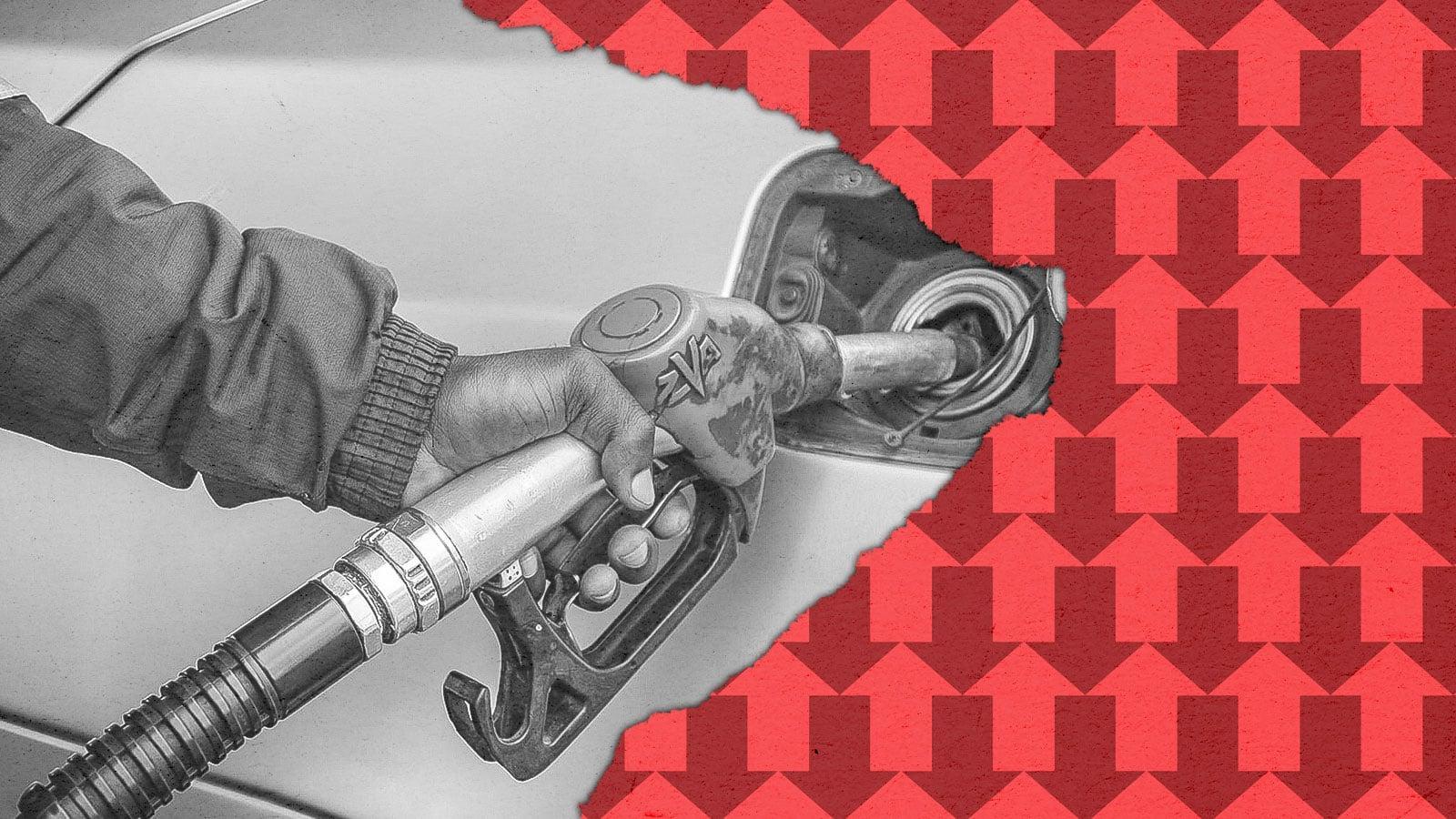
Africa-Press – South-Africa. Rising fuel prices in South Africa have significantly driven up operating costs within the country’s logistics sector, pushing some operators to the brink of closure.
While many of these operators may resort to passing on some of that cost to their customers, smaller operators may not be in a position where this is viable.
This is according to Road Freight Association (RFA) CEO Gavin Kelly, who said diesel can account for anywhere between 35% and 55% of a transport company’s operating costs.
Speaking to Newzroom Afrika, Kelly discussed the effect this has had on many smaller transport operators in the country’s road freight industry.
“We’ve had one or two small members of the RFA say ‘that’s it’,” Kelly said. “If there isn’t relief, they are really going to close their doors.”
Diesel prices were expected to go up by over R10 per litre on 1 April, but a R3 cut to the fuel levy meant the price only increased by around R7.51 per litre.
While this has provided some level of temporary relief, Kelly has warned that this R3 will likely need to be recouped somewhere else down the line.
“That R3 is supposed to come away on that Wednesday in May,” Kelly said. “So the question is – is that going to get added to the price?”
“If the international prices actually drop, will we see our price staying high to include the R3? Or are we going to be in for a nasty shock? That’s really the difficult part we are going towards.”
Kelly said greater concessions are needed from the state to protect transport operators, as many of them only receive payment for a job between 60 and 90 days after completion.
Coupled with another expected fuel price increase in May, this could have serious implications not only for logistics but also for other industries, such as food and retail.
“In the next two to three weeks, I think we are definitely going to see a lot of smaller transporters calling it quits,” Kelly said.
Deeper issues in South Africa’s logistical structure
Road Freight Association CEO Gavin Kelly
The crisis facing South Africa’s road freight industry has brought to light structural inefficiencies which affect the entirety of the country’s logistics sector.
The IMM Graduate School’s Head Lecturer in Supply Chain Management, Dr Ernst van Biljon, told 702 that South Africa is too dependent on diesel-powered, road-based freight.
Van Biljon explained that in a crisis like the current one, many of these operators will cut certain services as a way to keep their input costs at a manageable level.
This creates higher levels of uncertainty and variability down the supply chain, with retailers now having to pass on rising costs to the consumer.
“Because most of what moves in South Africa is by road, it is not only the increase in diesel,” Van Biljon said. “It is also potentially a problem with a weaker rand.”
“But more so with the behaviour of supply chains in the sense that they are starting to do other things, which in itself increases costs for the consumer.”
This impacts especially smaller logistics providers, greatly affecting the economy as they are forced to scale down or close their operations.
Van Biljon urged government and industry stakeholders to diversify the country’s logistics industry through alternate fuel sources and a heightened focus on rail freight.
The South African government has said it hopes to revitalise the country’s railway industry through calls for investment and public-private partnerships.
This would significantly reduce the burden on road freight operators and reduce inefficiency in the country’s logistics system, which costs South Africa an estimated R1 billion per day.
In the country’s urban areas, Van Biljon said that the use of electric vehicles could also offer substantial support to struggling transport operators.
“In urban settings, we have to go that way,” Van Biljon said. “We’ve seen the success of electric vehicles being used in urban centres around the world.”
“There are some good examples of that right now in South Africa. But we need to see much more of that for it to really make an impact and be sustainable.”
For More News And Analysis About South-Africa Follow Africa-Press